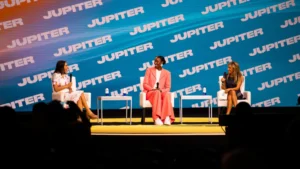
The rapid integration of generative artificial intelligence within the creator economy has fundamentally altered the landscape of digital content production, shifting from a climate of existential apprehension to one of strategic utility. Where the industry conversation in 2023 was dominated by fears of technological displacement, the current discourse—as evidenced by industry summits like the Cannes Lions International Festival of Creativity—focuses on operational leverage and the practical application of AI tools to scale human output.
This transition marks a pivotal chapter for digital creators, who are now navigating a complex ecosystem of productivity gains, intellectual property concerns, and evolving platform dynamics. As AI tools move from novelty to necessity, the industry is grappling with a paradox: how to utilize automated efficiency without eroding the authentic human connection that defines creator-led influence.
A Chronology of Adoption: From Dread to Integration
The trajectory of AI in the creator space has been non-linear. In early 2023, the emergence of large language models and generative video tools triggered widespread anxiety regarding job security and content saturation. Legal consultants and industry strategists reported a surge in inquiries centered on copyright infringement and the potential for AI to "replace" human creative talent.
By the start of 2024, the sentiment shifted toward pragmatic adoption. Kameron Buckner, founder of Social Docket, notes that the conversation has evolved from "this thing is going to take over" to "how do we harness this to optimize our workflow." This timeline aligns with the broader maturation of the software-as-a-service (SaaS) sector, where AI features were rapidly embedded into existing platforms, forcing creators to either adapt or risk falling behind in algorithmic visibility.
The Cannes Lions festival, held in June 2024, served as the primary barometer for this shift. Attendees reported that AI was no longer a peripheral topic but the centerpiece of every workshop and keynote. Unlike the previous year, where panels focused on the "threat" of AI, the 2024 sessions were highly technical, focusing on prompt engineering, automated video editing, and the legal nuances of AI-assisted contracts.
Productivity Gains and the Data Behind the Shift
The economic incentives for AI adoption are increasingly quantifiable. Creators utilizing AI for operational tasks report significant time savings. For instance, content creators who integrate AI-driven video clipping tools—which process hours of raw footage into highlight reels—have reported saving upwards of 10 hours of manual labor per week.
Data-backed insights suggest these efficiencies translate directly into revenue growth. Creators who utilize AI to streamline production pipelines have reported income increases of 20% or more, largely due to an increased volume of output and the ability to repurpose legacy content. By feeding years of archival newsletters and social media captions into proprietary AI models, creators are now building searchable "content hubs," allowing them to identify recurring themes and audience trends that would be impossible to synthesize manually.
However, this productivity comes with significant caveats. The democratization of high-level production tools means that the barrier to entry has lowered, leading to a glut of content that often lacks original voice. Analysts at firms like IZEA have observed a "flattening" effect, where content generated by identical AI models begins to mimic the same cadence and structure, creating a homogenizing trend across social platforms.
Legal Challenges and the Regulatory Lag
The legal infrastructure governing the creator economy has failed to keep pace with the velocity of AI development. According to industry experts, the current legal framework is largely reliant on precedents established decades ago, leaving a vacuum where, theoretically, the rights of creators are vulnerable.
A new area of friction has emerged in brand-creator contracts. Some brands have begun inserting clauses that demand access to a creator’s AI "processes," including their specific prompts and workflows. Legal experts view this as an overreach, arguing that a creator’s prompting strategy represents proprietary intellectual property and "hidden labor" that should not be part of a standard deliverable agreement.
Conversely, there is a rise in protective clauses. Creators are increasingly inserting language into their contracts that prohibits brands from using their likeness or voice to train proprietary AI models without explicit, separate compensation. As the industry matures, we are likely to see the emergence of a "Standard AI Rider," similar to long-standing celebrity contract riders, which will codify exactly how and when AI tools may be utilized in a partnership.
The Gender Gap in AI Adoption
Disparities in AI usage remain a critical subject of study. According to data from Lean In, women in the workforce are 22% less likely than their male counterparts to be regular users of AI tools. This discrepancy is often attributed to a "guilt factor," with women being 32% more likely to express concerns that using AI constitutes "cheating" or diminishes the value of their labor.
However, there is a positive counter-trend in the realm of financial advocacy. AI chatbots are increasingly being used as tools for pay transparency. By querying LLMs with industry-specific benchmarking data, creators are finding the confidence to negotiate higher rates. While AI cannot force a brand to pay more, it acts as a force multiplier for negotiation, providing the leverage necessary to challenge historically opaque pay structures.
The Human Element as a Competitive Advantage
Despite the proliferation of AI, the consensus among industry leaders remains that human expertise is irreplaceable. The emotional intelligence, lived experience, and nuanced point of view that a creator brings to their audience are qualities that current generative models cannot replicate.
The "Human-First" movement is gaining traction as a direct response to the saturation of synthetic content. Audiences are showing an increasing sensitivity to undisclosed AI-generated content, with many responding negatively to posts that lack a human touch. In response, top-tier creators are intentionally "de-automating" portions of their workflow. This involves writing, filming, and ideating without technological assistance to ensure their unique voice—what some describe as their "creative muscle"—does not atrophy.
Future Implications for the Creator Economy
As we look toward 2026, the creator economy is moving toward a model of "human-AI hybridity." The most successful creators will likely be those who treat AI as a junior assistant rather than a creative director. The responsibility will fall on the creator to maintain the ethical boundaries of their content, ensuring that while the process is accelerated by technology, the final product remains rooted in human perspective.
The industry is also expected to see a rise in platform-level regulation. Social media platforms are currently trapped in a contradictory cycle: they provide creators with AI tools to increase engagement while simultaneously tweaking algorithms to penalize content that feels "AI-produced." Creators will need to navigate this paradox by using AI for backend efficiency—such as scheduling, data analysis, and contract review—while preserving the raw, unpolished, and inherently human elements that foster community trust.
Ultimately, the lesson of the past two years is clear: the threat of AI is not displacement, but rather the loss of identity through excessive reliance on automated systems. By maintaining precise control over their creative inputs, the next generation of creators will leverage AI to build more sustainable, profitable, and human-centric businesses. As the technology continues to advance, the ability to discern when to use a tool and when to rely on one’s own intuition will become the definitive skill set for the professional creator.
Related posts: