Scrunch vs Peec AI: A Comprehensive Comparative Analysis of AI Answer Engine Optimization Platforms

The rapid transition from traditional keyword-based search to AI-driven answer engines—led by platforms like ChatGPT, Perplexity, Gemini, and Claude—has fundamentally disrupted the digital marketing landscape. As brands scramble to ensure their products and services appear in AI-generated responses, a new category of software has emerged: Answer Engine Optimization (AEO). Within this competitive sector, Scrunch and Peec AI have established themselves as the leading contenders for organizations seeking to measure and influence their visibility in the era of Large Language Models (LLMs). This report evaluates these two platforms across their measurement methodologies, feature sets, governance protocols, and their alignment with modern enterprise marketing workflows.
The Rise of the Answer Engine Ecosystem
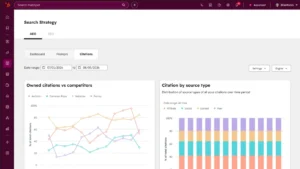
The fundamental shift in search behavior has moved the goalposts for marketing teams. While search engine optimization (SEO) traditionally focused on blue links and organic traffic, AEO focuses on "citations"—the specific URLs and sources that AI agents prioritize when synthesizing an answer. This transition has been accelerated by the integration of conversational search into daily workflows, with platforms like Perplexity and ChatGPT’s Search function becoming primary information gateways.
The challenge for marketing leaders is that AI responses are non-deterministic; the same prompt can yield different results across sessions, platforms, and geographies. Consequently, companies are increasingly turning to dedicated AEO platforms to gain visibility into this "black box" of AI citations. Scrunch and Peec AI have responded to this demand with distinct architectural approaches, reflecting different stages of organizational maturity.
Structural Divergence in Data Collection
The primary technical differentiator between the two platforms lies in their data acquisition strategies. Scrunch employs a hybrid model that combines browser automation with official platform APIs. By choosing the method that best reflects a real-world consumer interaction for each specific engine, Scrunch provides a granular look at how brands are surfaced. Data is then processed through a proprietary layer that categorizes sentiment and entity extraction, with strict contractual clauses preventing the use of client data to train external models.
Peec AI, by contrast, focuses on UI simulation—interacting with platforms via web interfaces in a manner that mirrors human query submission. This approach is designed to capture the "raw" experience of a user in 80+ countries. By utilizing dedicated infrastructure rather than simply injecting geographic identifiers into prompts, Peec AI claims a higher degree of localized accuracy. For global brands, this distinction is critical, as regional variations in LLM training data can lead to drastically different visibility scores across markets.
The Auditing and Optimization Divide
One of the most consequential differences for teams choosing between these vendors is the approach to site auditing. Scrunch offers a robust, page-level "Deep AI Audit." This feature acts as a diagnostic suite, scoring individual URLs across four dimensions: Access Controls, Content Delivery, Content Quality, and Content Alignment. It provides actionable checklists that allow technical teams to troubleshoot why a specific page is failing to register with AI crawlers.
Peec AI does not offer an equivalent page-level content audit. Instead, its focus remains on "Crawlability" and "Crawl Insights." By integrating with server logs via CDN platforms, Peec AI provides visibility into actual bot traffic patterns. This is an essential distinction: Scrunch offers a diagnostic tool for content optimization, while Peec AI provides a diagnostic tool for access and traffic monitoring. For organizations with legacy websites that are JavaScript-heavy or technically complex, Scrunch’s ability to provide structural fixes is a major value proposition.
Agentic Delivery: The Frontier of AEO
The most advanced feature currently available in this category is "Agentic Delivery," a capability pioneered by Scrunch through its AXP (AI Experience Platform). AXP functions as middleware at the CDN layer, intercepting incoming AI retrieval bots, stripping away unnecessary visual and script-heavy rendering, and serving a clean, semantic HTML version of the page. This allows the site to remain visually rich for human users while becoming perfectly legible for AI crawlers.
![Scrunch vs. Peec AI: Choosing the right AEO tool [2026]](https://53.fs1.hubspotusercontent-na1.net/hubfs/53/Copy%20of%20Featured%20Images_Blog%20Title%20Templates%20(8).png)
Peec AI has not yet introduced an interventional layer of this nature, remaining strictly within the realm of measurement and recommendation. While this lack of intervention keeps the platform simpler and potentially less risky for teams without specialized web operations resources, it positions Scrunch as a more aggressive, "active" partner for enterprises looking to exert direct control over how their brand data is ingested.
Pricing and Scalability Models
The cost of AEO tools is rarely static, as both platforms utilize prompt-based pricing models that can lead to unexpected overages. Scrunch’s pricing is tiered, with an entry-level "Starter" plan that is more robust in its features but gated by engine availability. Notably, users requiring coverage for the full suite of LLMs, including Claude and Gemini, must upgrade to the Enterprise tier. This makes Scrunch an investment specifically for teams with a defined budget for advanced digital infrastructure.
Peec AI offers a more modular pricing structure, which is generally more attractive to mid-market teams or those in the "scaling" phase of their AEO journey. Its "Starter" and "Pro" tiers offer broad engine coverage, including Gemini and others, at a lower price point than Scrunch. The trade-off is the depth of the diagnostic tools; where Scrunch charges for an integrated auditing suite, Peec AI keeps its price lower by focusing on data aggregation and citation analytics.
The Role of HubSpot AEO
The broader market has seen the entry of native solutions like HubSpot AEO, which complicates the competitive landscape. For organizations already embedded in the HubSpot ecosystem, the ability to connect citation data directly to CRM-driven marketing workflows is a compelling alternative. Unlike the standalone, "best-of-breed" tools like Scrunch and Peec AI, HubSpot AEO is designed for consolidation. It offers a free "AI Search Grader" as an entry-level diagnostic, allowing teams to establish a baseline before committing to a paid plan.
However, the "native" approach has limits. HubSpot AEO currently lacks the deep technical auditing capabilities of Scrunch and the specialized, granular source-classification of Peec AI. For enterprises that require high-level governance, SOC 2 Type II compliance, and complex agentic delivery, the standalone platforms remain the gold standard.
Strategic Implications and Implementation
For a marketing team at the "Early-to-Scaling" stage, the objective should be to establish a 30-to-60-day window of trend data before acting on any individual citation. Both platforms provide the necessary analytics to identify "Competitive Gaps"—sources where a competitor is cited but the brand is not—which is the lowest-hanging fruit in an AEO program.
The decision-making process should ultimately be guided by two questions:
- Does the team have the capacity to act on technical audits? If yes, Scrunch’s auditing suite offers a clear return on investment. If the team is focused on PR, community outreach, and content creation, Peec AI’s "Actions" feature provides more relevant, non-technical guidance.
- What are the hard procurement requirements? If the organization requires SOC 2 Type II compliance and SSO, Scrunch currently holds a verified advantage, whereas Peec AI’s certification status should be confirmed directly with their sales team during the procurement phase.
Conclusion
As AI models continue to evolve, the distinction between these tools will likely blur. We are moving toward a period where AEO is not a "side project" but a core component of the digital marketing stack. Currently, Scrunch is best suited for organizations that view AEO as a technical, infrastructure-heavy challenge requiring site-level intervention. Peec AI is better positioned as a flexible, data-driven intelligence layer for teams that need broad engine coverage and clear, actionable insights for PR and content teams. Regardless of the choice, the data suggests that brands that fail to measure their AI visibility today will be at a significant disadvantage as AI search becomes the dominant interface for information discovery. The key to success lies in consistent monitoring and the realization that citation share is a leading indicator of long-term brand authority.
Related posts: