The High Cost of Human Error in Digital Advertising Lessons from a 1000 Pound Meta Ads Mistake and the Future of PPC Management

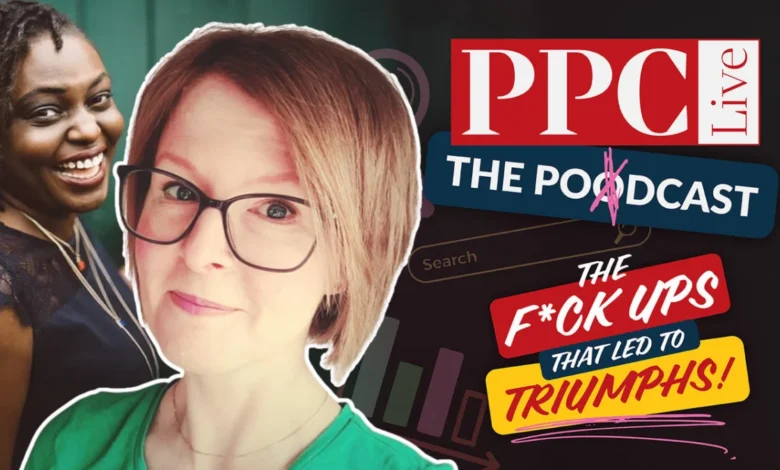
The digital advertising landscape is governed by complex algorithms and sophisticated automation, yet the most significant financial risks often stem from the most basic human actions. During a recent episode of PPC Live the Podcast, hosted by Anu Adegbola, veteran Google Ads and Meta specialist Heather Robinson detailed a cautionary tale that highlights the fragility of campaign management. What was intended to be a modest £50 weekend promotion on Meta’s social platforms ballooned into an unintended expenditure of over £1,000, a mistake that went unnoticed for three weeks. This incident serves as a critical case study for performance marketers, illustrating how complacency, the absence of rigid protocols, and the nuances of platform interfaces can lead to substantial financial discrepancies.
The error occurred during a routine campaign setup on Meta Ads Manager. Robinson, an experienced practitioner with nearly a decade of experience at the time of the incident, intended to set a "Lifetime Budget" of £50 for a short-term weekend burst. In the Meta interface, the budget toggle defaults to "Daily Budget" or "Lifetime Budget" depending on previous account history or specific campaign objectives. Robinson inadvertently left the setting on "Daily Budget" while entering the £50 figure. Consequently, instead of spending £50 over the course of the entire weekend, the platform was authorized to spend £50 every single day.
The financial impact was compounded by a lack of post-launch monitoring. Because the campaign was viewed as a minor, "set-and-forget" task, it was not revisited after it went live. The campaign continued to run well past its intended end date because no hard end date had been successfully integrated with a lifetime cap. It was only three weeks later, while Robinson was preparing data for a face-to-face client meeting, that the £1,050 total spend was discovered.
The Psychology of Professional Complacency
The primary driver of this error was not a lack of technical proficiency, but rather the psychological phenomenon of "expert complacency." Robinson explained that when a professional performs a task thousands of times, the brain begins to process the actions as "second nature," leading to a decrease in active cognitive engagement with the interface. In a busy agency or freelance environment where specialists manage multiple accounts and hundreds of campaigns, the risk of overlooking a single dropdown menu or toggle switch increases significantly.
Industry analysts suggest that "routine-task errors" are among the most common causes of ad spend waste in the PPC (Pay-Per-Click) industry. While large-scale strategic failures often garner more attention, the cumulative effect of small, mechanical errors—such as incorrect geo-targeting, mismatched currency settings, or budget duration mistakes—can cost advertisers millions of dollars annually. Robinson’s experience underscores the reality that even the most seasoned experts are susceptible to these lapses when working under heavy workloads without the safeguard of a second pair of eyes or a formalized review process.
A Chronology of the Overspend and its Resolution
The timeline of the incident provides a clear view of how a small oversight can spiral into a significant issue. On a Friday afternoon, the campaign was launched with the intention of running through Sunday. By Monday morning, the campaign had already spent £150—triple the intended budget—but because the specialist was focused on other high-priority client deliverables, the account was not audited.
By the end of the second week, the spend had reached £700. The Meta algorithm, seeing a consistent daily budget, continued to optimize for reach and engagement within those parameters. Finally, in the third week, during a pre-meeting audit, the discrepancy was identified. At this juncture, Robinson faced a critical professional crossroad: attempt to obscure the mistake through creative reporting or provide full disclosure.
Choosing the latter, Robinson addressed the overspend directly during a face-to-face meeting with the client. She accepted full responsibility, bypassed excuses regarding the platform’s user interface, and presented a plan to ensure such an error could never recur. This transparency proved to be the foundation of a long-term partnership. Despite the initial frustration regarding the lost capital, the client valued the honesty and the professional integrity displayed. Today, nearly ten years after the incident, the client remains a part of Robinson’s portfolio, demonstrating that in the service industry, trust is often forged through the successful navigation of crisis rather than the maintenance of a flawless, but perhaps distant, record.
Structural Solutions: Checklists Over Confidence
The immediate result of the £1,000 error was a complete overhaul of Robinson’s campaign launch workflow. She transitioned from a "confidence-based" model—relying on her experience to get things right—to a "process-based" model. Every campaign, regardless of size or complexity, now must pass through a structured, multi-point checklist before being published.
A standard professional PPC checklist typically includes:

- Budget Verification: Confirming Daily vs. Lifetime settings and currency accuracy.
- Bidding Strategy: Ensuring the bid cap or target CPA (Cost Per Acquisition) aligns with the client’s goals.
- Targeting Parameters: Double-checking geographic inclusions/exclusions and audience segments.
- Conversion Tracking: Verifying that the "Thank You" page or event trigger is firing correctly.
- Ad Creative and Links: Testing all destination URLs and checking for typos in ad copy.
- End Dates: Setting a hard stop for seasonal or short-term promotions to prevent "evergreen" spend.
Robinson noted that while she occasionally utilizes Artificial Intelligence (AI) to provide a "second opinion" on campaign structures, she remains firm that manual human review is the only reliable way to catch the nuances that automated systems might miss.
The Broader Crisis of Conversion Tracking
Beyond individual budget errors, Robinson highlighted a more systemic issue currently plaguing the digital marketing industry: incorrect conversion tracking. This problem has been exacerbated by the industry-wide transition from Universal Analytics (UA) to Google Analytics 4 (GA4). Many businesses, forced to migrate before the July 2023 sunsetting of UA, implemented tracking codes without a deep understanding of the new event-based model.
Robinson cited an example of an e-commerce client that had spent an entire year optimizing its campaigns toward the wrong metric. The account was set to track "site search" as its primary conversion goal rather than "completed purchase." As a result, Google’s machine learning algorithms were successfully finding users who liked to browse and search the site but had no intention of buying. When the tracking was finally corrected, the account’s "intelligence" was essentially reset to zero, as the historical data was useless for driving revenue.
Data from various industry audits suggests that up to 50% of small-to-medium business (SMB) ad accounts have significant flaws in their conversion tracking. When an account optimizes for the wrong signal, it doesn’t just waste money in the short term; it "trains" the platform’s AI to seek out low-value traffic, creating a cycle of diminishing returns that can be difficult to break.
AI as an Assistant, Not a Pilot
The conversation also touched upon the role of AI in modern advertising. Both Google and Meta have pushed "Black Box" solutions—such as Performance Max and Advantage+ campaigns—where the platform takes near-total control over ad placement, creative combinations, and bidding.
Robinson’s stance is that AI is a powerful productivity tool but a poor strategist. She utilizes AI to analyze vast search term reports, identifying negative keyword opportunities and patterns in consumer behavior that would take a human hours to compile. However, she warned against the "lazy" use of AI-generated ad copy. Many advertisers now allow Google’s AI to write their headlines and descriptions automatically, often resulting in repetitive, bland, or nonsensical messaging that fails to resonate with the brand’s unique value proposition.
The consensus among high-level PPC specialists is that the role of the marketer is shifting from "executioner" to "editor." The specialist must oversee the AI, ensuring the inputs (data and creative) are high-quality and the outputs (ads and spend) align with the overarching business strategy.
Implications for the Future of PPC
The lessons learned from a £1,000 mistake in 2015 remain more relevant than ever in 2024. As ad platforms become more complex and automated, the "surface area" for potential errors increases. The reliance on machine learning means that a single setting error can be amplified by an algorithm that is designed to spend money as efficiently as possible—even if that spend is directed toward the wrong goal.
For the PPC industry, the implications are clear:
- Transparency is the ultimate retention tool: Clients understand that mistakes happen; they do not understand or forgive a lack of accountability.
- Process beats talent: A junior marketer with a rigorous checklist is often safer for a client’s budget than a senior marketer who relies solely on intuition.
- Data Integrity is non-negotiable: Before a single pound is spent on media, the tracking infrastructure must be audited and verified.
Robinson’s reflection serves as a reminder that expertise is not the absence of mistakes, but the ability to learn from them, build better systems, and maintain the human integrity that no algorithm can replicate. As the industry moves further into an AI-dominated era, the "human in the loop" remains the most critical component of any successful advertising strategy.