TreeSize’s Perpetual License Policy Shift Sparks Debate Amidst Subscription Economy Surge

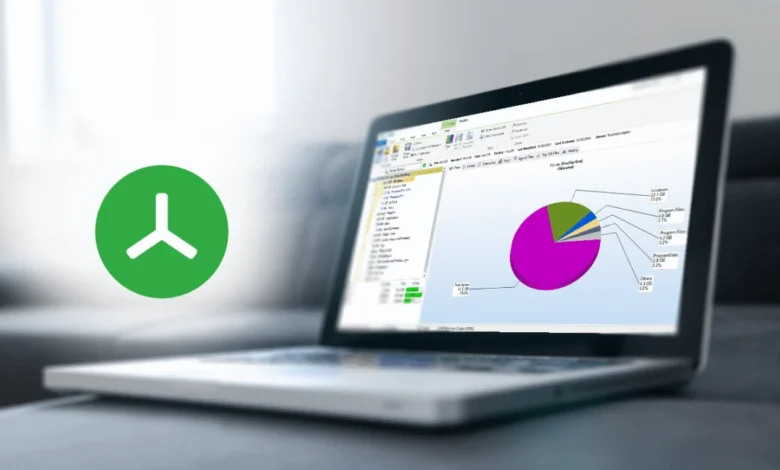
The software industry’s accelerating pivot towards subscription models has ignited a fresh wave of scrutiny, with the recent policy adjustments by disk space analysis tool TreeSize drawing significant attention and criticism. While JAM Software, the developer behind TreeSize, asserts that its long-standing practice of discontinuing indefinite access to older versions and their associated license keys is rooted in customer risk mitigation and operational sustainability, the move has underscored a widening chasm between consumer expectations of perpetual licenses and the evolving business realities of software vendors. This development resonates with a broader trend where companies are increasingly prioritizing recurring revenue streams, often at the expense of traditional one-time purchase models that historically guaranteed lifelong access.
TreeSize, a popular utility for analyzing and managing disk space, has historically offered perpetual licenses. However, the company’s policy, which limits the indefinite availability of download links and license keys for older versions, has become a focal point of user dissatisfaction. According to a statement from a TreeSize representative, the decision to restrict indefinite downloads is primarily driven by security and operational concerns. "Making these available for download indefinitely and without restriction is something we consider a risk to our customers, particularly in business environments," the representative explained. "There’s also the technical and organizational overhead of maintaining and supporting old versions and their associated keys indefinitely."
This rationale, while presented as a long-standing policy, has encountered considerable pushback from users who interpreted "perpetual license" as a guarantee of lifelong access to the software they purchased, including the ability to reinstall it at any time. The backlash highlights a fundamental disconnect in the understanding of software licensing in an era of rapid technological change and shifting business models. Many consumers, particularly those accustomed to purchasing software outright, perceive perpetual licenses as an assurance of ownership and enduring utility. When vendors alter their policies in ways that limit this perceived ownership, it often leads to frustration and a sense of being misled.
Proactive Notification Amidst Shifting Landscape
In an effort to mitigate user inconvenience and prevent unexpected loss of access, TreeSize claims to proactively inform customers about the end of their maintenance periods. "To make sure customers aren’t caught off guard, we proactively notify them by email, well before their maintenance ends, to back up their installation file and license key themselves," stated the company representative. "This is meant to ensure no one loses access to software they’ve already purchased." This proactive communication strategy, while intended to be helpful, does not entirely quell the concerns of users who may have purchased the software years ago and might not be actively monitoring their email for such notifications. The onus, therefore, subtly shifts to the customer to preserve their digital assets in perpetuity, a responsibility not always clearly understood at the point of sale.
The Subscription Conundrum: Value Proposition Under Scrutiny
The debate surrounding TreeSize’s policy also brings into sharp focus the question of whether a utility like a disk space analyzer is a suitable candidate for a subscription model. Critics point to the existence of capable free alternatives, such as WinDirStat, which offer core functionalities for managing disk space without any recurring cost. This raises a fundamental question about the perceived value proposition of a subscription for such software, especially for individual users or small businesses with limited budgets.
The company acknowledged the "frustrating" nature of the policy change for some users. When questioned about online requests for refunds, the representative maintained a firm stance: "since our customers do receive what was agreed, namely indefinite use of the software version they purchased, we don’t consider a refund to be warranted." This position underscores the company’s interpretation of the original purchase agreement, focusing on the perpetual right to use the specific version acquired, rather than an ongoing right to download and support any version indefinitely.
Free vs. Paid: Feature Sets and Business Use Cases
While a free version of TreeSize is available, it comes with significant limitations. Crucially, it lacks advanced features such as the ability to search for duplicate files, deduplicate redundant files, and compare disk space usage over time. Furthermore, the free version is explicitly not licensed for business use, directing commercial entities towards the paid offerings. This tiered approach, common in the software industry, aims to cater to different user segments while encouraging upgrades for those requiring more robust functionality. However, the restrictions on the free version, combined with the policy changes for paid versions, can create a perception of diminishing value for customers.
The Inexorable March of the Subscription Economy
TreeSize’s current predicament is emblematic of a broader trend sweeping across the software industry: the pervasive adoption of the subscription economy. Over the past decade, software vendors have increasingly gravitated towards subscription-based revenue models, driven by the allure of predictable and recurring income streams. This shift offers companies greater financial stability, allowing for more consistent investment in research and development, ongoing support, and product updates. The pursuit of "recurring revenue" has become a dominant strategic objective for many publicly traded software companies, influencing their product roadmaps and licensing strategies.
For JAM Software, the desire to "continue offering our customers a relevant, well-maintained product over the long term" is a stated objective behind their operational adjustments. The challenging economic climate further amplifies the need for such predictability. As the representative articulated, "The broader economic environment is more challenging today than it was a few years ago, and we feel that too as a software vendor. To continue meeting our own standards and our responsibility to business customers who rely on high-quality software, we are placing greater emphasis on predictability in development and support. A subscription model gives us that predictability in a way one-time purchases do not." This statement encapsulates the core business imperative driving the industry’s transformation.
The Impact on Customer Trust and Loyalty
The TreeSize incident, while specific, reflects a growing tension between software vendors and their user base. For consumers, the shift from ownership to a perpetual rental model can feel like a loss of control and a reduction in the long-term value of their investments. This can erode customer trust and loyalty, especially when such changes are perceived as being implemented retroactively or without sufficient transparency.
The implications of this trend extend beyond individual software purchases. As more critical business tools and personal applications move to subscription models, the cumulative cost for consumers and businesses can become substantial. This necessitates careful budgeting and a thorough evaluation of the ongoing value proposition of each subscription. Furthermore, the reliance on continuous internet connectivity for license validation in many subscription models raises concerns about long-term accessibility, particularly in regions with unreliable internet infrastructure or for users who prefer to maintain offline functionality.
Historical Context and Precedents
This is not an isolated incident. The software industry has witnessed similar shifts and controversies in the past. For instance, Adobe’s transition from its Creative Suite (perpetual licenses) to the Creative Cloud (subscription model) in 2013 was met with significant user outcry. Many long-time users felt compelled to adopt a subscription to access the latest features, despite having previously purchased software they considered to be their own. Similarly, companies like Microsoft have experimented with different licensing models for their flagship products, balancing perpetual licenses with subscription options. The VMware incident, where perpetual license owners reportedly faced difficulties downloading security patches, further illustrates the potential vulnerabilities and frustrations associated with managing older software versions in a rapidly evolving security landscape.
The Future of Software Licensing: A Balancing Act
The challenge for software vendors like JAM Software lies in navigating the transition to recurring revenue models while maintaining customer satisfaction and trust. Transparency, clear communication, and a genuine effort to provide ongoing value are paramount. For consumers, a greater understanding of licensing terms and the evolving economics of software development is crucial. As the subscription economy continues to mature, consumers may increasingly demand more flexible licensing options, stronger guarantees of long-term access, and a clearer articulation of the value provided by subscription services. The TreeSize case serves as a valuable case study, highlighting the complexities and potential pitfalls of this ongoing transformation in the software industry. The industry’s ability to strike a balance between its own economic imperatives and the enduring expectations of its customers will ultimately define its future trajectory.