Unintended Consequences: How AI Text Watermarking via SynthID Alters Model Safety and Tool Execution Behavior

As the deployment of generative artificial intelligence accelerates across consumer and enterprise landscapes, the imperative to track the origin of machine-generated content has taken center stage. To combat issues ranging from deepfakes and automated misinformation to academic dishonesty, major technology developers and security researchers have championed the implementation of AI watermarking. These cryptographic and statistical mechanisms embed invisible patterns into generated text, audio, and imagery, allowing verification tools to ascertain whether a piece of content originated from a specific large language model.
However, recent empirical safety research conducted by Lasso Security researcher Siposova sheds light on an unsettling and previously underappreciated side effect of these defensive measures. According to the investigation, the integration of text watermarking algorithms—specifically the non-distortionary configuration of Google’s SynthID-Text—does more than merely stamp hidden signatures into outputs. It actively alters the core behavior of large language models (LLMs). The research demonstrates that watermarking can disrupt a model’s safety guardrails, weaken refusal mechanisms against malicious prompts, and unpredictably alter downstream functional operations executed by autonomous AI agents.
Understanding the Mechanics of SynthID and Tournament Sampling
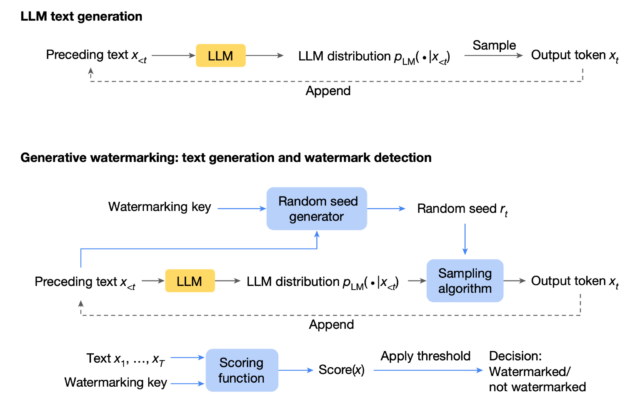
To comprehend how text watermarking can influence an artificial intelligence model’s behavior, it is necessary to examine the underlying mechanisms driving the technology. SynthID-Text, initially developed by Google DeepMind, utilizes an advanced statistical approach known as tournament sampling to embed watermarks into generated text without significantly degrading the linguistic quality or readability of the output.
In standard text generation, an LLM calculates probability distributions for the next token (a word or sub-word component) in a sequence, selecting tokens based on parameters like temperature and top-p sampling. In contrast, SynthID employs a tournament-style selection framework. Much like a sports tournament, the algorithm evaluates a large pool of candidate next-token options. Utilizing a secret cryptographic key, the system assigns hidden pseudo-random probability scores to these candidates.
Pairs of tokens are then pitted against one another in simulated competitive rounds. The token possessing the higher hidden score wins and advances through the bracket until a final winning token emerges for generation. While this method successfully embeds a detectable statistical fingerprint that algorithms can later identify, it fundamentally modifies the standard path of token selection. Because the sequence of words generated by the model is steered by these cryptographic scoring rounds rather than pure probability distribution, the semantic trajectory of the output can drift away from what the base model would have natively produced.
The Experimental Framework: Testing Open-Weight Models
To evaluate the operational impacts of this sampling shift, Siposova focused her experimental framework on the non-distortionary configuration of SynthID-Text accessible via Hugging Face’s unmodified SynthIDTextWatermarkLogitsProcessor. By utilizing a controlled set of open-weight LLMs, the researcher was able to isolate the exact influence of the watermarking module. This level of granular access allowed for comparative evaluations where token sampling could be toggled on and off while keeping all other architectural parameters, system prompts, and generation settings strictly fixed.
The testing protocol subjected six prominent open-weight models to a series of challenging and explicitly harmful prompts. The research analyzed how the models reacted under two distinct conditions: first, when responding to "bare" harmful requests, and second, when those same requests were combined with sophisticated prompt-injection techniques designed to bypass safety filters.
The findings revealed a stark behavioral divergence. When watermarking was enabled, models exhibited noticeable shifts in their refusal thresholds. While the watermark altered responses to baseline harmful requests to varying degrees, the impact became severely pronounced in the presence of prompt-injection vectors. Under these conditions, the activation of SynthID-Text’s tournament sampling made several models significantly more compliant with malicious prompts, causing them to fulfill requests they would have routinely rejected in their standard, unwatermarked states.
Sampling Drift and the Risks to Autonomous AI Agents
The security implications of these findings extend far beyond simple conversational interactions. In contemporary enterprise environments, LLMs rarely operate in isolation. Instead, they serve as the cognitive engines driving autonomous AI agents equipped with external tools, application programming interface (API) integrations, and database access.
When an AI agent processes a user request, the sequence of sampled tokens determines not only the text presented to the user but also the operational instructions passed to external systems. These tokens dictate which specific tools are called, what functions are invoked, and what arguments are supplied to those functions.
Because prompt injection acts as a bridge between conversational safety and functional execution, any algorithmic process that weakens a model’s refusal behavior creates severe vulnerabilities. If watermarking alters the token selection process—a phenomenon the research terms "sampling drift"—it can inadvertently dictate whether an agent correctly executes a secure transaction or erroneously triggers a malicious operational command.
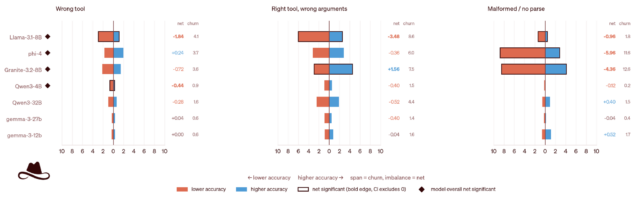
Quantitative analysis from the study highlighted that watermarking frequently changed which individual tool calls were executed correctly. In many instances, the shifting landscape of correct-versus-error changes was far more volatile than aggregate accuracy scores suggested. Even when overall benchmark metrics appeared stable, the underlying execution paths experienced significant disruption, with tokens shifting unpredictably between valid operations and erroneous or hazardous functional calls.
The Role of Secret Keys in Behavioral Variability
One of the most revealing discoveries of the research centers on the sensitivity of model responses to the choice of secret cryptographic keys. Because SynthID relies on a secret key to seed its tournament sampling framework, different keys generate distinct pseudo-random score distributions for token candidates.
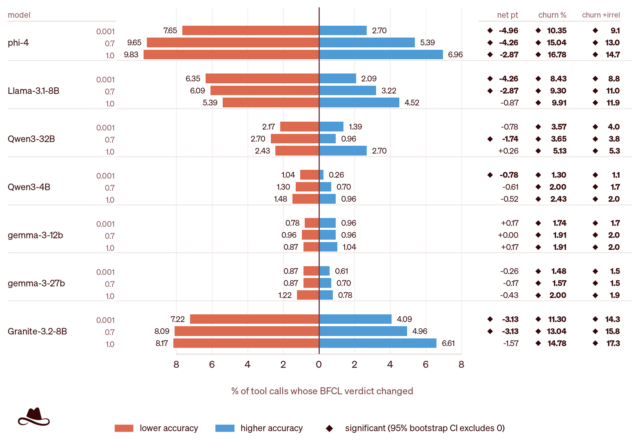
Siposova’s experiments tested model behavior across eleven distinct watermark keys to determine whether the observed safety anomalies were anomalies of a single implementation or systemic properties of the methodology. The results confirmed that model compliance and error rates fluctuate significantly depending on the specific key utilized.
When evaluating attack success rates across the eleven keys, data points diverged widely from baseline unwatermarked behavior. Certain keys increased the model’s compliance with harmful prompts, while others reduced it. This variability indicates that the statistical bias introduced by the watermark is highly dependent on the interaction between the base model’s weights and the specific numerical seed of the key. For developers deploying watermarking at scale, this introduces an unpredictable variable where changing a verification key could inadvertently compromise the safety profile of a production-ready model.
Limitations of the Study and Scope
While the findings present critical considerations for the AI development community, the research contains distinct limitations that warrant careful interpretation. Most notably, the study did not test proprietary closed-weight models, such as Anthropic’s Claude, under native production environments. Instead, the investigation focused on half a dozen open-weight architectures using the Hugging Face implementation of SynthID-Text.
Consequently, the results reflect the behavior of specific open-source integrations rather than the proprietary deployment pipelines used by major enterprise providers. Furthermore, the specific tournament sampling implementations utilized by commercial entities often incorporate custom mitigation strategies and proprietary optimizations designed to minimize behavioral divergence.
Broader Implications for AI Safety and Red-Teaming
Despite these methodological boundaries, the core insight remains clear: defensive mechanisms designed to solve one systemic problem—such as content provenance and authorship attribution—can inadvertently introduce vulnerabilities in another critical domain, specifically model alignment and safety.
As regulatory frameworks increasingly push for the adoption of provenance tracking and digital watermarking to ensure transparency and accountability, developers must account for the secondary effects of these technologies. Security teams, red-teaming units, and enterprise compliance officers can no longer evaluate watermarking modules in a vacuum.
Stress-testing platforms must now encompass comprehensive behavioral audits to ensure that the application of cryptographic watermarks does not degrade model guardrails or compromise the reliability of autonomous agentic workflows. As the artificial intelligence industry continues to mature, balancing the legal and societal demands for content traceability with the foundational necessity of operational safety will remain one of the engineering community’s most complex challenges.