Mastering Data Transformation: Corporate Finance Institute Launches Comprehensive Introduction to Power Query Course

In an era defined by data-driven decision-making, finance professionals, business analysts, and corporate accountants spend a significant portion of their daily routines wrangling messy spreadsheets. Recognizing the growing demand for automated and repeatable data preparation techniques, the Corporate Finance Institute (CFI) has officially launched its comprehensive educational offering, the Introduction to Power Query course. Taught by industry expert Joseph Yeates, this specialized Level 3 program is designed to bridge the gap between raw, unstructured data and polished, actionable business intelligence. Spanning approximately five hours of self-paced, online instruction, the curriculum targets both absolute beginners and seasoned Microsoft Excel and Power BI users eager to modernize their reporting workflows.
The modern corporate landscape requires rapid turnaround times for financial reporting, budgeting, and forecasting. However, data analysts frequently encounter operational bottlenecks caused by legacy systems, disparate data sources, and manually intensive spreadsheet manipulation. Traditional data cleaning methods—such as ad-hoc copy-pasting, complex nested formulas, and manual text-to-column splitting—are notoriously error-prone and inefficient. When source data updates, analysts are often forced to repeat these tedious manual steps from scratch, increasing the risk of human error and delaying critical business insights.
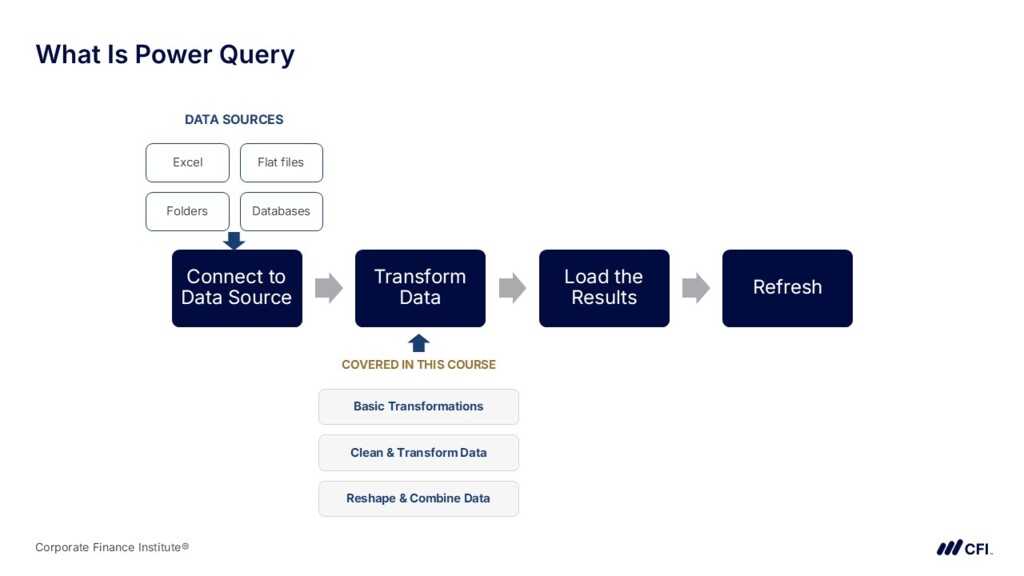
Power Query, a built-in data connectivity and transformation technology available within Microsoft Excel and Power BI, serves as a powerful antidote to these operational inefficiencies. By allowing users to connect, combine, and refine data across a wide variety of sources, Power Query records every transformation step as a repeatable query. This foundational shift transforms chaotic, manual data preparation into a streamlined, one-click refresh process. CFI’s newly introduced course aims to demystify this powerful tool, providing learners with a structured, analyst-friendly approach to mastering data hygiene.
Structuring the Learning Journey: Curriculum and Core Objectives
The curriculum for the Introduction to Power Query course has been meticulously structured to guide students from foundational concepts to advanced, practical application. Organized into seven distinct modules, the program covers the entire lifecycle of a data preparation workflow.
The journey begins with an essential introduction that establishes the strategic importance of data preparation in modern analytics ecosystems. Students are quickly introduced to basic transformations, learning how to connect to various data sources—ranging from flat files and databases to web data—and establish initial table structures. As the coursework progresses into cleaning and transforming data, learners tackle common real-world data anomalies, including handling missing values, standardizing text casing, managing date formats, and removing duplicate records.
A critical component of effective data analysis is proper table structuring. In the reshaping and combining data module, students learn advanced techniques such as unpivoting wide datasets, merging separate tables based on common keys, and appending data from multiple sources. These skills are vital for preparing data to meet the rigorous demands of relational data models and dynamic dashboards.
The curriculum culminates in building repeatable workflows, where students synthesize their knowledge to create robust pipelines that can withstand recurring data updates without breaking. Following this, learners complete a comprehensive course wrap-up and a qualified assessment. This final examination requires students to demonstrate their technical proficiency through multiple-choice questions, fill-in-the-blanks, and practical Excel exercises, achieving a minimum passing score of 80 percent to earn their certificate of completion.
Integration with Professional Certification Programs
Rather than existing as a standalone elective, the Introduction to Power Query course has been strategically integrated into several of CFI’s most prestigious professional development and credentialing pathways. Students enrolled in the program can simultaneously earn valuable continuing professional education (CPE) credits while advancing toward industry-recognized designations.
The course forms an integral component of the Data Analysis in Excel Specialization and the Business Intelligence Analyst Specialization. Furthermore, it directly supports candidates pursuing the Financial Planning and Analysis (FP&A) Professional designation, the Macabacus Specialist program, and the cutting-edge AI Finance Professional (AIFP) certification. By embedding Power Query mastery into these comprehensive tracks, CFI ensures that modern finance and analytics professionals possess the foundational technical capabilities required by top-tier employers.
Software Accessibility and Technical Requirements
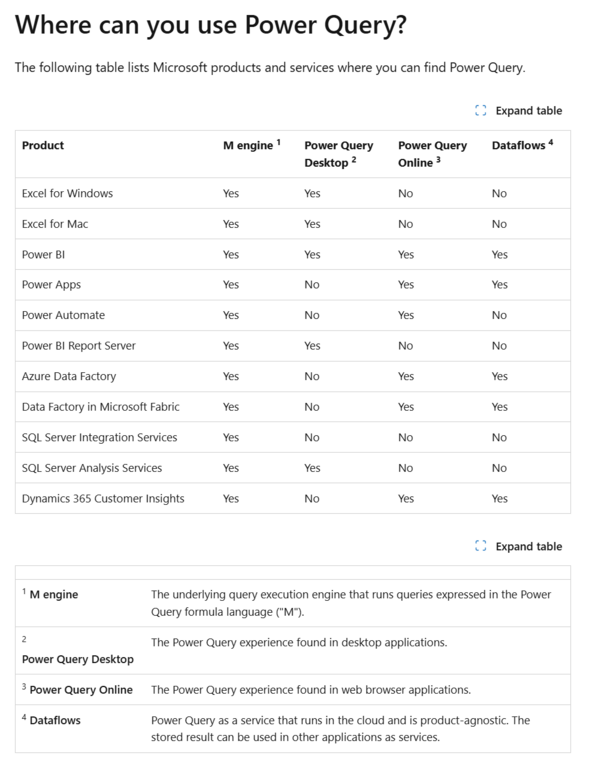
A key consideration for any software-based educational program is accessibility. Power Query is natively integrated into Microsoft Excel for Windows, Excel for Mac, and Microsoft Power BI. However, functionality and user interfaces can vary significantly depending on the specific operating system and software version utilized.
CFI strongly advises all prospective students to verify their software compatibility prior to enrollment. While Power Query is fully supported across modern versions of Excel (2016 and newer) and Microsoft 365 environments, certain advanced transformation capabilities may differ between Windows and macOS platforms. To assist students in auditing their technical setup, the institution provides direct reference links to official Microsoft documentation detailing platform-specific feature availability.
In addition to spreadsheet software, students require a stable internet connection to access the online learning management system, stream video modules, and download the comprehensive library of practical workbook templates and sample datasets. These downloadable assets allow learners to practice hand-on exercises that simulate actual workplace scenarios.
Early Reception and Student Feedback
Since its release, the Introduction to Power Query course has garnered widespread acclaim from professionals across diverse industries. Early cohorts have praised the practical relevance of the curriculum and its direct applicability to daily enterprise challenges.
Owen Crichlow, a recent program participant, highlighted the immediate value added to his professional routine. "This was truly an informative course," Crichlow remarked. "I did the Fundamentals to Power Query and because of the change in course, I had to take the Introduction to Power Query. I am glad I did, as there were many new things I’ve learned that I can use in my current job."
Another student, Steve McKenzie, emphasized the broader strategic utility of the tool. "I learned this is a very powerful and useful tool with data analysis," McKenzie noted. "Content and instructor were great."
These sentiments reflect a broader industry trend: as data volumes continue to expand exponentially, the ability to clean and structure data efficiently is no longer an optional skill reserved for dedicated data engineers. It has become a core competency expected of all forward-thinking financial analysts, accountants, and business consultants.
Broader Industry Implications and Future Outlook
The launch of CFI
’s Power Query curriculum underscores a fundamental shift in corporate finance and business administration education. Historically, accounting and finance curricula focused heavily on ledger reconciliation, financial modeling theory, and static statement analysis. Today, the velocity of business transactions demands that finance professionals double as agile data engineers capable of building scalable reporting architectures.
By democratizing access to advanced data transformation tools, programs like the Introduction to Power Query empower individual contributors to eliminate hours of repetitive administrative labor. This time savings allows analysts to pivot away from manual data wrangling and dedicate their expertise to high-value strategic analysis, forecasting, and decision support.
As organizations increasingly migrate their reporting infrastructure to cloud-based business intelligence platforms like Power BI and advanced Excel environments, the mastery of query languages and automated data pipelines will only grow in importance. Through this targeted educational offering, the Corporate Finance Institute continues to equip the next generation of financial leaders with the practical, technology-driven skills necessary to thrive in an increasingly complex global economy.