Global Finance Certification Standards Evolve as the Financial Modeling & Valuation Analyst Credential Gains Worldwide Recognition


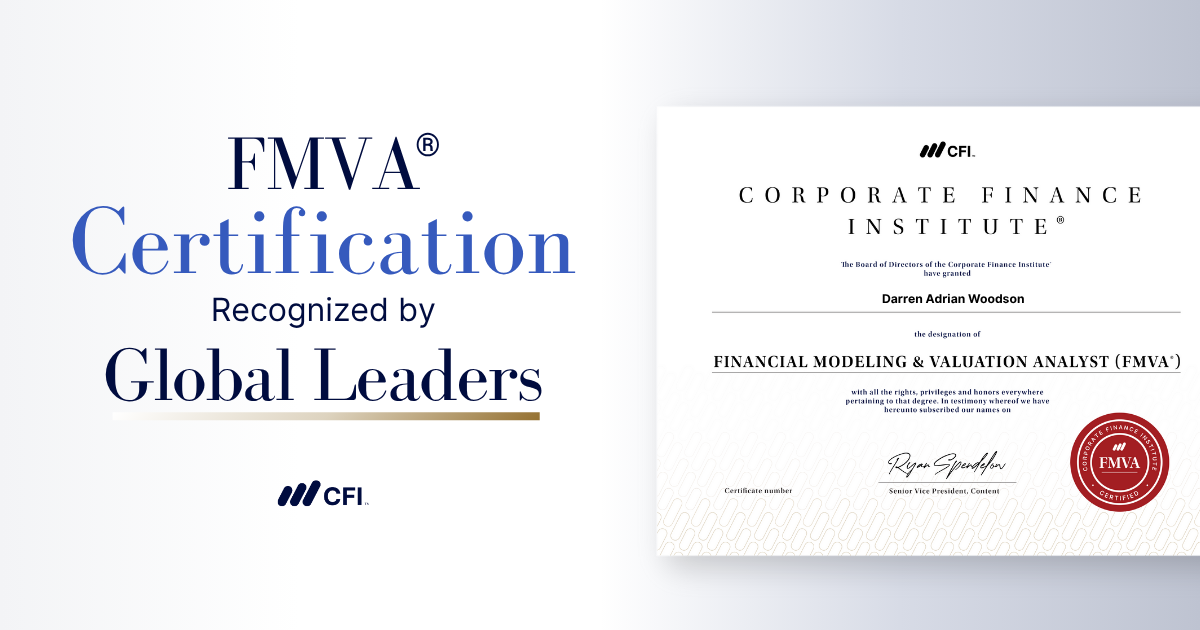
The corporate finance landscape has undergone a significant transformation over the past decade, driven by the rapid evolution of technology, the integration of artificial intelligence into financial workflows, and an increasing demand for practical, desk-ready analytical skills. At the center of this shift is the Financial Modeling & Valuation Analyst (FMVA) certification, a globally recognized credential managed by the Corporate Finance Institute (CFI). Trusted by more than three million finance professionals across over 200 countries, the FMVA program has emerged as a primary benchmark for assessing core competencies in financial modeling, valuation, corporate accounting, and financial planning and analysis (FP&A).
Background and Industry Context
For decades, traditional finance education relied heavily on theoretical frameworks taught in academic institutions. While these programs provided a solid foundation in macroeconomic theory and corporate finance principles, newly minted graduates and career transitioners frequently encountered a steep learning curve upon entering the workforce. Hiring managers in investment banking, private equity, corporate development, and FP&A routinely reported that incoming analysts required extensive on-the-job training to master practical tools such as advanced Microsoft Excel modeling, dynamic three-statement projections, and discounted cash flow (DCF) valuation.
Recognizing this operational gap, industry practitioners founded the Corporate Finance Institute to bridge the divide between academic theory and real-world execution. The FMVA designation was specifically engineered to address the day-to-day requirements of working financial analysts. Designed by experienced professionals who have held roles in major financial institutions, the curriculum reflects the exact technical proficiencies required to build auditable financial models from scratch, evaluate corporate acquisitions, and present actionable insights to executive leadership.

Program Structure and Core Curriculum
The FMVA certification is structured as a comprehensive, self-paced learning journey typically requiring between 100 and 120 hours of dedicated study. The curriculum is divided into several distinct phases, ensuring that learners from diverse educational and professional backgrounds can successfully acquire the requisite skill set.
The educational framework begins with optional preparatory courses covering fundamental topics such as Excel formulas for finance, accounting principles, reading financial statements, and corporate finance basics. These modules ensure that all participants—regardless of whether they hold an undergraduate degree in finance or are executing a mid-career transition—possess a uniform foundational baseline.
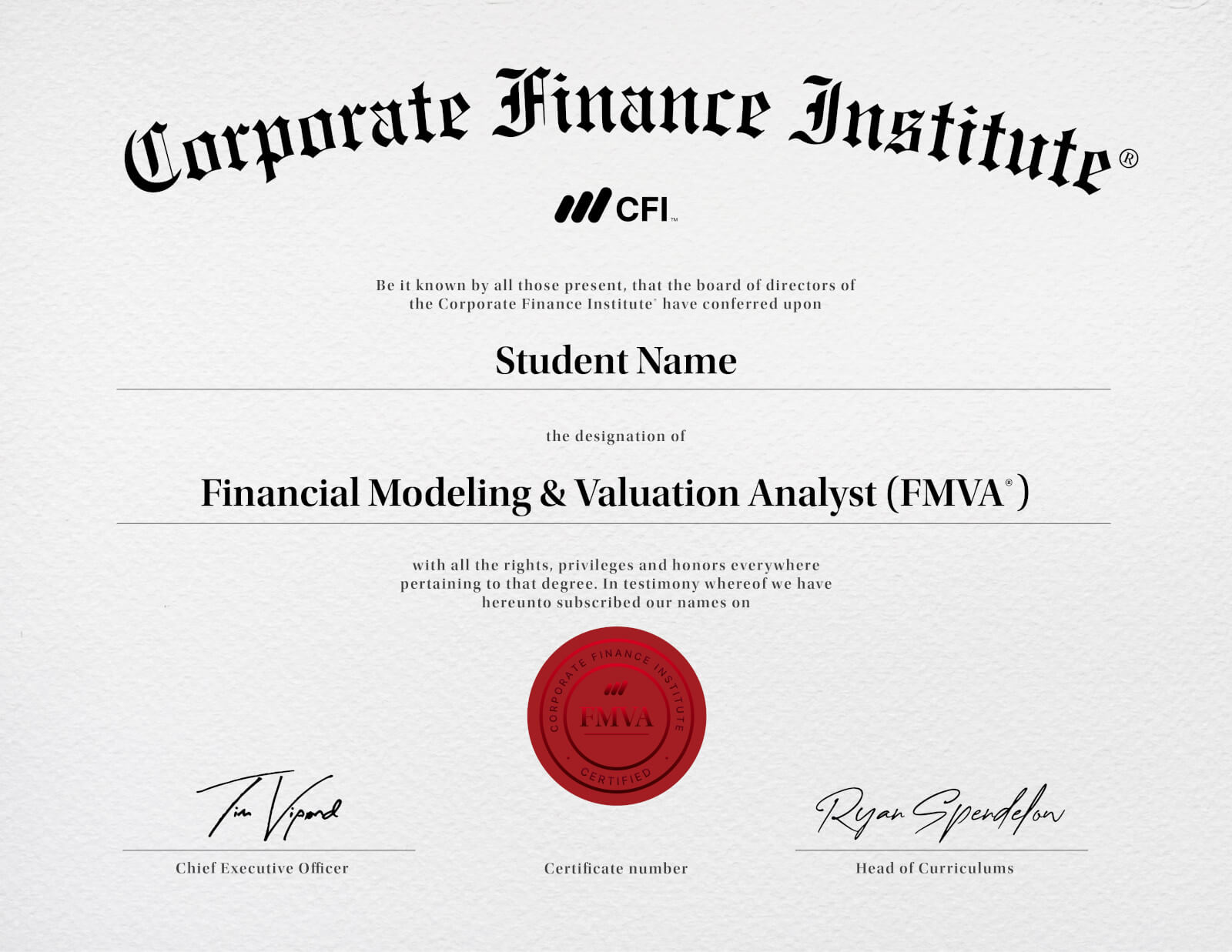
Following the preparatory phase, candidates must complete 15 mandatory core courses. These core modules form the structural backbone of the FMVA credential, focusing on essential disciplines including:
- Financial Analysis Fundamentals and Financial Modeling Guidelines
- Introduction to and Mastery of 3-Statement Modeling, alongside auditing and balancing techniques
- Operational Modeling and Forecasting Methodologies
- Introduction to Business Valuation, including DCF valuation modeling fundamentals and applied modeling
- Comparable Valuation Analysis and Scenario and Sensitivity Analysis in Excel
- Excel Data Visualization, Dashboards, and Professional Pitchbook presentation design via PowerPoint
- Professional Ethics in finance
In addition to the core requirements, learners must select a minimum of three elective courses from a pool of 12 specialized options. These electives allow professionals to tailor their education to niche sectors or advanced disciplines, such as Monthly Cash Flow Modeling, Advanced Excel Formulas, Startup and e-Commerce Valuation, Bank Valuation, Real Estate Financial Modeling, Sell-Side Equity Research, and Strategic Problem Solving.

Furthermore, the program incorporates practical case study challenges that expose learners to real-world scenarios, such as renewable energy solar financial modeling, benchmarking using industry data platforms like IBISWorld, AI-assisted peer group selection, and sell-side earnings analysis.
Integration of Artificial Intelligence in Finance
As artificial intelligence reshapes the global economy, CFI has adapted its curriculum to incorporate modern technological workflows. Modern financial analysts are increasingly expected to leverage automation and AI tools to enhance productivity and reduce manual errors. The FMVA program integrates specialized modules focusing on AI for finance workflows and governance.

Learners are trained to utilize structured AI prompts tailored specifically for financial tasks, enabling them to draft, format, and audit complex three-statement financial models with unprecedented efficiency. This technological integration ensures that credential holders are not only proficient in legacy tools like Excel but are also capable of operating at the cutting edge of digital financial analysis.
Institutional Endorsements and Global Recognition
The credibility of the FMVA program is reinforced by major professional bodies and educational regulatory institutions worldwide. The institution behind the credential maintains registrations and accreditations with key oversight organizations, including the National Association of State Boards of Accountancy (NASBA) in the United States, allowing professionals to earn Continuing Professional Education (CPE) credits. Additionally, the program is recognized by The London Institute of Banking & Finance (LIBF)—a professional body regulated by the Financial Conduct Authority (FCA)—and supported by regional educational bodies.

Major multinational corporations, accounting firms, and financial institutions—including Deloitte, Verizon, ExxonMobil, Boeing, Marriott, and BlackRock—utilize CFI training programs and the FMVA credential for internal talent development and analyst training pipelines.
Career Advancement and Industry Impact
Data compiled from program alumni indicate substantial career mobility following the completion of the certification. More than 75% of learners report significant career advancement, improved job performance, or successful job transitions within months of earning their designation.

Alumni frequently highlight the practical utility of the curriculum during high-stakes recruitment processes. Alonso Saponara Rivva, an Investment Banking Analyst at Goldman Sachs and an FMVA graduate, noted that the program’s comprehensive case studies provided a decisive advantage during his interview process. "I had it open on my second screen while working through the case study, which required building a model and presenting strategic alternatives," Rivva stated, adding that interviewers familiar with the designation spoke highly of its rigorous practical standards.
Similarly, senior-level professionals have embraced the credential to formalize their expertise. Chris Caldwell, a Director of Treasury and a CFA Charterholder who dedicated hundreds of hours to traditional designations, noted that the FMVA provided parallel practical value for workplace execution in a fraction of the time, emphasizing its direct applicability to day-to-day corporate operations.

Comparative Analysis: FMVA versus FPAP
To accommodate different career trajectories within the broader corporate finance sector, professional development programs are increasingly bifurcated. CFI offers a direct comparison between its flagship Financial Modeling & Valuation Analyst (FMVA) credential and its Financial Planning & Analysis Professional (FPAP) certification.
While the FMVA is specifically targeted at individuals who wish to analyze, value, and transact on companies—making it the ideal credential for investment banking, private equity, corporate development, and sell-side equity research—the FPAP credential is tailored for professionals focused on budgeting, forecasting, and steering internal corporate financial performance from within operational finance departments. Both programs maintain identical time commitments (100 to 120 hours), but their respective curricula align with distinct professional pathways.

Future Outlook for Financial Analysts
As capital markets become increasingly complex and data-driven, the demand for verified, standardized analytical skills shows no sign of abating. The FMVA credential exemplifies a broader trend in professional education: the shift toward micro-credentials and competency-based certifications that validate immediate workplace utility over prolonged theoretical study.
By combining rigorous accounting and valuation foundations with modern AI applications and flexible, self-paced digital delivery, programs like the FMVA continue to shape the global standard for financial analyst readiness, ensuring that the next generation of financial professionals enters the workforce equipped to navigate uncertainty, evaluate strategic opportunities, and drive sound business decisions from day one.