The Evolution of Integrated Marketing: Why Media is Becoming the Connective Tissue of Modern Business Strategy

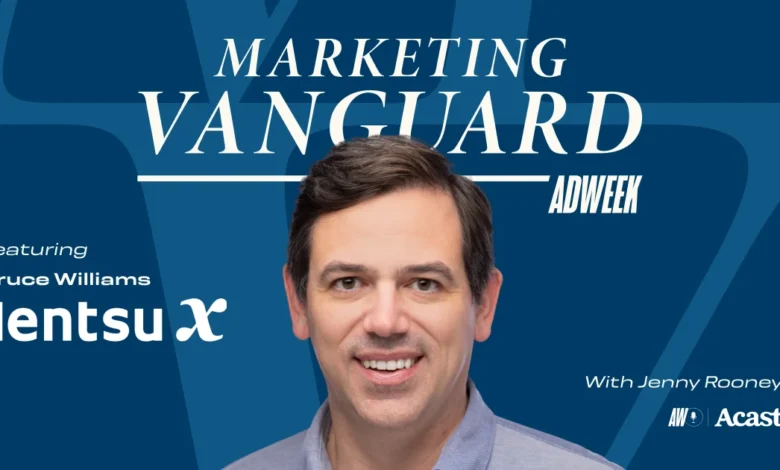
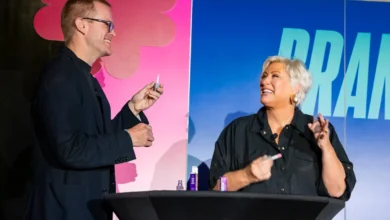
The traditional silos of the marketing world are collapsing, marking the end of an era where media buying was treated as a discrete, standalone function within a brand’s broader commercial strategy. As digital touchpoints proliferate and consumer expectations for seamless experiences reach an all-time high, the role of media has shifted from a mere megaphone for advertising to the central connective tissue linking creative, commerce, CRM, data, and advanced technology. This fundamental transition is the focus of a recent deep-dive discussion on the Marketing Vanguard podcast, where Jenny Rooney sat down with Bruce Williams, CEO of dentsu X North America, to unpack the obsolescence of legacy agency models and the rise of the outcome-based operating system.
The Death of the Standalone Media RFP
For decades, the standard procurement process for marketing services involved the Request for Proposal (RFP)—a document that typically cordoned off media buying from creative strategy and data management. However, the modern marketing landscape has rendered this approach increasingly ineffective. Williams notes that standalone media RFPs are rapidly disappearing, replaced by complex, integrated briefs that demand a holistic approach to business transformation.
Brands are no longer asking, "Can you buy media well?" Instead, they are asking, "Can you help us operate better?" This shift represents a transition from tactical execution to strategic partnership. When a brand initiates a search for agency partners today, they are seeking entities capable of bridging the gap between brand storytelling and transactional commerce. The implication for agencies is profound: the ability to execute high-reach campaigns is now table stakes, while the ability to manage the underlying data infrastructure and CRM integration has become the primary value proposition.
A Chronology of Fragmentation
The history of marketing over the last twenty years has been defined by the pursuit of specialization. In the early 2000s, the emergence of search engine marketing, social media, and digital display led to the rise of specialized agencies. While this era of "best-in-class" expertise allowed for rapid innovation, it also created the very fragmentation that industry leaders are now struggling to dismantle.
- 2005–2012 (The Era of Specialization): Agencies emerged to manage specific channels—SEO firms, social media agencies, and programmatic trading desks.
- 2013–2018 (The Rise of the Holding Company Integration): Large holding companies began acquiring these specialized agencies to offer "all-under-one-roof" services, though, in practice, these remained largely siloed operations.
- 2019–2023 (The Data-Driven Pivot): The focus moved toward CRM and first-party data, as brands realized that media performance was inextricably linked to their ability to recognize and serve the customer across platforms.
- 2024–Present (The Outcome-Oriented Operating System): The current phase, as articulated by Williams, where media, creative, and technology are unified into a single operating system designed to drive specific business outcomes rather than just media metrics.
Supporting Data and Industry Context
The push toward integration is driven by harsh market realities. According to recent industry reports from the Interactive Advertising Bureau (IAB) and Gartner, CMOs are under increasing pressure to prove the ROI of every dollar spent. Disconnected structures are the primary enemy of this goal. Research indicates that companies with high levels of organizational alignment—those where marketing, sales, and IT operate on a unified data layer—achieve an average of 15% to 20% higher conversion rates compared to those with siloed operations.
Furthermore, the "fragmentation penalty"—the cost incurred by brands when they fail to provide a consistent experience across channels—is estimated to account for a significant portion of wasted marketing spend. When a customer receives a personalized email, clicks an ad, and then lands on a generic, disconnected website, the drop-off rate increases exponentially. By viewing media as the "connective tissue," agencies are moving to ensure that the message delivered in an ad is mirrored in the customer’s interaction with the website, the CRM system, and the sales team.
Operationalizing AI: Beyond the Hype
A significant portion of the discourse surrounding modern marketing involves Artificial Intelligence. While much of the industry has been consumed by the promise of generative AI for creative production, Williams cautions against viewing AI solely as a tool for content generation. Instead, he advocates for an infrastructure-first approach.
Using the example of dentsu X’s work with Heineken, Williams highlights a dual-track strategy: building long-term, robust data and technology integration while simultaneously deploying "scrappy," tactical tools. This includes the implementation of local intelligence agents—AI-driven systems that ingest market-specific competitive data and provide real-time recommendations to local teams. This ensures that global brands remain agile enough to make data-backed decisions at the local level, effectively turning high-level data into immediate, actionable intelligence.
The Shift Toward Interoperability
Perhaps the most significant change in the agency-client dynamic is the rejection of the "our way or nothing" model. Historically, agencies forced clients into proprietary tech stacks, creating what Williams refers to as "closed systems." These systems, while convenient for the agency, often create friction for the client, who may be juggling data across multiple platforms and partners.
The modern agency mandate is interoperability. Clients now demand that their agencies play well with others. If a brand has an existing CRM infrastructure, a preferred cloud provider, or a long-standing partnership with a niche tech vendor, the agency must be capable of integrating into that ecosystem rather than demanding the brand rip and replace its infrastructure to fit the agency’s proprietary model. This move toward openness is not just a customer-service improvement; it is a fundamental shift in the agency value proposition. The agency of the future is an architect of ecosystems, not just a vendor of services.
Broader Implications and Strategic Outlook
The implications of these shifts are widespread. First, for the workforce, it means that the "pure-play" media planner is becoming a role of the past. The next generation of marketing professionals must be "T-shaped"—possessing deep knowledge in one area, such as media, but having the breadth of understanding to navigate data, technology, and organizational change.
Second, for procurement and finance departments, it suggests that the way marketing is budgeted must change. If media is the connective tissue, then the budget can no longer be split into rigid silos of "creative production" versus "media spend." Instead, organizations will move toward a "customer journey budget," where funds are allocated to the outcomes desired at each stage of the funnel, regardless of which department or agency partner is managing the execution.
Finally, for the C-suite, this represents a return to a focus on the customer experience as the ultimate business strategy. When marketing is fragmented, the customer bears the brunt of that disconnect. By consolidating media, technology, and creative, brands are not just improving their advertising—they are repairing their relationship with the consumer.
As the industry continues to evolve, the distinction between media strategy and business strategy will continue to blur. The leaders of tomorrow will be those who, like Williams, prioritize the structural integrity of their operating models over the convenience of traditional silos. In this new landscape, the agency that wins is the one that can provide the most seamless, integrated path between a brand’s promise and its bottom-line performance. The era of the standalone media RFP is, indeed, over; the era of the integrated, outcome-driven marketing machine has firmly arrived.