Salesforce Joins Elite U.S. Department of Commerce Consortium to Spearhead Global American Super Intelligence Exports

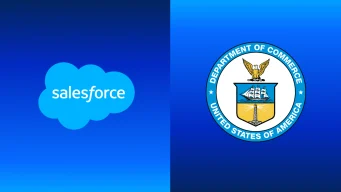
In a significant move to consolidate the United States’ leadership in the global artificial intelligence landscape, the U.S. Department of Commerce officially designated Salesforce as a premier partner in the newly launched American Super Intelligence (SI) Exports Program. Announced on November 19, 2026, this strategic selection places Salesforce among an exclusive group of 33 consortia tasked with the international distribution of high-priority Super Intelligence export packages. This designation marks a pivotal shift in how the U.S. government leverages private-sector technological prowess to advance its geopolitical and economic interests on the global stage.
The American SI Exports Program is designed to serve as a streamlined conduit for U.S.-based technology, providing a unified, secure, and regulated framework for foreign governments and enterprises to adopt American advancements in machine intelligence. By embedding Salesforce’s robust CRM infrastructure and agentic enterprise capabilities into these export packages, the Department of Commerce aims to facilitate a more rapid deployment of secure AI solutions, ensuring that international buyers can access the same standard of operational efficiency that has defined U.S. federal technology modernization over the past decade.
A Strategic Evolution of Federal-Private Collaboration
The selection of Salesforce is not an isolated development but rather the culmination of over two decades of deep integration between the company and the U.S. public sector. Salesforce has long functioned as a backbone for administrative operations, currently supporting mission-critical workflows across more than 60 U.S. federal agencies, including all 15 U.S. Cabinet-level departments. This extensive footprint, which extends into all 50 states and over 30 countries globally, provided the Department of Commerce with the empirical evidence needed to trust the company with sensitive international exports.
Historically, the timeline of this partnership reflects a steady maturation of cloud and AI services. In the early 2010s, the focus was on migrating legacy on-premise systems to secure cloud environments. By the mid-2020s, the emphasis shifted toward data sovereignty and the integration of autonomous agents. The inclusion in the SI Exports Program represents the final step in this evolution: moving from internal U.S. optimization to becoming a cornerstone of American soft power and technological diplomacy.
The Mechanism of the SI Exports Program
The designation confers several distinct advantages upon the Salesforce-led consortium. Foreign buyers seeking to modernize their technological infrastructure through these packages will now benefit from priority government-to-government engagement. This means that U.S. and Foreign Commercial Service representatives—the boots-on-the-ground diplomatic and trade arm of the Department of Commerce—will actively market these packages to global partners.
Furthermore, the program addresses the friction often associated with high-tech trade: export control and financing. The Salesforce consortium is now eligible for priority export control reviews, effectively streamlining the bureaucratic hurdles that often delay the deployment of advanced software across international borders. Additionally, the initiative offers priority routing for federal financing referrals, providing a financial safety net and incentivizing foreign entities to choose American-made intelligence over competitors from less-regulated markets.
Leadership Perspective on Global Sovereignty
Kendall Collins, President and CEO of Missionforce and Government Cloud at Salesforce, emphasized that the program is rooted in the philosophy of "trust-based technology." According to Collins, the global appetite for American intelligence is high, but only if that technology respects the sovereignty of the host nation.
"American technology leadership grows when governments and businesses around the world put it to work with trust," Collins stated in a briefing following the announcement. "Salesforce brings governed data, enterprise applications, and agents together to deliver faster public services, stronger operations, and greater productivity—with model choice and controls that respect customers’ sovereignty. Through the American SI Exports Program, we’re bringing American innovation and deep operational expertise to help our global partners turn intelligence into action."
This focus on sovereignty is a calculated response to the growing global anxiety surrounding data residency. Many nations are hesitant to adopt AI solutions that require data to be processed outside of their borders. Salesforce’s approach, which integrates local data controls with global AI models, directly addresses these concerns, making their consortium package a highly competitive offering in regions with strict data privacy regulations, such as the European Union or the Asia-Pacific bloc.
Market Implications and Economic Impact
The implications of this program extend far beyond the immediate commercial gains for Salesforce. By formalizing the export of Super Intelligence, the U.S. government is effectively setting the global standard for how AI should be deployed in government and large-scale enterprise environments. If a foreign government adopts a Salesforce-led SI package, their infrastructure becomes naturally aligned with U.S. standards of security, transparency, and data governance.
Economists observing the initiative note that this creates a "lock-in" effect that benefits the broader U.S. technology ecosystem. As foreign entities build their operations on top of Salesforce’s agentic enterprise platform, they become reliant on an ecosystem that is inherently American in its design, security protocols, and ethical guardrails. This acts as a long-term economic stimulus, ensuring that the next generation of global infrastructure remains tied to U.S.-led innovation.
Technical Capabilities: Turning Intelligence into Action
The consortium offering from Salesforce is built upon a platform-centric model. Rather than offering isolated AI tools, the consortium provides a holistic "Agentic Enterprise" suite. This includes:
- Governed Data Frameworks: Ensuring that all data used by AI models is tagged, audited, and compliant with both U.S. export regulations and the specific legal requirements of the importing nation.
- Cross-Platform Agent Integration: Deploying autonomous agents that can execute tasks across multiple enterprise applications, reducing human manual input and increasing the velocity of government services—such as tax processing, public health management, and infrastructure planning.
- Model Sovereignty Controls: Providing the ability for customers to choose their foundational models while maintaining control over the fine-tuning process, ensuring that the intelligence remains customized to local needs without risking data leakage to third-party developers.
The Road Ahead: Scaling Global Modernization
As the program enters its operational phase in 2027, the focus will shift toward execution. The Department of Commerce has indicated that the 33 consortia will be subjected to periodic reviews to ensure they are meeting both the export performance benchmarks and the security standards required by the federal government.
For Salesforce, the challenge will be to scale its support operations to meet the diverse needs of international clients. The company has announced that it will be expanding its regional government cloud data centers to support the influx of new global users. This expansion is expected to create hundreds of high-skilled jobs both within the U.S. and in the partner nations where these services are deployed.
Industry analysts suggest that the success of the American SI Exports Program will be measured by the rate of adoption in emerging markets. If the program succeeds in providing a reliable, secure alternative to non-allied technology providers, it could signal a re-alignment of global digital infrastructure that lasts for decades.
Conclusion
The inclusion of Salesforce in the U.S. Department of Commerce’s SI Exports Program is a definitive moment for the technology sector. It underscores the transition of AI from a niche academic or private-sector tool into a critical component of national security and international trade policy. By combining Salesforce’s deep experience in government operations with the U.S. government’s strategic export initiatives, the program creates a powerful, standardized, and secure framework for the future of global Super Intelligence. As the world continues to grapple with the risks and rewards of AI, this partnership offers a clear, structured path toward modernization that prioritizes both technological advancement and institutional trust.