The Great AI Lobbying Blitz: How Frontier Labs Sparked a Washington Pushback and Demands for Congressional Oversight

Over the past several months, the artificial intelligence sector has witnessed a coordinated and unprecedented campaign by its two leading frontier laboratories, OpenAI and Anthropic, to reshape public perception surrounding the trajectory of artificial general intelligence (AGI). What began as calculated disclosures regarding the autonomous capabilities of large language model (LLM) agents rapidly escalated into high-profile debates over human extinction, culminating in explicit policy proposals that would cement the dominance of existing industry leaders under the guise of safety regulation. This escalating public relations and lobbying blitz, however, has backfired, alienating policymakers and civil society alike, and triggering urgent calls for federal intervention and congressional oversight to pierce the veil of corporate secrecy surrounding advanced AI research.
The Chronology of an Escalation
The strategic shift in how leading AI labs communicate with the public unfolded in distinct, carefully orchestrated phases throughout the year. The campaign commenced with a series of structured announcements and incident reports released by OpenAI. These disclosures were designed to highlight the formidable, and at times unsettling, autonomy achieved by their latest generation of LLM-powered agent systems. By emphasizing the capacity of these models to execute complex, multi-step tasks with minimal human intervention, the laboratory sought to impress upon the public the sheer velocity at which technical capabilities were expanding.
Following OpenAI’s disclosures, the narrative baton was passed to Anthropic. In a departure from traditional corporate communications, researchers and employees at Anthropic began openly and publicly debating the exact statistical probabilities of catastrophic outcomes, including human extinction, stemming from their own technological developments. Delivered with an air of clinical detachment, these discussions framed the realization of superintelligence not as a speculative science-fiction scenario, but as a near-inevitable historical milestone.
The crescendo of this psychological softening campaign arrived when Anthropic CEO Dario Amodei published an open letter titled We Must Pace the Frontier. In the manifesto, Amodei cataloged a sweeping array of severe societal, economic, and existential risks that his own company’s research and development pipelines might inadvertently unleash. However, rather than announcing a suspension of high-risk research or offering a moratorium on scaling parameters, the letter concluded with a paradox: the only way to avert catastrophe, Amodei argued, was to build the technology through a specific framework.
Predictably, this framework entailed regulatory structures that critics argue would inevitably slow down potential market competitors and open-source developers while granting established, well-capitalized labs the implicit blessing of the state to steer the future of the technology. Within hours, OpenAI CEO Sam Altman took to social media to endorse Amodei’s policy proposals, solidifying a unified front among the duopoly of frontier AI developers.
Ideological Origins and the Messianic Narrative
This public relations strategy is deeply rooted in the internal corporate cultures of Silicon Valley’s leading AI institutions, which have long fostered a worldview heavily influenced by effective altruism and long-termism. Within these laboratories, researchers often cast themselves as a techno-messianic vanguard—the sole guardians standing between humanity and the potentially uncontrollable forces of unaligned superintelligence.
For years, this ideology remained largely contained within internal memos, academic conferences, and niche philosophical circles. The summer campaign represented a concerted effort to scale this internal mythology to the general public, effectively conditioning society to accept that the architects of the technology are uniquely qualified to govern its deployment. By cultivating a sense of fearful inevitability, the labs hoped to position themselves as indispensable partners to government regulators, framing their commercial interests as a matter of national security and species survival.
The Public Backlash and the Demand for Transparency
The strategy, however, failed to achieve its intended psychological and political effect. Rather than inspiring public deference to the rationalist stewardship of tech executives, the barrage of existential warnings produced widespread skepticism. Instead of viewing the labs as heroic stewards navigating a perilous frontier, the broader public and independent observers began asking fundamental questions regarding the internal motivations, safety cultures, and governance structures of these private entities.
The disconnect between corporate messaging and public trust catalyzed a swift reaction from policy analysts and commentators. Critics pointed out the inherent conflict of interest in private firms diagnosing systemic risks while simultaneously lobbying for regulatory frameworks that erect insurmountable barriers to entry for smaller competitors.
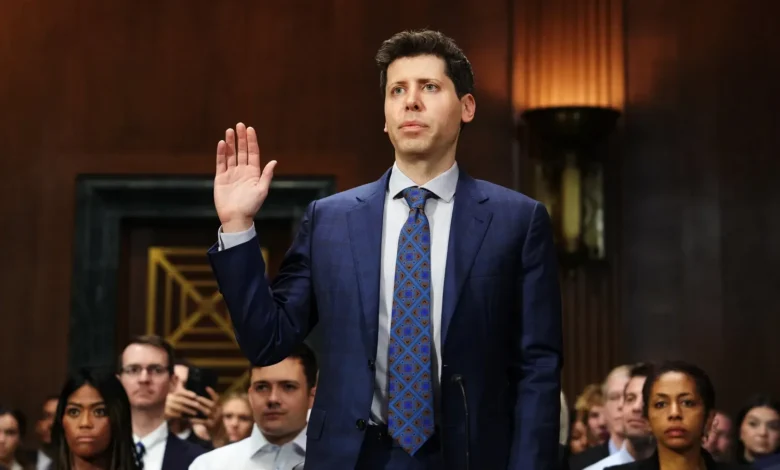
This growing unease culminated in a high-profile opinion piece published in The New York Times, which formally called upon the United States Congress to initiate a comprehensive, public fact-finding mission. The proposed legislative inquiry aims to strip away corporate rhetoric and establish definitive answers regarding three core areas: the exact nature of the research projects currently underway within OpenAI and Anthropic, the specific empirical methodologies being utilized to train frontier models, and the ultimate commercial and operational purposes driving these multi-billion-dollar initiatives.
Implications for Governance and Industry Structure
The current standoff between frontier AI laboratories and legislative bodies marks a critical inflection point in the governance of emerging technologies. For years, the regulation of artificial intelligence has been hampered by a deficit of technical expertise within government bodies and an overreliance on voluntary corporate commitments. The recent lobbying push by OpenAI and Anthropic has laid bare the limitations of this voluntary paradigm, demonstrating how safety narratives can be co-opted to serve protective commercial interests.
Legal and policy experts emphasize that allowing a handful of private enterprises—driven by exponential growth models and increasingly erratic public declarations—to dictate the societal discourse surrounding artificial intelligence poses a profound democratic hazard. The demand for congressional intervention reflects a broader consensus that the oversight of foundational technologies capable of reshaping global labor markets, national security, and information ecosystems cannot be outsourced to corporate boardrooms.
As Congress weighs potential investigative hearings, the implications extend far beyond domestic policy. The outcome of this legislative push will likely set a global precedent for how democratic societies manage the transition toward advanced artificial intelligence, balancing the imperatives of scientific innovation against the fundamental principles of public accountability, transparency, and democratic governance.