The Productivity Paradox of Technological Advancement: Lessons from the PC Era for the Age of AI

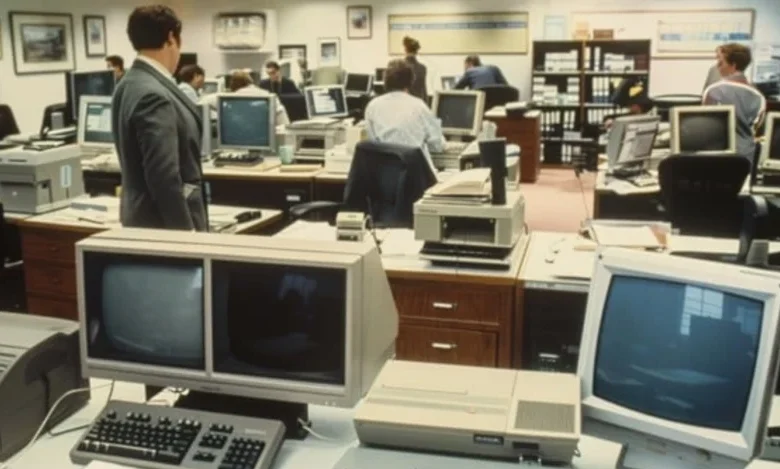
The advent of the personal computer (PC) in the late 1970s and early 1980s was heralded as a revolutionary leap forward, promising to usher in an era of unprecedented productivity for knowledge workers. The proliferation of software designed to streamline common professional tasks – from the intricate calculations of spreadsheets and the polished prose of word processors to the organizational power of databases and the visual clarity of presentation software, all amplified by the advent of electronic mail – seemed poised to deliver a "productivity slam dunk." The sheer potential for simplification and efficiency was immense, painting a picture of a dramatically enhanced work environment.
However, the reality of integrating these powerful new tools into the fabric of daily work proved to be far more complex and nuanced than initially anticipated. As observed in a 2021 op-ed for WIRED, the anticipated surge in productivity was not as immediate or as straightforward as many had predicted. While specific tasks were undeniably made easier, the overall impact on work output and efficiency was a gradual, often uneven, process. The initial promise often became entangled with new forms of digital labor, communication overload, and the steep learning curves associated with mastering these sophisticated devices and their accompanying software.
This historical parallel is particularly pertinent today as the world grapples with the emergence and rapid advancement of artificial intelligence (AI). The current discourse surrounding AI is rife with optimism, with many assuming that its capacity to automate complex processes and augment human capabilities will inevitably lead to a significant increase in overall workforce productivity. Yet, the early experiences with desktop computing serve as a crucial reminder that technological progress does not always translate directly into immediate or universally recognized productivity gains. The path from technological potential to realized efficiency is often fraught with unforeseen challenges and requires careful consideration of implementation, adaptation, and the human element.
The PC Revolution: A Paradigm Shift with a Delayed Payoff
The introduction of the personal computer marked a fundamental shift in how information was processed, created, and disseminated. Prior to the PC, tasks like document creation, data analysis, and communication were largely manual and time-consuming. The development of word processing software, for instance, offered a significant improvement over typewriters, allowing for easy editing and revision. Spreadsheets revolutionized financial modeling and data analysis, enabling complex calculations and scenario planning that were previously arduous or impossible. Databases provided a structured way to manage vast amounts of information, enhancing accessibility and retrieval. Presentation software transformed how ideas were communicated to groups, offering visual aids and dynamic content. And email, when it emerged, promised to accelerate communication, reducing reliance on slower postal services and even telephone calls for certain types of messages.
Despite these undeniable advancements, the widespread adoption and effective utilization of PCs did not immediately result in a demonstrable leap in national productivity figures. Economic historians and productivity analysts have pointed to a phenomenon often referred to as the "productivity paradox," where significant technological investments did not, at least initially, yield corresponding increases in output per worker. This paradox was famously articulated by Nobel laureate economist Robert Solow in 1987, who quipped, "You can see the computer age everywhere but in the productivity statistics."
Several factors contributed to this delay. Firstly, the initial cost of PCs and associated software was substantial, limiting widespread adoption, especially in the early years. Secondly, there was a significant learning curve. Employees needed to be trained not only on how to operate the hardware but also on how to effectively use the new software applications. This training period, coupled with the time it took for individuals to become proficient, represented a temporary dip in immediate productivity.
Furthermore, the way people worked often remained unchanged, even with new tools. The potential of the technology was not always fully realized because existing workflows and management practices were not adequately adapted. For example, while email offered faster communication, it also led to an explosion of messages, creating a new form of information overload and requiring individuals to spend more time managing their inboxes rather than engaging in deeper, more productive work. The transition from analog to digital processes was not simply a matter of replacing one tool with another; it required a fundamental re-evaluation and redesign of work processes.
The transition also fostered new forms of digital labor. The convenience of digital document creation meant that more documents were created, more revisions were made, and more information was stored, often leading to increased demands on IT infrastructure and support. The ability to send an email instantly could also lead to an expectation of instant replies, blurring the lines between work and personal time and contributing to burnout.
A Timeline of Transformation: From Early Adopters to Ubiquitous Integration
The journey of the personal computer from a niche business tool to an indispensable personal and professional device can be broadly segmented:
- Late 1970s – Early 1980s: The Dawn of the PC. Companies like Apple and IBM introduced early personal computers, targeting hobbyists and early adopters. Software was rudimentary, and the focus was on basic computing functions.
- Mid-1980s: The Rise of Productivity Software. The introduction of user-friendly software like Lotus 1-2-3 (spreadsheet), WordPerfect (word processing), and early database management systems began to demonstrate the practical business applications of PCs.
- Late 1980s – Early 1990s: The GUI Revolution and Networking. The widespread adoption of graphical user interfaces (GUIs), pioneered by Apple’s Macintosh and later adopted by Microsoft Windows, made PCs more accessible. The development of local area networks (LANs) and early internet technologies began to connect computers, paving the way for collaborative work and email.
- Mid-1990s – Early 2000s: The Internet Boom and Email Dominance. The explosion of the World Wide Web and the rapid growth of email as a primary communication tool significantly changed the professional landscape. Productivity saw a more discernible upward trend as businesses integrated PCs and internet connectivity into their core operations.
- 2000s – 2010s: Mobile Computing and Cloud Integration. The rise of laptops and smartphones, coupled with the advent of cloud computing, further embedded digital tools into daily life and work, enabling greater flexibility and access to information. However, challenges related to information overload and constant connectivity persisted and even intensified.
Throughout this timeline, the impact on productivity was not a uniform ascent. Periods of rapid adoption and integration were often followed by periods of adjustment as individuals and organizations adapted to the evolving technological landscape and its implications for work practices.
Supporting Data and Economic Perspectives
Numerous economic studies have attempted to quantify the impact of computing technology on productivity. While the initial years showed a less dramatic correlation, later analyses have indicated a more positive and sustained impact, particularly in the latter half of the 1990s and early 2000s. This suggests that the productivity gains from PCs were real but took time to materialize as the technology matured, software became more sophisticated, and organizational processes were adapted.
For instance, research by economists like Robert Gordon has argued that while IT technologies have brought significant benefits, their impact on overall economic growth and productivity may have been less transformative than earlier general-purpose technologies like electricity or the steam engine. This perspective highlights that not all technological innovations have the same scale of impact, and the nature of their contribution can differ significantly.
However, it is also crucial to acknowledge that productivity is a multifaceted concept. While direct output increases are often measured, the qualitative improvements in work – such as enhanced creativity, better decision-making due to access to more information, and improved customer service – are harder to quantify but undeniably contribute to overall economic and societal progress. The PC, by enabling these qualitative improvements, laid the groundwork for the digital economy we experience today.
The AI Moment: A New Frontier of Productivity Expectations
Today, we stand at the precipice of another technological revolution with the advent of advanced AI. Generative AI models, capable of creating text, images, code, and more, along with AI-powered analytical tools, are presenting new possibilities for enhancing professional activities. The promise of AI automating mundane tasks, assisting in complex problem-solving, and accelerating research and development is immense.
It is natural to assume, therefore, that AI will usher in a new era of significantly boosted productivity. However, drawing parallels with the PC era is instructive. The early years of desktop computing taught us that the integration of powerful new technologies is rarely a simple, linear progression towards higher output. The "AI productivity paradox" might very well emerge, where initial investments and enthusiasm are met with complexities in implementation, adaptation, and unintended consequences.
Potential challenges for AI integration include:
- Skill Gaps and Retraining: Just as with PCs, AI will require new skill sets. The workforce will need training not only in how to use AI tools but also in how to effectively prompt them, evaluate their outputs, and integrate them into existing workflows.
- Ethical and Trust Concerns: The outputs of AI can sometimes be biased, inaccurate, or even fabricated. Building trust in AI systems and establishing robust ethical guidelines for their use will be paramount. This includes addressing issues of data privacy, intellectual property, and job displacement.
- Over-reliance and Deskilling: A potential risk is that an over-reliance on AI for certain tasks could lead to a deskilling of the workforce, diminishing critical thinking and problem-solving abilities.
- Integration into Existing Systems: Seamlessly integrating AI tools into legacy systems and established business processes can be a significant technical and logistical hurdle.
- The "Convenience Trap": Similar to how email led to an overload of messages, AI’s ability to rapidly generate content or provide quick answers could lead to an increased volume of work or a superficial engagement with tasks. The temptation to prioritize quantity over quality, or speed over thoughtful consideration, could become a new productivity challenge.
Statements and Reactions from Stakeholders
Industry leaders, researchers, and policymakers are actively discussing the implications of AI for productivity. Many technology companies are positioning AI as a key driver of future economic growth and efficiency. For example, Satya Nadella, CEO of Microsoft, has repeatedly emphasized AI’s potential to "democratize" productivity, making it more accessible and powerful for everyone. Similarly, Sundar Pichai, CEO of Google, has highlighted AI’s role in augmenting human capabilities across various sectors.
Economists, however, are urging a more measured approach. Daron Acemoglu, an economist at MIT, has voiced concerns that while AI may increase productivity in some areas, it could also lead to a concentration of wealth and power, and potentially exacerbate inequality if not managed carefully. He suggests that the benefits of AI will depend heavily on how the technology is developed and deployed, and whether it serves to augment human labor or replace it.
Labor unions and worker advocacy groups are also raising important questions about job security, the need for reskilling programs, and the potential for AI to create new forms of surveillance and control in the workplace. Their reactions underscore the need for a human-centric approach to AI adoption, ensuring that technological advancements benefit society broadly.
Broader Impact and Implications
The integration of AI into the workforce is likely to be a prolonged and iterative process, much like the PC revolution. While we may not see immediate, across-the-board productivity spikes, the long-term implications are profound. AI has the potential to:
- Redefine Job Roles: Many existing jobs will be augmented by AI, while new roles focused on AI development, management, and ethical oversight will emerge.
- Accelerate Scientific Discovery and Innovation: AI’s ability to analyze vast datasets and identify patterns can significantly speed up research in fields like medicine, climate science, and materials science.
- Personalize Education and Training: AI can tailor learning experiences to individual needs, making education more effective and accessible.
- Enhance Public Services: AI can be used to optimize traffic flow, improve public safety, and streamline government operations.
However, the successful navigation of this transition hinges on our ability to learn from historical precedents. Just as we eventually came to appreciate the indispensable role of the PC, recognizing that its impact was not solely about speed but also about enabling new forms of creativity and problem-solving, we must approach AI with a similar nuanced perspective. The "untapped convenience" of AI, much like that of early PCs, is too significant to ignore. But as we grapple with its promise, it is vital to remember that in the digital and AI-driven world, productivity gains are not always immediate, straightforward, or universally distributed. The true measure of AI’s success will lie not just in the efficiency it unlocks, but in how it is integrated to empower individuals, foster equitable growth, and ultimately enhance the human experience of work and life.
The lessons from the PC era are clear: technological innovation is a powerful catalyst, but its transformative potential is fully realized only through thoughtful implementation, continuous adaptation, and a deep understanding of its impact on human beings and societal structures. The age of AI presents both immense opportunities and significant challenges, and our ability to harness its benefits will depend on our collective wisdom in navigating this new technological frontier.
Related posts: