The transition to automated inventory management at the 855,000-square-foot facility in Byhalia, Mississippi, represents a broader industry trend toward high-frequency, AI-driven logistics. Previously, the warehouse relied on manual inventory counts performed only twice annually. In such a vast facility, this sparse audit schedule meant that misplaced items—often obscured in high-density storage racks—could remain undiscovered for up to six months. Under that old system, a customer might place an order for a product that appeared available in the digital database but was physically missing from its assigned location, leading to inevitable order cancellations and a degraded customer experience.
The Chronology of Digital Transformation at Asics
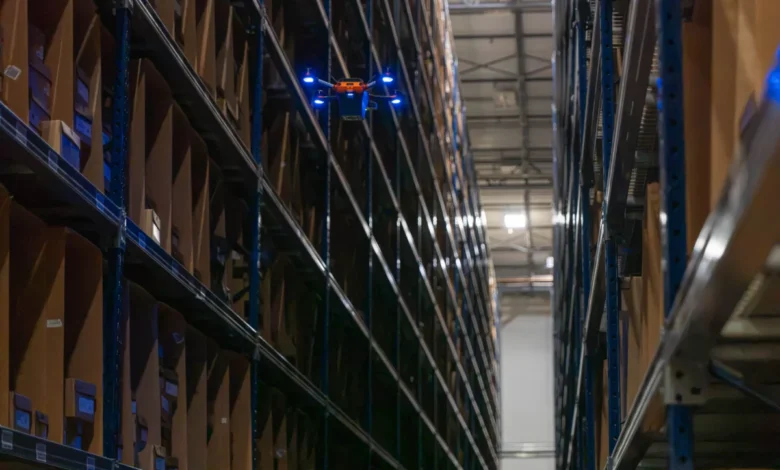
The integration of Corvus One drones was designed to bridge the gap between digital record-keeping and physical reality. The project began with a pilot phase aimed at testing the drones’ ability to navigate narrow aisles without the need for additional infrastructure. Because the Corvus One utilizes sophisticated onboard computer vision and spatial reasoning, it can operate in aisles less than 6 feet wide. This was a critical requirement, as installing beacons or floor markers across nearly a million square feet would have been prohibitively expensive and disruptive to existing workflows.
Following the successful pilot, Asics shifted to a rigorous operational schedule. Starting at 7 p.m. each evening, the drones perform seven scheduled flights. As they move through the facility, they scan universal product codes (UPCs) and count individual boxes. This data is processed in real-time, allowing the software to reconcile the physical scan against the warehouse management system (WMS). By the time the morning shift arrives, employees are presented with a prioritized list of discrepancies, allowing them to focus their attention on targeted investigation rather than broad-spectrum manual counting.
The Economics of Inventory Visibility
The impact of this technology extends beyond mere operational efficiency; it has fundamentally changed the company’s digital commerce strategy. Prior to the deployment, Asics felt compelled to maintain a "safety buffer" in its online inventory feeds to account for potential errors. The company routinely withheld 12% to 15% of its available stock from online marketplaces to ensure that if a product was misplaced, it would not lead to an over-promised order.
With the move to monthly, rather than biannual, cycle counts, Asics has gained the granular visibility required to eliminate these safety buffers. The company now publishes its full inventory availability feed to its marketplace partners. This shift is expected to have a positive impact on the bottom line, as products that were previously hidden in the system—and often relegated to discount liquidations once eventually found—are now sold at full price through primary sales channels. While specific revenue figures have not been disclosed, the ability to move more inventory at premium prices represents a quantifiable gain in supply chain ROI.
Operational Shifts and Human Capital
A common concern regarding warehouse automation is the potential for job displacement; however, Asics and Corvus Robotics maintain that the technology is intended to augment, rather than replace, the human workforce. By removing the need for manual cycle counts, the company has freed up warehouse personnel to pivot toward higher-value tasks.
"You don’t want to have to count a thousand locations to find the four or five that have problems," noted Kyle Koestler, senior director of distribution and transportation at Asics America. This sentiment reflects the broader goal of modernizing logistics: shifting human labor from repetitive, low-impact tasks—such as walking aisles to count boxes—to complex problem-solving. Warehouse staff now spend their time on inventory reconciliation, investigating the root causes of discrepancies, and managing wholesale-support projects. Furthermore, the use of drones reduces the need for heavy lift equipment during the counting process, which improves overall facility safety by reducing congestion in narrow aisles.
Broad Industry Context: The Automation Wave
Asics is part of a larger cohort of retailers currently investing heavily in "warehouse intelligence." The pressure to deliver goods faster and more reliably has made inventory accuracy the "holy grail" of supply chain management. As consumer expectations for two-day or even next-day shipping continue to rise, any margin for error in stock levels becomes a liability.
The scale of this trend is evidenced by other major players in the retail sector. GNC, for instance, has leveraged the same Corvus Robotics technology to move from two-to-four annual counts to as many as 12 per year across its distribution centers in Indianapolis and Phoenix. Similarly, Southern Glazer’s Wine & Spirits has expanded its drone program to nine different facilities, citing a 100-basis-point improvement in cases handled per hour—a metric that, in the high-volume beverage industry, translates to millions of dollars in efficiency gains.
Meanwhile, the industry is witnessing even more aggressive capital expenditure from giants like Walmart, which recently committed $6 billion to scale Symbotic’s AI and robotics technology across 25 of its regional distribution centers. These investments signal that the era of "static" warehouses—facilities that operate on legacy manual processes—is rapidly drawing to a close. The competitive advantage is increasingly being defined by the ability to ingest, process, and act upon warehouse data in real-time.
Analysis of Future Implications
The success of the Asics initiative highlights several key implications for the future of retail logistics:
- The Death of the Safety Buffer: As inventory systems become more accurate, retailers will move away from "conservative" stock availability. This will lead to a more efficient allocation of goods and potentially lower consumer prices, as retailers no longer need to price in the risk of dead-stock or lost inventory.
- Infrastructure-Light Robotics: The success of the Corvus system demonstrates that the next generation of warehouse robotics will be "infrastructure-light." Systems that require expensive retrofitting of warehouses will likely be outperformed by agile, AI-driven drones that can navigate existing environments.
- Data-Driven Decision Making: The transition from periodic inventory checks to continuous, drone-assisted monitoring transforms the warehouse from a static storage unit into a dynamic data source. This allows for predictive analytics, where companies can forecast potential stock-outs or storage bottlenecks before they actually occur.
Asics’ move in Byhalia serves as a blueprint for mid-to-large-scale retailers. By addressing the physical limitations of warehouse management, the company has effectively synchronized its physical inventory with its digital sales channels. For a brand that operates across multiple channels—ecommerce, physical retail, and wholesale—this synchronization is no longer a luxury; it is a fundamental requirement for operational resilience in a global market. As the technology continues to mature, it is likely that such autonomous solutions will become the standard rather than the exception, fundamentally redefining the efficiency parameters of the modern supply chain.