The Legal Perils of Forwarding Work Documents: When Evidence Gathering Becomes Grounds for Termination

In an era defined by digital mobility and remote work, the intersection of data security policies and employee rights has become a high-stakes battlefield. A recent ruling by the United States Court of Appeals for the First Circuit has underscored the precarious position employees face when they attempt to preserve evidence of workplace discrimination by forwarding company documents to personal email accounts. The decision, which upheld the dismissal of a retaliation claim, serves as a stark reminder that while employees may be legally protected when reporting misconduct, the methods employed to document that behavior are subject to strict scrutiny under corporate security protocols.
The case centers on a senior data architect who found herself at a professional crossroads after receiving a second performance improvement plan (PIP). When presented with an ultimatum—accept the PIP or resign with two months of severance—the employee contended that the performance metrics were arbitrary and designed to facilitate her departure. Believing she was being targeted due to her sex, she took the initiative to forward internal communications, training certifications, and the PIP documents themselves to her personal email address. Within one week of the company discovering the data transfer, the architect was terminated, with the employer citing a direct violation of its internal security and data protection policies.
A Chronology of the Dispute
The progression of events highlights a common friction point in modern human resources management. The timeline began when the employee’s manager, in conjunction with HR, issued the second PIP. Following the receipt of this document, the employee engaged in a series of unauthorized data transfers. The company’s IT department identified the unauthorized outbound traffic shortly thereafter.
Following the discovery, the company immediately placed the employee on administrative leave to conduct an internal investigation. The investigation concluded that the employee had breached established cybersecurity guidelines, which strictly prohibited the transfer of company assets—including internal performance documents—to non-corporate domains. The subsequent termination occurred just seven days after the initial data transfer. The employee filed a lawsuit alleging retaliation, arguing that her actions were a protected attempt to secure evidence of discrimination. The district court dismissed the claim, and the First Circuit’s recent affirmation solidifies the employer’s position, noting that the employee failed to demonstrate that the company’s decision-making process was driven by retaliatory intent rather than a legitimate enforcement of security policy.
The Legal Framework of Protected Activity
The central legal tension lies in whether the act of "self-help" discovery constitutes protected activity under anti-discrimination laws. The First Circuit assumed, for the sake of its analysis, that the preservation of evidence could theoretically be protected. However, the court found that the employee’s complaint lacked sufficient factual allegations to support the claim that the employer’s motivation was retaliatory. The court noted that because the employer was unaware of the employee’s intent to build a discrimination case, the act of firing her could not be definitively linked to the intent to suppress a whistleblower.
This mirrors broader legal debates regarding employee access to information. In the landmark case Verdrager v. Mintz, the Massachusetts Supreme Judicial Court established a multi-factor test to determine if an employee’s unauthorized copying of documents is "protected conduct." Under this framework, courts evaluate:
- How the employee obtained the documents.
- Whether the documents were already accessible to the employee through normal work functions.
- The relevance of the documents to the discrimination claim.
- Whether the copying was "reasonably necessary" for the pursuit of legal action.
- The nature and sensitivity of the information accessed.
The Verdrager precedent suggests that not all data transfers are created equal. Forwarding a copy of one’s own performance review is viewed far differently by the judiciary than the bulk extraction of sensitive client databases or proprietary intellectual property.
The Growing Conflict: Security vs. Transparency
For corporations, data protection is no longer just about guarding trade secrets; it is a matter of regulatory compliance and cybersecurity hygiene. Organizations are increasingly deploying Data Loss Prevention (DLP) software that automatically flags or blocks the transmission of sensitive information to personal email accounts, public cloud storage, or unauthorized external servers.

According to data from the Cybersecurity and Infrastructure Security Agency (CISA) and various industry reports, insider threats—whether malicious or negligent—account for a significant portion of corporate data breaches. Consequently, employers have tightened their "Acceptable Use Policies" (AUP). These policies are designed to be neutral, yet they often create collateral damage for employees attempting to preserve evidence of harassment or systemic bias.
Industry experts argue that the lack of clear, established pathways for employees to secure their own personnel files during disputes leads to these high-risk scenarios. When an employee perceives that their employer is acting in bad faith, their instinct is to secure documentation before their access is revoked. Without a transparent process for requesting these records, employees often resort to "shadow IT" practices, such as blind-copying emails or downloading files to personal drives, inadvertently providing the employer with a "for-cause" reason for termination that bypasses the underlying discrimination dispute entirely.
Implications for Human Resources and Legal Strategy
The First Circuit ruling provides a roadmap for how companies should approach these conflicts. HR departments are increasingly advised to adopt a three-pronged strategy to mitigate legal and security risks:
1. Codification of Data Handling Policies
Companies must explicitly state in their employee handbooks what constitutes an authorized transfer of data. Blanket bans are often less effective than specific guidelines that explain how employees can work offsite or share files using approved secure channels. Training programs that provide real-world scenarios—such as how to safely move a presentation to a home office—help clarify expectations before a dispute arises.
2. Standardized Discovery Processes
To reduce the incentive for employees to "self-help," HR departments should establish clear protocols for employees to request copies of their own personnel files, including performance reviews and PIPs, even while on leave or during the offboarding process. By formalizing this, the company removes the "necessity" argument often used by employees who claim they had no other way to preserve evidence.
3. Measured Investigation Protocols
When an IT department identifies unauthorized data transfers, the immediate reaction should be forensic preservation rather than summary termination. Companies that pause to document the investigation, verify the nature of the files transferred, and assess whether the employee had a legitimate belief that the documents were necessary for a legal claim are better positioned to defend against retaliation suits. Furthermore, consistency is key; if an organization terminates one employee for sending a PIP to a personal account but ignores another employee doing the same for convenience, they expose themselves to claims of pretextual termination.
Looking Ahead: The Future of Evidence Preservation
As digital footprints become the primary evidence in labor disputes, the legal system will likely continue to refine the boundaries of protected activity. For employees, the takeaway is clear: unauthorized data exfiltration is a high-risk maneuver that can easily overshadow the merits of an underlying discrimination claim. For employers, the lesson is that while robust security is necessary, it should not be utilized as a shield to insulate the company from legitimate grievances.
The current legal climate suggests that the courts are moving toward a more nuanced analysis that balances the employer’s right to protect its data against the employee’s need to document their professional record. However, until federal or state statutes provide more explicit protections for employees in these circumstances, the safest route remains the formal request—ensuring that the documents needed to prove a case are obtained through the front door of HR rather than through the back door of the company’s server.
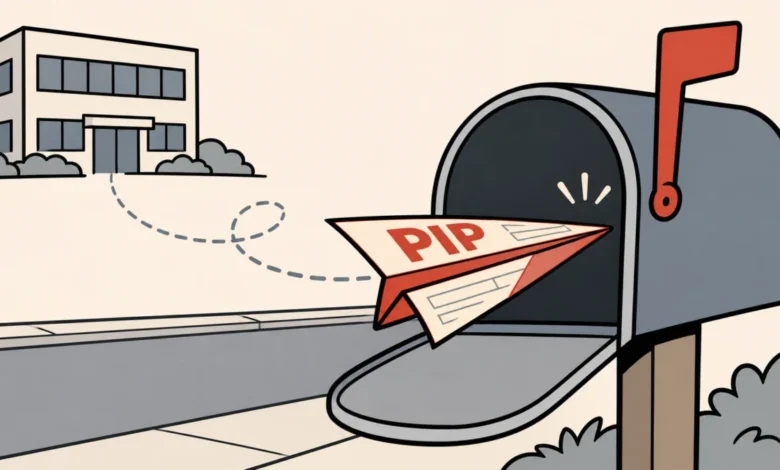
The case serves as a critical junction for corporate policy, suggesting that the most effective way to prevent the "paper airplane" effect—where an employee’s evidence lands in a personal mailbox and triggers a termination—is to create a transparent, accessible, and secure environment that renders such clandestine actions unnecessary.