Navigating Compliance, Talent, and AI: Inside the Leadership Journey of ICIMS General Counsel Courtney Dutter

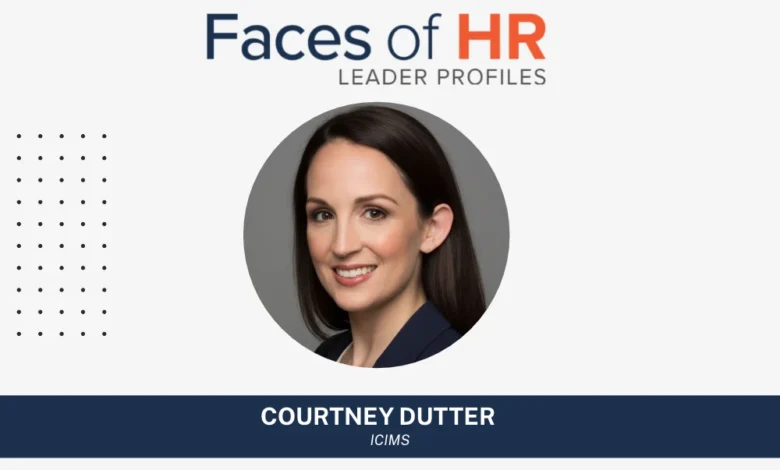
The modern corporate landscape demands a delicate equilibrium between rapid technological innovation and rigorous legal compliance, a challenge that few executives have navigated as comprehensively as Courtney Dutter. As the General Counsel and Chief Compliance Officer of iCIMS, a leading global cloud-based talent acquisition software company, Dutter has spent the last decade and a half steering the organization through unprecedented organizational scaling, international expansion, complex mergers, and acquisitions. Her career trajectory offers a masterclass in how proactive legal strategies, deeply rooted in human resources foundations, can fortify enterprise growth while preserving the trust and security of sensitive talent data.
From the Ground Up: A 15-Year Evolution at iCIMS
When Dutter first joined iCIMS over fifteen years ago, the enterprise environment looked vastly different. The company did not even retain an internal employment lawyer at the time. Recognizing a critical void and seizing an opportunity to drive structural change, Dutter stepped forward to architect the company’s legal, privacy, and compliance functions entirely from scratch.
Over the subsequent decade and a half, iCIMS evolved from an emerging tech provider into a global industry titan. Throughout this period of aggressive scaling, Dutter’s mandate remained unyielding: safeguarding the integrity, security, and privacy of millions of candidate and customer data points. Her leadership transformed the legal department from a reactive support desk into a proactive, strategic business unit capable of facilitating international commerce while maintaining strict adherence to multi-jurisdictional labor and data privacy regulations.
The Human Foundations of Legal Strategy
Dutter’s affinity for employment law and compliance is far from accidental; it is deeply generational. Growing up immersed in discussions concerning organizational leadership, workplace dynamics, and human capital challenges, she was heavily influenced by her mother, a distinguished human resources professional who later served as a Deputy City Manager in California. Spending her formative summers interning under her mother’s supervision, Dutter gained firsthand insight into the vital role that human resources plays in driving enterprise success.
This early exposure instilled in her a leadership philosophy anchored in empathy, operational integrity, and an acute awareness of the human element behind corporate ledgers. According to Dutter, these foundational lessons continue to dictate how she manages her global teams and collaborates with executive stakeholders today. She emphasizes that understanding what motivates people, recognizing their individuality, and supporting their professional growth are prerequisites for building resilient corporate cultures.
De-Escalating the AI Panic: A Pragmatic Approach to Workplace Technology
As artificial intelligence rapidly permeates every facet of talent acquisition—from automated resume screening to predictive candidate matching—human resources leaders and corporate counsels face an unprecedented regulatory and ethical maze. Dutter has emerged as a pragmatic voice of reason in this domain, cautioning organizations against allowing fear and regulatory uncertainty to induce organizational paralysis.
A central tenet of Dutter’s philosophy regarding artificial intelligence is the critical contextualization of bias. She frequently reminds industry leaders that artificial intelligence does not introduce bias into hiring out of thin air; rather, it often reflects historical human data sets. "Remember that humans carry bias too," Dutter observes. "So much of the conversation assumes AI is introducing bias into hiring, but bias has always existed, and when it is built and deployed responsibly, AI can actually help mitigate it."
To achieve responsible deployment, Dutter advocates for actionable frameworks rather than speculative hesitation. She urges corporate leadership teams not to wait for sluggish legislative bodies to codify comprehensive AI-specific employment laws. Existing statutory frameworks prohibiting hiring discrimination already apply broadly to recruitment processes, regardless of whether algorithms are utilized. Consequently, businesses that delay compliance preparations risk falling behind both technologically and legally.
Reframing the Legal Function: Moving Beyond the "Department of No"
One of the most persistent cultural hurdles within corporate governance is the pervasive stereotype that legal and compliance teams exist primarily to obstruct innovation and stifle operational momentum. Dutter acknowledges this friction, noting that anxieties surrounding automated technologies and algorithmic recruitment have only amplified this perception.
However, she champions a collaborative model where legal, product, human resources, and business development teams operate in lockstep from the inception of a project. Dutter argues that friction typically arises when legal departments are brought into strategic discussions too late in the development cycle, forced to evaluate complex initiatives in an informational vacuum. By embedding compliance perspectives early, organizations can innovate securely without sacrificing speed or regulatory adherence.
Lessons in Leadership and Team Building
Reflecting on her extensive executive journey, Dutter is candid about the evolution of her leadership style. Early in her tenure, she fell into the common trap of believing that the organization could not function effectively without her direct intervention, a mindset that inadvertently hindered her team’s autonomy and her own capacity to delegate. Over time, she recognized that true leadership is measured by the ability to cultivate independent, high-performing teams capable of thriving in the executive’s absence.
Furthermore, Dutter learned to abandon the assumption that direct reports share identical career trajectories and definitions of professional fulfillment. Tailoring mentorship and operational support to individual motivations has proven essential in retaining top-tier talent within her global legal and compliance divisions.
Her proudest professional achievement remains the construction of a highly cohesive, geographically distributed legal team. Despite operating across multiple continents and time zones, Dutter successfully fostered a collaborative culture that defies the traditional boundaries of remote work, proving that operational distance is no barrier to shared organizational excellence.
Strategic Imperatives for the Future of Human Resources
As the business environment looks toward the next five years, Dutter anticipates that the current anxieties surrounding artificial intelligence will normalize, mirroring the tech sector’s historical transition to cloud-based architecture. What currently feels disruptive and legally perilous will ultimately become standard operational procedure, compelling companies to refine their talent evaluation processes and drive greater efficiency in recruitment.
For corporate leaders seeking to maximize enterprise value, Dutter’s message is definitive: human resources must be treated as a core strategic partner rather than a purely administrative support function. Organizations that integrate talent strategy directly into executive decision-making will be best positioned to navigate future regulatory shifts, attract premier talent, and sustain long-term competitive advantage.