Mastering Time Arbitrage: A Strategic Framework for Peak Productivity and Energy Management

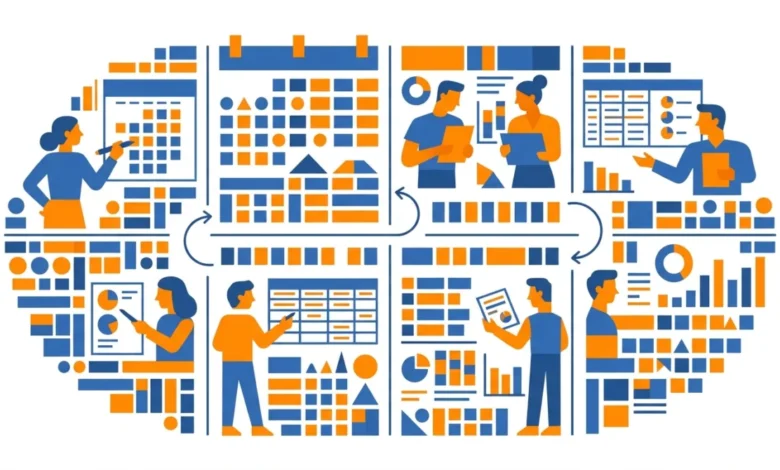
In the modern professional landscape, the traditional approach to time management—which focuses almost exclusively on calendar density—is increasingly being identified as a primary driver of burnout and inefficiency. Productivity experts are now shifting the paradigm toward "time arbitrage," a concept that treats hours not as equal units of currency, but as assets with varying degrees of utility based on cognitive alignment. By prioritizing energy and attention management alongside simple scheduling, individuals can significantly enhance their output while mitigating the risk of professional exhaustion.
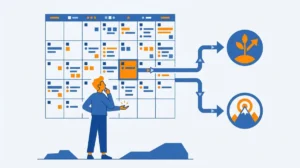
The core of this methodology lies in the realization that a well-organized calendar is not a panacea for poor performance. Many professionals report that despite meticulously blocking off hours for specific tasks, the work remains unfinished. This phenomenon is often attributed to a fundamental disconnect between the time available and the cognitive capacity required to execute a given task.
The Hierarchy of Productivity: Time, Energy, and Attention
To address this disconnect, productivity frameworks like the 25x system advocate for a three-tiered progression: time management, energy management, and attention management. While time management is the foundational layer—ensuring that a task has a dedicated slot on a calendar—it is frequently rendered ineffective by a failure to account for energy levels.
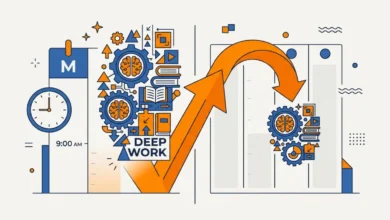
Data from occupational psychology suggests that cognitive performance follows predictable circadian rhythms. For most individuals, peak mental acuity occurs in the mid-to-late morning hours, typically between 9 a.m. and noon. Conversely, the "valleys" of the day, often occurring in the mid-afternoon, are better suited for administrative tasks or physical activity. When an individual attempts to force high-demand cognitive labor into a low-energy valley, the result is often a decline in work quality and an increase in the time required to complete the task.
Research into ultradian rhythms—the cycles of brain activity that last approximately 90 to 120 minutes—supports the efficacy of focused work blocks. Clinical observations suggest that the human brain can maintain peak concentration for roughly 90 minutes before requiring a recovery period. Professionals who integrate 30-minute recovery intervals between these 90-minute blocks report higher sustained output compared to those attempting continuous, multi-hour focus sessions, which often succumb to the law of diminishing returns.
Establishing the Energy Pyramid
When an individual feels overwhelmed by the complexity of habit optimization, experts recommend a hierarchical approach known as the "Energy Pyramid." At the base of this pyramid is sleep, which serves as the fundamental physiological substrate for all cognitive performance. Second is nutritional intake, and third is physical exertion.
The implications of this hierarchy are significant. Many professionals attempt to rectify productivity deficits by adopting complex scheduling software or advanced project management methodologies. However, if the underlying biological needs—specifically sleep quality—are not addressed, these tools often fail to yield results.
A study on sleep consistency indicates that the stability of a sleep-wake cycle is often more predictive of daytime cognitive function than the total duration of sleep. Rather than attempting to force an additional hour of sleep, which may lead to sleep onset latency and frustration, experts advise establishing a consistent bedtime supported by a 90-minute "shutdown ritual." This ritual serves as a psychological transition, signaling to the body that the period of high-demand output has concluded.
Mitigating Environmental Friction and Cognitive Leaks
Beyond biological factors, the physical and digital environment plays a critical role in productivity. The metaphor of the "leaky bucket" is frequently used to describe how minor, persistent distractions—such as unread notifications, browser tabs, and desktop clutter—drain mental energy.

These "leaks" are not merely aesthetic issues; they represent a continuous stream of deferred decisions. A stack of paper on a desk, for example, is a physical manifestation of a task that has been repeatedly postponed. Each time the eye lands on that stack, the brain engages in a micro-decision to ignore it, which consumes finite cognitive resources.
By systematically clearing the workspace and silencing non-essential digital alerts before beginning a high-focus task, professionals can create a "distraction-free block." This environmental control allows for a deeper state of "flow," where the task at hand receives the entirety of the user’s attention.
The Role of Renewal Rituals: The Concept of Uitwaaien
The integration of rest into the workday is not a sign of reduced productivity, but rather a strategic necessity. In the Netherlands, the cultural concept of uitwaaien—literally "to blow out" or taking a walk in the wind to clear one’s head—is increasingly being adopted in professional settings as a renewal ritual.
Transitioning from a period of intense focus to a period of recovery is often mishandled. Many individuals attempt to pivot directly from deep work to high-stress meetings or personal chores. By inserting a brief, non-competitive outdoor walk as a transitional phase, professionals can effectively "reset" their attention. This practice allows for a psychological detachment from the work, which is essential for preventing the cumulative fatigue that often builds by the end of the workweek.
Ensuring Strategic Alignment
Even with optimized energy and time management, there remains the risk of "productive drift," where an individual completes tasks efficiently but focuses on objectives that do not align with their broader professional goals. This is a common failure point for even the most disciplined workers.
To combat this, a "daily check-in" protocol is recommended. By setting a recurring reminder at midday and late afternoon to ask, "Am I working on the right thing?", individuals can maintain alignment with their high-priority objectives. In a coaching environment, this is often formalized by having a partner verify these goals for a two-week period. Once the habit of reflection is established, the external accountability can be phased out in favor of self-regulation.
Analyzing the Impact of Behavioral Shifts
The adoption of these strategies represents a significant shift from reactive to proactive professional management. By analyzing the "constraint" behind a failed task—whether it was a lack of time, a lack of energy, or a lack of attention—professionals can identify the specific bottleneck in their workflow.
If the constraint is time, the solution is calendar optimization. If the constraint is energy, the solution is physiological and environmental management. If the constraint is attention, the solution is the elimination of environmental leaks and the enforcement of focus blocks.
This systemic approach to professional life suggests that productivity is not an innate trait, but a series of repeatable processes. The broader implication for organizations is that the traditional nine-to-five structure may be inherently flawed for knowledge workers. Companies that offer the flexibility to align high-demand work with individual peak performance periods—and that reward the quality of output over the quantity of hours logged—are likely to see substantial gains in employee retention and creative output.
As professionals move forward, the focus must remain on iterative improvement. By treating the work week as a laboratory for testing these habits—adjusting the start time of work sessions, refining the evening shutdown ritual, and ruthlessly eliminating cognitive leaks—individuals can build a sustainable, high-performance career that respects the biological limits of the human mind. The ultimate goal is not to fill every minute of the day with activity, but to ensure that the time spent in labor is yielding the highest possible value, both for the individual and the organization.