The Weekly Pulse: Navigating Core Algorithm Updates, AI Crawlers, and Shifting CMS Market Dynamics


The digital marketing landscape is undergoing a period of rapid, structural transformation, marked by overlapping algorithm rollouts, evolving search engine crawler behavior, and shifting platform adoption rates. As the industry closes out the final quarter of the year, SEO professionals and web administrators must contend with a barrage of concurrent developments: Google’s back-to-back core algorithm updates, newly formalized documentation regarding policy changes and appeal mechanisms, technical hurdles surrounding AI agent access, a notable decline in WordPress market share, and conflicting executive narratives regarding the future of traditional search optimization.
These developments challenge long-held assumptions about web architecture, traffic measurement, and search visibility. To maintain competitive parity in an increasingly complex ecosystem, digital strategists must critically evaluate how these shifts impact their operational workflows, technical configurations, and measurement frameworks.
The Chronology and Measurement of Google’s Back-to-Back Core Updates
The cadence of Google’s algorithm updates has intensified, leaving digital teams with narrow windows to assess performance volatility. The November 2026 core update, which commenced on November 10, officially concluded its rollout on November 24, adhering to Google’s standard two-week deployment window. However, the respite for site owners was remarkably brief. Approximately an hour after the November update was marked complete, Google preannounced via the Search Status Dashboard that an additional core update is slated for release in December 2026.
According to Google’s documentation, the impending December update is engineered to refine how automated systems interpret and rank relevant content—particularly regarding complex, multi-faceted queries—while simultaneously enhancing personalization features for users who have opted into tailored search experiences. While Google has not provided an exact launch date for the December rollout, the consecutive nature of these events complicates performance analysis.
Analytical Implications and Measurement Strategies
Evaluating the impact of algorithm updates requires disciplined data hygiene. Google’s official guidance dictates that webmasters should wait a minimum of one full week following the completion of an update before attempting to isolate traffic fluctuations. They should then compare that post-rollout week against baseline data from the week preceding the update.
For the November update, however, this standard evaluation period introduces statistical noise. The initial post-rollout observation window—November 25 through December 1—encompasses major retail events, including U.S. Thanksgiving, Black Friday, and Cyber Monday. Sites influenced by seasonal retail spikes may find it challenging to isolate algorithm-induced ranking shifts from typical holiday shopping behaviors.
To maintain historical accuracy within Google Search Console, administrators are advised to utilize the custom annotation feature. By logging November 24 as a formal chart annotation, and preparing to do the same for the December update upon its launch, analytics teams can contextualize sudden traffic anomalies directly within their reporting interfaces.
Formalizing Notice, Feedback Loops, and UK Regulatory Compliance
In tandem with its algorithmic adjustments, Google has expanded its Search Central documentation to clarify how site owners receive notice of ranking and policy changes, submit feedback regarding those alterations, and navigate regulatory appeal structures.
The newly published "stay-informed" documentation outlines that Google will provide advance notice for significant ranking alterations, such as broad core updates, as well as actionable policy modifications. Notably, this includes specialized notices directed at site owners serving users in the United Kingdom, aligning with fair-ranking requirements mandated by the U.K. Competition and Markets Authority (CMA).
Furthermore, verified site owners can now formally transmit feedback regarding specific algorithmic shifts through a designated button within Google Search Console. Submissions require specific identifiers, such as categorical hashtags like #NovemberCoreUpdate2026, alongside relevant performance data. Google has explicitly clarified, however, that these feedback submissions do not trigger manual ranking reassessments for individual URLs; rather, they serve as aggregated qualitative data for engineering teams.
The U.K. CMA Indexing Appeal Mechanism
A significant regulatory development takes effect on December 17, when a formal appeal process opens for web properties serving U.K. users. Under this framework, sites that have been entirely removed from Google’s index through manual enforcement actions can pursue an official review via the U.K. CMA indexing appeal process. This represents a rare instance of external regulatory oversight directly influencing search engine indexing and de-indexing protocols.
For SEO practitioners, incorporating these feedback and notification mechanisms into standard operating procedures is increasingly vital. By subscribing to Google’s Search Status RSS feed and preparing structured performance reports—complete with affected query lists and appropriate hashtags—web teams can systematically document algorithmic impacts during the mandated post-update observation windows.
Managing AI Agent Access and Bot Defenses
As automated web navigation transitions from traditional scraper bots to sophisticated user-triggered agents, technical SEO has expanded into bot management infrastructure. On November 17, Google updated its crawling documentation to address a friction point for modern web architecture: ensuring that Google-Agent, the system utilized by Google applications to navigate websites and execute user-requested actions, successfully bypasses overly aggressive security defenses.

Modern enterprise websites frequently rely on Content Delivery Networks (CDNs), Web Application Firewalls (WAFs), and specialized bot-detection services to mitigate malicious scraping and Distributed Denial-of-Service (DDoS) attacks. However, these security layers often inadvertently block legitimate utility crawlers.
Technical Configuration for Google-Agent
According to Google’s documentation, legitimate Google-Agent requests can be identified through specific technical markers:
- The User-Agent header contains the explicit string "Google-Agent".
- The originating IP address matches the documented inventory within Google’s
user-triggered-agents.jsonfile. - Requests participating in the Web Bot Auth experiment carry verifiable digital signatures.
To prevent service degradation, web administrators must configure their security perimeters to ensure that verified Google-Agent requests bypass standard bot challenge screens, CAPTCHAs, and aggressive rate limits. Crucially, Google’s documentation emphasizes that whitelist rules must extend beyond the primary landing page to encompass interactive site elements, including on-site search functionality, add-to-cart pathways, booking engines, and backend API requests. Failure to permit agent access across transactional funnels can inhibit the functionality of AI-driven browsing assistants on behalf of users.
CMS Market Dynamics: The Erosion of WordPress Dominance
While search engine mechanics and AI integration dominate technical discussions, foundational web infrastructure is also experiencing a notable shift. Data from W3Techs’ daily-updated content management system survey reveals that WordPress’s market share fell significantly over a twelve-month period, dropping from 43.2% of all surveyed websites down to 38.4% as of late November.
Concurrently, the segment of websites utilizing none of the tracked Content Management Systems grew by 4.4 percentage points, rising from 28.6% to 33.0%. This growing cohort encompasses both custom-built, bespoke web applications and platforms operating outside W3Techs’ tracking parameters.
Implications for Technical Audits
This structural contraction of WordPress market share carries direct implications for digital marketing and SEO agencies. Historically, digital audits could safely presume the presence of standardized CMS environments equipped with ubiquitous plugins designed to manage title tags, canonical links, robots meta directives, and XML sitemaps.
With approximately one-third of surveyed web properties operating outside traditional mainstream CMS ecosystems, default assumptions regarding technical SEO implementation are no longer viable. Comprehensive website audits must now begin with a fundamental discovery phase to determine what infrastructure—if any—governs the underlying source code and metadata generation.
The Dichotomy of Search Visibility: Executive Rhetoric Versus Enterprise Strategy
The intersection of traditional search engine optimization and generative artificial intelligence sparked a high-profile debate within the enterprise software sector, highlighted by conflicting narratives from Salesforce leadership.
On November 18, Salesforce CEO Marc Benioff published a statement on social media promoting Palmata, an enterprise AI product designed to monitor brand citations within generative AI responses. Benioff concluded his announcement with the provocative declaration, "Goodbye SEO. Hello Palmata!" suggesting that conversational AI assistants have superseded traditional search engines as the primary discovery mechanism for consumers.
However, this executive dismissal contrasts sharply with internal corporate documentation. Just two months prior, on September 11, Salesforce published a comprehensive digital marketing guide authored by Senior Director of SEO Graham Hardt. The guide explicitly addresses the emergence of Answer Engine Optimization (AEO) alongside traditional search, asserting that "SEO is still the foundation" and noting that optimization practices are "not going away." Nevertheless, the guide concedes that relying exclusively on traditional search optimization creates visibility blind spots for emerging enterprises.
Reconciling Traditional SEO with Generative AI Metrics
The juxtaposition of Benioff’s public commentary and Salesforce’s technical guidance captures the broader identity crisis facing modern digital marketing. Rather than viewing SEO and AEO as mutually exclusive disciplines, enterprise strategy increasingly frames them as complementary visibility layers targeting the same audience through different technological interfaces.
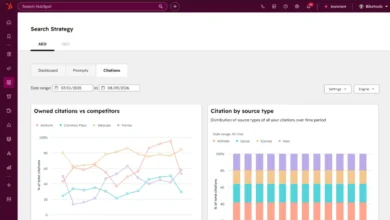
For marketing executives navigating this transition, industry analysts recommend a dual-tracking methodology. Modern performance dashboards must expand beyond traditional metrics—such as organic search traffic, keyword rankings, and click-through rates—to incorporate AI citation monitoring and brand sentiment tracking within conversational assistant platforms. Aligning legacy search metrics with generative discovery analytics provides a holistic view of brand visibility across both algorithmic search results and neural synthesis engines.
Conclusion: Reassessing Foundational Assumptions
The converging events of late 2026 underscore a unified theme: the systematic reevaluation of assumptions long taken for granted within the digital marketing industry. From navigating overlapping core algorithm updates and formalizing regulatory appeal pathways, to troubleshooting bot security configurations for AI agents, accommodating fragmented CMS architectures, and bridging the gap between traditional search optimization and generative AI citation tracking, web professionals must adapt to an increasingly complex operational environment.
As the digital ecosystem prepares for the impending December core update and beyond, organizations that maintain rigid, uncritical workflows risk severe performance penalties. Conversely, those that embrace rigorous data measurement, robust technical governance, and dual-layered visibility strategies will be best positioned to sustain long-term digital growth.