The Productivity Paradox: Lessons from the PC Revolution for the AI Era

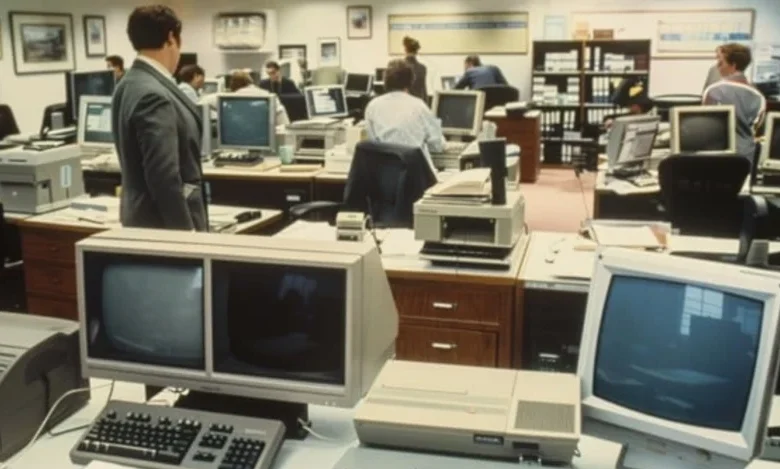
The advent of the personal computer (PC) was heralded as a transformative force, poised to revolutionize the workplace and usher in an era of unprecedented productivity. The proliferation of sophisticated software—from powerful spreadsheets and word processors to comprehensive databases and intuitive presentation tools, all underpinned by the seemingly indispensable communication channel of email—promised to streamline countless professional tasks. The inherent logic was compelling: automating and simplifying complex or repetitive processes would undoubtedly translate into significant gains in output and efficiency.
However, the reality of the PC’s impact on productivity proved to be far more nuanced and, at times, counterintuitive. As observed in a 2021 op-ed published in WIRED, the anticipated “slam dunk” of increased productivity often fell short of expectations. While the benefits of these digital tools were undeniable in simplifying specific tasks, their aggregate effect on overall work output and efficiency was not as straightforward as initially projected. This disconnect between technological promise and realized productivity has resurfaced with the current wave of artificial intelligence (AI) innovations.
The current AI moment presents a striking parallel to the early days of the personal computer. There is a palpable assumption that AI, with its demonstrated ability to expedite a wide range of professional activities—from content generation and data analysis to customer service and complex problem-solving—will inherently lead to a more productive workforce. Yet, the lessons learned from the PC revolution suggest that this outcome is not guaranteed and may, in fact, be subject to similar complexities.
The PC era, though now a distant memory for many, offers valuable insights into the challenges of integrating new technologies into established work practices. While few individuals would willingly relinquish the conveniences afforded by personal computing—the ability to draft documents instantly, analyze vast datasets with ease, or communicate globally in moments—the impact of PCs on overall productivity was a slow-burn phenomenon, not an immediate revolution. Unlike earlier, more tangible innovations such as the steam engine or the power loom, whose productivity gains were often direct and measurable, the benefits of desktop computing were subtler, requiring a significant period of adaptation, skill development, and organizational restructuring to be fully realized. The integration of PCs into the workforce was a gradual process, marked by a learning curve that often offset initial efficiency gains.
Similarly, artificial intelligence, much like the early personal computer, is a technology too imbued with potential convenience and transformative capabilities to be easily dismissed or contained. The sheer breadth of applications and the speed at which AI tools are evolving suggest that they are not a fleeting trend but a fundamental shift in how work can be approached. However, as organizations and individuals grapple with the implications of AI, it is crucial to approach its promise with a critical lens, informed by the historical precedent of computing. The digital world has repeatedly demonstrated that productivity is not a linear equation where technological advancement directly equates to increased output.
The Dawn of the Personal Computer and the Productivity Promise
The 1970s and 1980s witnessed the birth of the personal computer, a technological leap that promised to democratize computing power and bring it from the domain of large corporations and academic institutions into the hands of individuals. Companies like Apple and IBM, along with the emergence of Microsoft’s operating systems, laid the groundwork for a paradigm shift. The early vision was one of enhanced efficiency: tasks that once required hours of manual labor or specialized expertise could be accomplished with relative ease.
Key Software Innovations and Their Anticipated Impact:
- Word Processors: Replacing typewriters and manual editing, these tools offered unprecedented ease in drafting, revising, and formatting documents. The expectation was faster report generation, more polished correspondence, and reduced administrative burden.
- Spreadsheets: Programs like VisiCalc and later Lotus 1-2-3 revolutionized financial modeling, budgeting, and data analysis. The promise was quicker financial forecasting, more accurate business planning, and the ability to explore complex scenarios with speed.
- Databases: Managing vast amounts of information became more accessible, allowing for efficient storage, retrieval, and organization of customer records, inventory, and other critical business data.
- Presentation Software: Tools like PowerPoint enabled the creation of visually engaging presentations, aiming to improve the effectiveness of business communication and training.
- Email: The introduction of electronic mail was perhaps one of the most significant early developments, promising near-instantaneous communication and the elimination of postal delays.
The initial rollout of these technologies was met with widespread optimism. Businesses invested heavily in hardware and software, and employees underwent training. The assumption was that these tools would directly translate into higher productivity, enabling workers to accomplish more in less time.
The Unforeseen Complications: The PC Productivity Paradox
Despite the initial enthusiasm, the anticipated surge in productivity was not immediately apparent. Several factors contributed to this phenomenon, often referred to as the "productivity paradox" of information technology.
- Learning Curves and Skill Gaps: Mastering new software and hardware required time and effort. Many employees struggled with the transition, leading to initial dips in efficiency as they learned to navigate new interfaces and functionalities. The complexity of some early software also meant that specialized skills were often needed, creating bottlenecks rather than broad efficiency gains.
- The Rise of "Digital Paperwork": While word processors made editing easier, they also encouraged longer documents and more elaborate formatting. Similarly, spreadsheets, while powerful, could lead to overly complex models that were difficult to understand or maintain. The ease of creating content did not necessarily translate into more concise or impactful communication.
- The Communication Overload: The advent of email, while a revolutionary communication tool, inadvertently led to an explosion of messages. What was intended to streamline communication often resulted in an overwhelming volume of emails, demanding constant attention and contributing to distraction and context-switching. The 2021 WIRED op-ed by the author of the original article highlighted this very issue, noting how the very tools designed to increase efficiency could, in fact, become a significant drain on productive time.
- Integration Challenges: Effectively integrating new technologies into existing workflows and organizational structures proved to be a significant hurdle. Simply providing computers did not automatically change entrenched processes or management styles. The potential of the technology was often hampered by a lack of strategic implementation and organizational adaptation.
- Measurement Difficulties: Quantifying the productivity gains from intangible tasks like communication, information processing, and decision-making proved to be far more challenging than measuring the output of factory workers or agricultural laborers. This made it difficult to definitively prove the return on investment in IT.
Research from the 1980s and 1990s, such as the work by economists like Robert Solow, famously noted that "You can see the computer age everywhere but in the productivity statistics." This observation underscored the discrepancy between technological investment and measured economic output.
The AI Revolution: Echoes of the Past?
Today, the landscape is dominated by artificial intelligence. Generative AI models, machine learning algorithms, and advanced automation tools are rapidly entering the professional sphere. The promise is similar to that of the PC: increased efficiency, enhanced creativity, and the ability to tackle complex problems with unprecedented speed.
Current AI Applications and Their Potential Productivity Impacts:
- Content Generation: AI can draft emails, reports, marketing copy, and even code, potentially freeing up human workers for more strategic tasks.
- Data Analysis and Insights: AI can process and analyze vast datasets, identifying trends and anomalies that might be missed by human analysts, leading to faster and more informed decision-making.
- Customer Service Automation: AI-powered chatbots and virtual assistants can handle routine customer inquiries, improving response times and reducing the workload on human support staff.
- Process Automation: AI can automate repetitive tasks across various industries, from manufacturing to finance, streamlining operations and reducing errors.
- Personalized Learning and Development: AI can tailor training programs to individual needs, accelerating skill acquisition and professional growth.
However, the parallels with the PC era are undeniable. As the author’s 2021 WIRED piece and his book, A World Without Email, implicitly suggest, the integration of new digital tools rarely follows a perfectly linear path to enhanced productivity.
Navigating the AI Era: Lessons for Today
The experience with personal computers offers crucial guidance as we navigate the current AI landscape.
- Focus on Integration, Not Just Adoption: Simply deploying AI tools is insufficient. Organizations must strategically integrate them into existing workflows, redesigning processes to leverage AI’s capabilities effectively. This requires a deep understanding of both the technology and the human element of work.
- Prioritize Skill Development and Adaptation: Just as workers needed to learn to use PCs, they will need to acquire new skills to effectively utilize AI. This includes understanding AI’s limitations, prompt engineering, critical evaluation of AI outputs, and ethical considerations.
- Beware of New Forms of Overload: The potential for AI to generate vast amounts of information or automate communication raises concerns about new forms of digital overload. The challenge will be to manage AI-generated content and interactions efficiently, avoiding the pitfalls of the email deluge.
- Measure Impact Beyond Simple Metrics: Productivity in the age of AI will likely involve more complex metrics. The value of AI may lie not just in speeding up existing tasks but in enabling entirely new forms of work, fostering innovation, and improving the quality of outcomes.
- The Long Road to Realized Gains: Significant productivity gains from AI, much like with PCs, may take time to materialize. It will require a period of experimentation, learning, and organizational evolution.
The author’s 2021 WIRED article, which was inspired by his New York Times bestselling book A World Without Email: Reimagining the Communication, delves deeply into the complexities of how computing and network technologies have reshaped knowledge work, often with unintended consequences for productivity. The book argues that while these technologies have introduced immense convenience, they have also fostered a culture of constant connectivity and an overwhelming reliance on asynchronous communication, which can be detrimental to deep work and focus. This research provides a crucial historical context for understanding the current AI moment. The insights from the PC revolution are not merely historical anecdotes; they are vital signposts for navigating the transformative, yet potentially complex, integration of artificial intelligence into our professional lives. The journey from technological promise to tangible, widespread productivity is often a marathon, not a sprint, requiring careful planning, thoughtful implementation, and a willingness to learn from the past.
The author’s extensive research, as showcased in A World Without Email, offers a provocative yet deeply considered perspective on the uneven impact of technological advancements on knowledge work. This seminal work, recognized as a New York Times bestseller, underscores that the promise of technological utopia is often tempered by the realities of human behavior and organizational inertia. As AI continues its rapid ascent, the lessons learned from the PC era—the prolonged integration, the unforeseen complications, and the often-subtle nature of productivity gains—serve as a critical reminder that technological adoption is only the first step. True productivity enhancement requires a holistic approach that considers not only the capabilities of the technology but also its profound implications for how we work, communicate, and ultimately, create value.