Tenth Circuit Reverses Summary Judgment in Retail Harassment Case Establishing New Precedents for Workplace Evidence

In a significant ruling for employment law, the United States Court of Appeals for the Tenth Circuit has partially revived a lawsuit filed by a former retail employee who alleged a hostile work environment based on his sexual orientation. The decision, which involves a national retail chain, clarifies how lower courts must evaluate evidence in Title VII cases, particularly regarding the weight given to discrete acts and the threshold for supervisory knowledge. While the appellate court affirmed the dismissal of the plaintiff’s claims regarding wrongful termination and retaliation, its decision to remand the hostile work environment claim for trial underscores the legal risks companies face when supervisors dismiss reports of harassment.
The case centers on a gay male employee who alleged a multi-year pattern of harassment that culminated in his resignation in 2021. The litigation, which initially saw all claims dismissed by a U.S. District Court via summary judgment, has now become a focal point for legal experts analyzing the intersection of workplace culture, supervisory responsibility, and the "continuing violation" doctrine.
Chronology of Allegations and Workplace Conduct
The plaintiff’s tenure at the national retailer was marked by a series of incidents that he contended created an increasingly hostile atmosphere. According to court documents and deposition testimony, the harassment began with verbal comments from management and peers. An assistant store manager allegedly expressed derogatory views to the plaintiff, suggesting that the expansion of rights for the LGBTQ+ community was a precursor to the legalization of extreme criminal behaviors.
As the plaintiff’s employment continued, the nature of the alleged harassment shifted toward stereotyping and personal insults. A supervisor and a temporary coworker reportedly mocked the plaintiff’s physical mannerisms, specifically targeting his gait and the movement of his hips, which they characterized as "effeminate." In another instance, a coworker questioned the plaintiff’s ability to perform physical labor, mockingly asking if he was "afraid to break a nail."
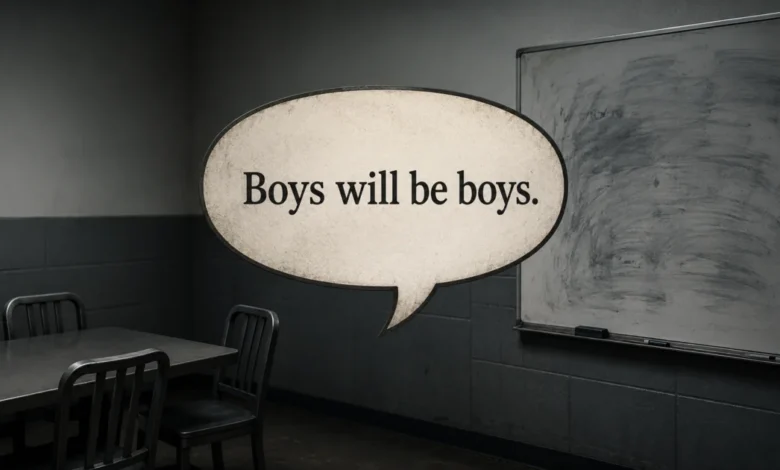
The situation escalated with the use of a derogatory nickname. The plaintiff testified that an unidentified coworker began referring to him by a slur-based moniker that combined his first name with a homophobic epithet. Despite the pervasive nature of these comments, the most critical piece of evidence involved a visual display in a common area. In 2019, a slur was drawn across a face on a whiteboard in the employee breakroom. When the plaintiff brought this to the attention of a supervisor, the supervisor reportedly shrugged off the incident, remarking "boys will be boys" before erasing the drawing.
The timeline of the plaintiff’s career also included a 2019 workload dispute. Following this conflict, the plaintiff was demoted rather than terminated. Although he continued to work for the retailer for two more years, he ultimately resigned in 2021, citing the cumulative effect of the workplace environment.
The District Court Ruling and the EEOC’s Intervention
The plaintiff filed suit under Title VII of the Civil Rights Act of 1964 and the New Mexico Human Rights Act (NMHRA). The district court initially granted summary judgment in favor of the employer on all counts. The lower court’s reasoning was based on several factors: it deemed the 2019 demotion too old to be litigated as a standalone claim, found that the plaintiff’s complaints did not constitute "protected activity" because they didn’t explicitly mention discrimination, and ruled that the harassment was not "severe or pervasive" enough to meet the legal standard for a hostile work environment.
Furthermore, the district court excluded several pieces of evidence, including the anonymous nickname and the comments about the plaintiff’s walk, labeling them as hearsay or lacking sufficient connection to his sexual orientation.
The Equal Employment Opportunity Commission (EEOC) entered the fray as an amicus curiae (friend of the court) during the appeal. The EEOC argued that the district court had applied an overly narrow lens to the evidence, failing to consider the "totality of the circumstances" as required by Supreme Court precedent. The Tenth Circuit largely agreed with this assessment.

Legal Analysis: Rebuilding the Hostile Work Environment Claim
The Tenth Circuit’s reversal on the hostile work environment claim rests on three primary legal corrections regarding evidence and the application of Title VII standards.
1. Discrete Acts as Contextual Evidence
The most impactful part of the ruling involves the treatment of the plaintiff’s 2019 demotion. While the court agreed that the demotion occurred too long ago to be a standalone basis for a lawsuit, it ruled that the district court erred by excluding it as evidence of a hostile work environment. Under the Supreme Court’s ruling in National Railroad Passenger Corp. v. Morgan, a hostile work environment is viewed as a single unlawful employment practice. Therefore, even "discrete acts" like a demotion or a formal disciplinary action can serve as component parts of a broader harassment claim, provided they contribute to the overall atmosphere.
2. The Standard for Severity and Pervasiveness
The appellate court criticized the lower court’s suggestion that harassment must occur with high frequency to be actionable. The Tenth Circuit clarified that a single, sufficiently severe incident can sustain a claim. In this case, the slur on the breakroom whiteboard, combined with the supervisor’s dismissive "boys will be boys" reaction, was deemed potentially severe enough for a jury to consider. The court noted that when a supervisor validates harassment through indifference, it significantly alters the conditions of employment.
3. Rejection of Hyper-Technical Evidence Rules
The court addressed the exclusion of the "effeminate walk" comments and the slur-based nickname. The Tenth Circuit ruled that comments do not need to be explicitly "anti-gay" in a vacuum to be evidence of a hostile work environment; they must be viewed in the context of the plaintiff’s identity and the other slurs used. Additionally, the court found that anonymous harassment (the nickname) is still relevant evidence, and that statements used to show the effect on the environment, rather than the truth of the statement itself, are not barred by hearsay rules.
Supporting Data on Workplace Discrimination
The Tenth Circuit’s decision reflects broader trends in employment litigation following the landmark 2020 Supreme Court decision in Bostock v. Clayton County, which confirmed that Title VII protects employees from discrimination based on sexual orientation and gender identity.
According to data from the EEOC, charges alleging discrimination based on sexual orientation and gender identity have seen a steady presence in federal filings. In recent fiscal years, sex-based discrimination claims (which include LGBTQ+ protections) have consistently accounted for nearly 30% of all charges filed with the commission. Furthermore, "harassment" remains one of the most common issues cited in these charges. Legal analysts suggest that the "boys will be boys" defense is increasingly failing in federal courts, as the judiciary places a higher burden on employers to demonstrate proactive corrective action.
Official Responses and Industry Implications
While the retail employer has not issued a formal statement regarding the ongoing litigation, the ruling serves as a stark warning to HR departments and corporate legal teams. The affirmation of the dismissal of the retaliation claim provides some solace for employers; the court held that because the plaintiff’s internal complaints about his workload and demotion never explicitly mentioned "discrimination" or "harassment," the company could not be held liable for retaliating against "protected activity."
However, the reversal on the harassment claim creates a new "blueprint" for plaintiffs’ attorneys. By allowing old, resolved personnel actions (like the 2019 demotion) to be reintroduced as evidence of a hostile environment, the court has effectively extended the "shelf life" of workplace disputes.
Broader Impact on HR Policy and Training
The implications of this case for national retailers and large-scale employers are profound. Legal experts suggest several key takeaways for maintaining a compliant workplace:
- Supervisory Accountability: The failure of the supervisor to take the whiteboard slur seriously was a turning point in the case. Companies must train managers that their "on-the-spot" reactions are legally binding for the corporation. A dismissive remark can negate years of formal anti-harassment policy.
- Contextual Sensitivity: HR departments must look beyond the literal text of a comment. As the Tenth Circuit noted, mocking a gay employee’s "walk" or "toughness" can be just as indicative of a hostile environment as a direct slur when viewed holistically.
- Documentation of Vague Complaints: While the employer won the retaliation portion of the suit due to the plaintiff’s vague complaints, the court’s decision suggests that a more proactive investigation into those "vague" concerns might have prevented the hostile work environment claim from maturing.
- The "Continuing Violation" Risk: Employers can no longer assume that once a statute of limitations has passed on a specific act (like a demotion or a write-up), that act is "gone" for litigation purposes. It can remain a "zombie" fact that resurfaces to support a later harassment claim.
The case now moves back to the district court, where a jury will likely decide whether the retailer’s environment was sufficiently hostile to warrant damages. This ruling ensures that the "boys will be boys" era of management faces increasing scrutiny in the federal appellate system.