First Circuit Affirms Dismissal of Conflicting ADA Verdict in Deaf Driver Applicant Case

In a significant ruling for employment law practitioners and human resources departments, the United States Court of Appeals for the First Circuit has upheld a trial judge’s decision to vacate a jury’s contradictory verdict in a case involving the Americans with Disabilities Act (ADA). The case, which centered on a medical transport company’s refusal to hire a deaf applicant for a driver position, highlights a critical legal boundary: an employer cannot be held liable for failing to engage in an "interactive process" if it is ultimately proven that no reasonable accommodation could have allowed the applicant to perform the essential functions of the job.
The appellate court’s decision settles a complex dispute over how courts must handle "hopelessly inconsistent" jury findings. By affirming the lower court’s judgment, the First Circuit reinforced the principle that the interactive process—the dialogue between employer and employee to find a middle ground for disability—is a means to an end, not an independent basis for liability when a viable accommodation is non-existent.
The Foundation of the Dispute: Hiring and Initial Accommodations
The litigation began when an applicant, who is deaf and uses American Sign Language (ASL) as his primary mode of communication, applied for a "chair car driver" position with a family-owned medical transportation company in Massachusetts. The company’s primary business involves transporting patients who use wheelchairs to and from medical appointments, dialysis centers, and hospitals.
The applicant came to the interview with relevant experience, having served for four years as a residential counselor at a group home for deaf individuals. In that role, he frequently drove residents to various locations and communicated with them using sign language. During his interview with the transport company, he demonstrated the use of Video Relay Service (VRS) on his smartphone. VRS allows a deaf individual to communicate with hearing individuals via a video link to a remote ASL interpreter. The applicant proposed using VRS along with a phone holder mounted in the vehicle as a reasonable accommodation to facilitate communication with the company’s dispatchers and the patients he would be transporting.
Initially, the hiring manager was impressed by the applicant’s credentials and his demonstration of the technology. A verbal offer of employment was extended, contingent on the successful completion of a "ride-along" shift, a standard part of the company’s vetting process to ensure drivers can handle the physical and logistical demands of the job.
The Ride-Along and the Breakdown of Communication
The trajectory of the hiring process shifted dramatically during the ride-along. A company supervisor accompanied the applicant to observe how he would interact with the environment. Although the applicant did not drive during this session, the supervisor raised immediate concerns regarding the feasibility of the proposed accommodation.
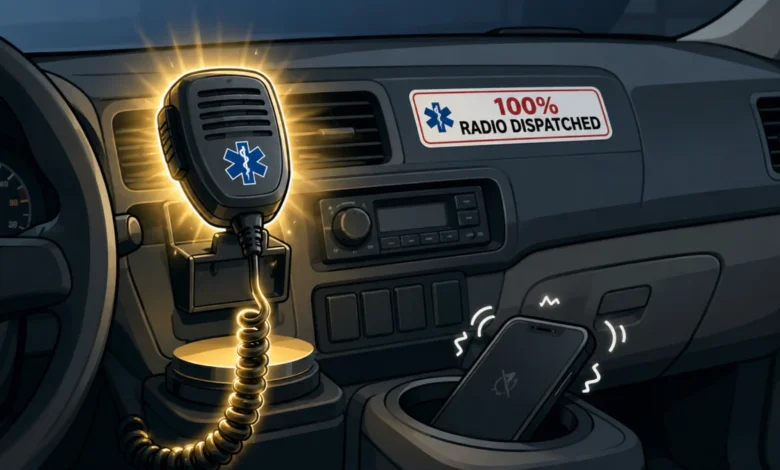
The company’s operations relied on a radio dispatch system designed to allow drivers to receive instructions while keeping their eyes on the road. The supervisor noted that the applicant’s reliance on VRS would require him to look at a screen to see the ASL interpreter, creating a potential safety hazard if used while the vehicle was in motion. Furthermore, the supervisor observed that drivers must frequently communicate with facility staff at nursing homes and hospitals, as well as with patients who may have cognitive impairments or limited mobility and cannot use sign language.
Following the ride-along, the company’s management and owners engaged in a series of internal email discussions. They analyzed the "essential functions" of the chair car driver role, which they categorized into three distinct communication streams: communication with patients, communication with medical facility staff, and communication with the company’s dispatch center.
Crucially, the applicant was not included in these internal deliberations. The management also considered whether the applicant could be placed in a "Day Care Van" role, but determined that the communication requirements for that position were identical to those of the chair car driver. Ultimately, the company rescinded the offer. They sent the applicant a formal rejection letter that detailed five specific areas where they believed his deafness, even with the proposed VRS accommodation, would prevent him from safely performing the job. The letter invited the applicant to respond with questions or further suggestions, but he did not do so, choosing instead to pursue legal action.
The Legal Standard: Reasonable Accommodation vs. Undue Hardship
Under Title I of the ADA, employers are prohibited from discriminating against a "qualified individual on the basis of disability." A qualified individual is someone who can perform the essential functions of the job with or without a reasonable accommodation. When an applicant requests an accommodation, the law generally requires the employer to engage in an "interactive process"—a good-faith effort to explore potential solutions.
However, an employer is not required to provide an accommodation if it would impose an "undue hardship" on the operation of the business. An undue hardship is defined as an action requiring significant difficulty or expense when considered in light of factors such as the employer’s size, financial resources, and the nature of its operation.
In this case, the employer argued that the applicant was not "qualified" because the only proposed accommodation (VRS) was insufficient for the real-time, hands-free communication required for safety and efficiency. They further argued that any other potential accommodation would constitute an undue hardship.
A Trial of Two Verdicts
The case proceeded to a five-day jury trial in a federal district court in Massachusetts. The trial was bifurcated, meaning the jury first decided on liability before moving to a potential damages phase. The verdict form presented the jury with several specific questions.

The jury’s responses created a legal paradox. On one hand, the jury found that the employer had proven that accommodating the applicant would have imposed an undue hardship. This finding logically implied that no reasonable accommodation existed that would have allowed the applicant to perform the job safely.
On the other hand, the jury found in favor of the applicant on a separate count: that the employer had failed to engage in the interactive process in good faith. By finding for the applicant on this count, the jury suggested that if the company had talked to him more, a reasonable accommodation could have been identified.
The trial judge immediately recognized the inconsistency. Under established ADA case law, a failure to engage in the interactive process is not a standalone violation of the law. To prevail on such a claim, a plaintiff must prove that a reasonable accommodation actually existed. If the jury found that any accommodation was an "undue hardship," then the failure to talk about it became legally moot.
The District Court’s Intervention and the First Circuit’s Affirmation
Before the trial could proceed to the damages phase, the trial judge ordered briefing on the inconsistent verdict. The employer moved for judgment as a matter of law, arguing that the "undue hardship" finding necessitated a total victory for the defense.
The trial judge agreed, noting that the verdict form had been flawed by allowing the jury to consider the interactive process as a separate path to liability regardless of the availability of an accommodation. She threw out the portion of the verdict favoring the applicant.
The applicant appealed to the First Circuit, arguing that the jury’s finding on the interactive process should stand. However, the appellate court was not persuaded. The First Circuit panel held that the trial judge acted correctly. The court clarified that while the interactive process is a vital component of the ADA, it is a procedural requirement designed to achieve a substantive result: the identification of a reasonable accommodation.
"Because the jury found that no reasonable accommodation was available (by finding undue hardship), the breakdown of the interactive process did not result in any actual discrimination," the court’s reasoning suggested. The First Circuit emphasized that the ADA does not punish an employer for a "procedural" failure if that failure had no impact on the ultimate hiring decision.
Timeline of the Case
- Initial Application: The applicant applies for the chair car driver position and demonstrates VRS technology.
- Contingent Offer: The company extends a verbal offer pending a ride-along.
- The Ride-Along: A supervisor identifies safety and communication concerns during a field observation.
- Internal Deliberation: Management discusses the risks via email without involving the applicant.
- Rescission of Offer: The company sends a detailed five-point rejection letter.
- Lawsuit Filed: The applicant sues under the ADA for failure to hire and failure to engage in the interactive process.
- Trial: A five-day trial ends in a split, contradictory verdict.
- District Court Ruling: The judge vacates the "interactive process" verdict in favor of the "undue hardship" finding.
- Appellate Ruling: The First Circuit affirms the district court’s decision, ending the litigation.
Analysis of Implications for Employers and Applicants
This case provides a roadmap for how employers should handle high-stakes accommodation requests. Although the employer won on a legal technicality regarding the verdict form, the litigation lasted years and likely cost significant sums in legal fees.
1. The Value of Specificity in Job Descriptions
The employer’s success in proving "undue hardship" was largely due to their ability to break down the job’s communication requirements into specific functions. Rather than claiming "drivers must be able to hear," they argued that drivers must be able to communicate with dispatch via radio while driving, interact with patients who have varying cognitive abilities, and coordinate with medical staff in noisy hospital environments. This specificity allowed the jury to see why a video-based screen service (VRS) was not a viable solution for a person behind the wheel.
2. The Risk of Internal Silos
The court noted that the employer’s decision-making happened almost entirely via internal email. While this did not lead to liability in this specific instance, it is a dangerous practice. The ADA "interactive process" is meant to be a dialogue. Had the employer invited the applicant to a second meeting to discuss the specific concerns raised during the ride-along, they might have avoided the "failure to engage" claim altogether.
3. Documentation as a Shield
The rejection letter sent by the company was a crucial piece of evidence. By itemizing five distinct concerns and inviting the applicant to respond, the company created a record of transparency. Even though the court ultimately focused on the legal impossibility of the verdict, the existence of a well-reasoned, itemized rejection letter helped establish the company’s "good faith" in the eyes of the court.
4. The "No Harm, No Foul" Rule for the Interactive Process
The First Circuit’s ruling reaffirms a "no harm, no foul" principle for the interactive process. If a job simply cannot be performed by an individual with a specific disability—and no amount of technology or modification can change that fact—the employer’s failure to be "nice" or "communicative" during the rejection process does not create a cause of action for damages.
Conclusion
The First Circuit’s decision in this case serves as a reminder of the complexities of disability law. While the ADA provides broad protections for individuals with disabilities, those protections are tethered to the reality of the "essential functions" of a job. For the medical transport industry, where safety and split-second communication are paramount, the court has signaled that "undue hardship" remains a robust defense, provided the employer can prove that the limitations of a proposed accommodation create genuine operational or safety risks.
For the legal community, the case highlights the importance of clear and precise jury instructions and verdict forms. A single "hopelessly inconsistent" response can jeopardize a trial’s outcome, leading to years of appellate litigation to resolve what a judge could have clarified at the outset. As it stands, the ruling provides a measure of certainty for employers: while the interactive process is a best practice, the ultimate litmus test of an ADA claim remains the feasibility of the accommodation itself.