Google Unlocks Billions in New Ad Revenue Through AI Max Integration as Search Queries Evolve Toward Conversational Intent

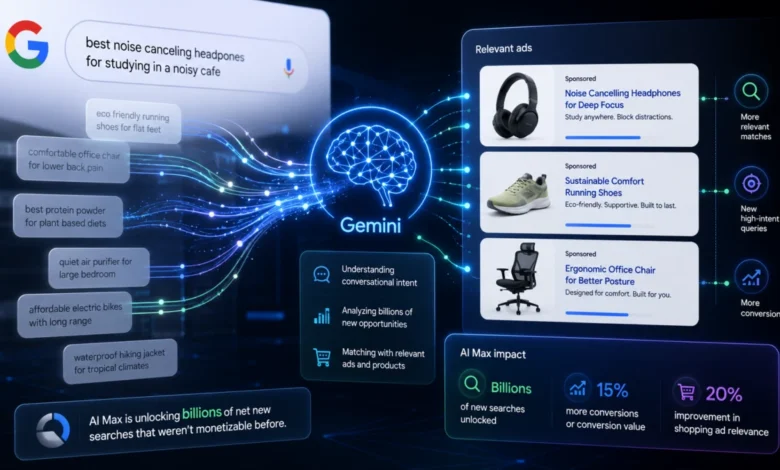
Alphabet Inc. has officially entered a new era of search monetization, revealing during its Q2 2026 earnings call that its proprietary AI Max technology is successfully opening "billions" of previously unmonetized searches to the global advertising market. This development marks a significant pivot in the company’s revenue strategy, as Google transitions from a keyword-centric advertising model to one driven by deep semantic understanding and conversational artificial intelligence. Philipp Schindler, Google’s Senior Vice President and Chief Business Officer, provided a detailed look into how the company is leveraging its Gemini large language models to interpret complex user queries that were historically considered too ambiguous or "long-tail" for traditional ad matching.
The announcement comes at a critical juncture for Alphabet, which has faced increasing pressure from investors to demonstrate that generative AI is a catalyst for growth rather than a threat to its core search business. By unlocking inventory in conversational search—a segment that has grown rapidly as users interact with AI-driven interfaces—Google is effectively expanding the boundaries of the digital advertising ecosystem. Schindler emphasized that AI Max is not merely a feature within existing tools but a fundamental shift in how Google creates and fills ad inventory, ensuring that even the most nuanced human inquiries can be paired with relevant commercial offerings.
The Graduation of AI Max: From Beta to Global Scale
A central highlight of the Q2 report was the announcement that AI Max has officially exited its beta testing phase. The tool, which represents the next evolution of Google’s automated campaign management, has already seen rapid adoption, with more than 500,000 advertisers currently utilizing the system. The scale of this adoption suggests that the transition to AI-managed advertising is no longer a futuristic concept but a present-day reality for a significant portion of Google’s client base.
According to data shared by Google, the performance metrics for AI Max are substantial. Advertisers transitioning to AI Max, or its predecessor Performance Max, are experiencing an average 15% increase in conversions or conversion value. Crucially, this lift is being achieved while maintaining a similar return on ad spend (ROAS), suggesting that the AI is finding high-value opportunities rather than simply increasing spending. This efficiency is a primary driver for the half-million businesses that have already integrated the tool into their marketing stacks.
The transition out of beta signifies Google’s confidence in the stability and reliability of the AI Max algorithms. For years, the advertising industry has moved toward automation, but AI Max represents a leap forward by taking full control of placement, bidding, and creative matching across the entire Google ecosystem, including Search, YouTube, Gmail, and the Display Network.
Gemini Integration and the Optimization of Shopping Ads
The technological backbone of this revenue expansion is Gemini, Google’s most advanced suite of AI models. During the earnings call, executives detailed how Gemini is being used to bridge the gap between complex user intent and product availability. One of the most striking statistics provided was a 20% improvement in the relevance of Shopping ads for complex queries.
In the past, a search query like "what are the best eco-friendly running shoes for someone with high arches training for a marathon in a rainy climate" might have struggled to trigger a precise ad match. Traditional keyword-based systems might have focused on "running shoes" or "marathon," potentially missing the "eco-friendly" or "high arches" nuances. Gemini, however, is capable of parsing the entire sentence, understanding the specific constraints of the user’s request, and matching it with a product feed that highlights those exact features.
This ability to interpret "commercial intent" in conversational language is what allows Google to monetize the billions of searches that previously went "dry"—meaning they displayed organic results but no ads. By better understanding the user’s journey, Google can now insert relevant sponsored content into deep-research phases of the consumer lifecycle that were previously inaccessible to advertisers.
A Chronology of Google’s AI Advertising Evolution
The path to AI Max has been a multi-year journey characterized by incremental shifts toward automation and machine learning. To understand the significance of the Q2 2026 announcement, it is necessary to look at the timeline of Google’s ad tech development:

- 2021-2022: The Launch of Performance Max. Google introduced Performance Max (PMax) as a way for advertisers to access all Google Ads inventory from a single campaign. This was the first major step toward "black box" advertising, where the system made decisions based on goals rather than manual keyword inputs.
- 2023: The Rise of Generative AI. Following the public explosion of generative AI, Google began integrating Search Generative Experience (SGE) into its core product. This allowed users to see AI-written summaries at the top of search results, creating a new "AI Mode" for search.
- 2024: Gemini Implementation. Google rebranded its AI efforts under the Gemini umbrella and began using these models to assist advertisers in creative asset generation, such as writing headlines and generating images for ads.
- 2025: The AI Max Beta. AI Max was introduced as a more advanced, intent-based layer on top of existing systems, specifically designed to handle the conversational nature of modern search queries.
- Q2 2026: Full Deployment. AI Max exits beta, and Google reports the successful monetization of billions of conversational queries, marking the formal integration of AI into the core revenue engine of the company.
Official Responses and Strategic Vision
Philipp Schindler’s remarks during the earnings call painted a picture of a company that is no longer defensive about AI’s impact on search. "We are seeing that as queries become longer and more conversational, our ability to provide relevant answers—and relevant ads—is only increasing," Schindler stated. He noted that the "billions" of newly monetized searches represent a frontier of growth that was simply not possible under the constraints of the old keyword-matching paradigm.
Financial analysts have reacted with cautious optimism. While the 15% lift in conversions is an impressive headline figure, some market observers have raised questions about the "black box" nature of these tools. During the Q&A session of the call, questions were raised regarding how much visibility advertisers would retain. Google’s response emphasized that while "exact match" keyword reporting might be declining in relevance, the company is providing new types of "intent-based" insights to help brands understand why their ads are being shown.
The company also touched upon "AI Mode" ads, which are specifically designed for the AI-generated overviews that appear at the top of search results. These ads are being integrated directly into the AI’s responses, allowing for a more seamless blend of information and commerce.
Broader Impact: The End of the Keyword Era?
The success of AI Max signals a fundamental shift for the digital marketing industry. For nearly three decades, the "keyword" has been the primary unit of currency in search marketing. SEO professionals and PPC managers spent their careers identifying, bidding on, and optimizing for specific words and phrases.
With AI Max, the focus is shifting from "keywords" to "signals." To succeed in this new environment, advertisers must provide Google with high-quality product feeds, diverse creative assets (images, videos, headlines), and clear landing page data. The AI then uses these signals to determine which user queries—no matter how complex—align with the advertiser’s goals.
This shift has several profound implications:
- Lower Barrier to Entry for Small Businesses: Small advertisers who may not have the expertise to manage complex keyword lists can now rely on AI Max to find their audience based on simple goals and creative inputs.
- Increased Competition for Mid-Tail Queries: As Google gets better at monetizing specific, long-form queries, the competition for these "niche" searches is likely to increase, potentially driving up costs for specialized retailers.
- Data Privacy and Transparency: As the "how" and "why" of ad matching become more obscured by AI algorithms, there will likely be increased scrutiny from regulators regarding how Google uses user data to determine intent.
Analysis of Market Implications and Future Outlook
Alphabet’s Q2 2026 results suggest that the "threat" of AI to Google’s search dominance may have been overstated, or at the very least, Google has found a potent counter-strategy. By turning conversational search into a revenue-generating asset, the company is effectively future-proofing its business model against the rise of AI-first search competitors like Perplexity or OpenAI’s SearchGPT.
The ability to monetize "billions" of previously untapped searches provides Google with a massive "buffer" of inventory. In an era where digital ad space on traditional platforms is often seen as saturated, finding a way to create new inventory out of thin air—by simply understanding existing queries better—is a significant competitive advantage.
However, the transition is not without its risks. The reliance on AI Max requires a high level of trust from the advertising community. If the 15% conversion lift begins to plateau, or if advertisers feel they are losing too much control over their brand safety and spend, there could be a pushback against the "automated-only" approach.
For now, the data suggests a winning formula. Alphabet’s ability to marry the linguistic power of Gemini with the commercial infrastructure of Google Ads has created a powerful new engine for growth. As AI Max continues to roll out to the remaining millions of advertisers on the platform, the industry will be watching closely to see if this "intent-based" model becomes the new global standard for how products are discovered and sold online. The bottom line from Google’s latest disclosure is clear: AI is no longer just a way to improve search results; it is the primary tool for expanding the search economy itself.