Sazo Revolutionizes Cross-Border Commerce with Agentic AI Integration and US Market Expansion Following Ten Million Dollar Series A Funding

The landscape of international e-commerce is undergoing a fundamental transformation as Sazo, an agentic artificial intelligence-powered commerce platform, scales its operations to bridge the gap between Asian markets and the United States. Following a successful expansion strategy that began in East Asia, the Nagoya-based company has officially entered the U.S. market, allowing American consumers to purchase goods directly from Japan with the same ease as domestic shopping. This strategic move, supported by a recent $10.3 million Series A funding round, positions Sazo at the forefront of a new era in retail where autonomous AI agents handle the logistical complexities of customs, currency, and consolidation.
The company’s entry into the United States comes at a pivotal moment for global trade. While traditional cross-border models have historically relied on "duty-free tricks" and the exploitation of tax loopholes to maintain low prices, Sazo is pivoting toward a model defined by transparency and seamless execution. Chief Financial Officer Gavin Jung noted that despite a macro environment characterized by more restrictive trade policies—most notably the tightening of the U.S. de minimis duty exemptions—consumer demand for international goods continues to surge. Sazo’s value proposition lies in its ability to absorb the friction of these regulatory hurdles, providing a "landed cost" experience where duties and shipping are calculated and settled at the point of sale.
The Genesis and Evolution of Sazo: A Chronological Overview
Sazo was founded in 2023 by Maro Gil, a visionary entrepreneur who conceived the idea while studying artificial intelligence in Nagoya, Japan. As a South Korean student living abroad, Gil experienced firsthand the frustrations of trying to acquire hobby-related products from his home country. Despite the geographical proximity of South Korea and Japan, the digital and logistical barriers remained significant. Leveraging his background in AI, Gil developed a prototype designed to automate the purchasing process, effectively acting as a digital bridge between the two nations.
The company’s growth trajectory has been aggressive. In early 2024, Sazo launched its initial service, facilitating commerce from South Korea to Japan. By June 2025, the platform expanded its corridor to include Japan-to-Korea commerce, tapping into the deep cultural exchange between the two neighbors. The most significant milestone to date occurred in June 2026, when Sazo officially opened its doors to the U.S. market. Currently, the platform allows U.S. shoppers to access a vast array of Japanese products, with plans to open a dedicated office in California within the next year to manage its growing North American footprint.
Agentic AI: The "Execution Layer" of Modern Commerce
At the heart of Sazo’s operations is "agentic AI," a subset of artificial intelligence that goes beyond mere recommendation engines or chatbots. Unlike traditional AI, which might suggest a product or translate a page, Sazo’s agentic models are designed to execute complex tasks autonomously. This includes estimating duties and taxes based on Harmonized System (HS) codes, translating technical product listings into the consumer’s native language, and managing the physical consolidation of goods.
When a consumer in the United States selects multiple items from different Japanese sellers, Sazo functions as a proxy buyer. The AI coordinates the purchase of these items, directs them to a regional warehouse, and repackages them into a single, optimized shipment. This consolidation significantly reduces international shipping costs and simplifies the customs clearance process.
Gavin Jung emphasizes that Sazo is building a "technology stack" intended to serve as the back-end infrastructure for the wider AI ecosystem. As AI agents—autonomous programs that can shop on behalf of humans—become more prevalent, they will require a physical and regulatory execution layer to complete transactions. Sazo’s upcoming Application Programming Interface (API) will allow third-party AI agents to plug into its logistics network. "As AI agents start shopping on people’s behalf, searching, recommending, eventually buying, the models are great at finding a product," Jung explained. "But they can’t clear customs, predict duty by HS code, or run local fulfillment. That execution layer is exactly what we own."
Financial Backing and Strategic Partnerships
The company’s innovative approach has attracted significant interest from major financial institutions and venture capital firms across Asia. Sazo recently secured $10.3 million in Series A funding, a round led by Japan Post Capital and the logistics giant Suzuyo & Co. These lead investors also spearheaded Sazo’s pre-Series A financing, signaling strong long-term confidence in the company’s scalability.
The diversity of Sazo’s investor pool reflects the cross-border nature of its business. Notable participants in the funding round include:
- Naver: South Korea’s leading internet search and e-commerce portal.
- Sumitomo Mitsui Banking Corporation (SMBC): One of Japan’s "megabanks," providing deep financial and institutional support.
- Mizuho Bank: Another top-tier Japanese financial institution.
- Partners Fund: A Japanese venture capital firm focused on high-growth startups.
- D4V (Design for Ventures): A firm known for its partnership with IDEO, focusing on design-led innovation.
CEO Maro Gil stated that the new capital will be used to aggressively hire talent across development and service operations. The company is currently experiencing a 25% month-over-month growth rate, with its monthly gross merchandise value (GMV) increasing sevenfold over the past six months. This rapid scaling necessitates a robust infrastructure to support the "cross-border ecosystem" Gil envisions.
Consumer Trends: The Psychology of Cross-Border Shopping
Sazo’s internal data reveals fascinating discrepancies in how different demographics utilize cross-border commerce. While the company initially expected a younger, budget-conscious audience, the actual user base is more mature and willing to spend significantly on niche interests.
In the South Korean market, the primary demographic consists of women in their 30s and 40s. This group frequently uses Sazo to source Japanese products related to anime, character-based merchandise, and specialized hobby items. In contrast, Sazo’s Japanese customer base trends younger and is predominantly male, with a strong focus on K-pop memorabilia, fashion, and Korean food products.
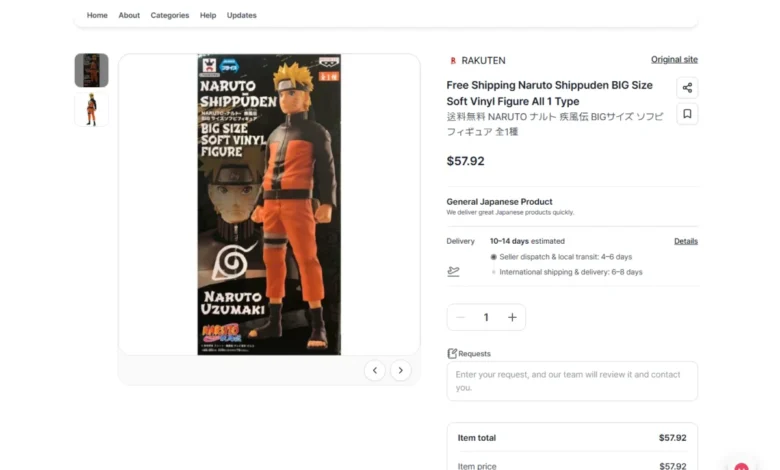
One of the most surprising metrics for the Sazo leadership team has been the Average Order Value (AOV). Despite the availability of cheap global shipping options through competitors, Sazo’s AOV consistently exceeds $100. This suggests that consumers are using the platform not for "fast fashion" or disposable goods, but for high-value items they are passionate about. Jung refers to these customers as "IP maniacs"—collectors and enthusiasts who are willing to pay a premium for authentic intellectual property, such as limited-edition Japanese anime figures or exclusive South Korean collectibles.
Navigating a Restrictive Trade Environment
The expansion into the U.S. comes at a time when the American government is re-evaluating its "de minimis" rules, which allow packages valued under $800 to enter the country duty-free. Critics of the rule argue it gives an unfair advantage to foreign e-commerce giants and facilitates the entry of illicit goods. However, Sazo’s model is built to thrive regardless of these exemptions.
By integrating duties and tariffs into the upfront price, Sazo eliminates the "customs shock" that often occurs when a consumer receives an unexpected invoice from a courier like FedEx or DHL weeks after a purchase. This transparency is a strategic move to build trust in a market where consumers are increasingly wary of hidden costs associated with international shopping.
Furthermore, Sazo’s consolidation model—turning multiple small shipments into one larger, documented shipment—allows for more efficient customs processing. This "execution layer" ensures that even as trade regulations tighten, the consumer experience remains as frictionless as a domestic Amazon or Walmart transaction.
Future Outlook: Building the Global Back-End
As Sazo prepares to establish its California presence, the company is also exploring "inventory-led" models. While it currently operates primarily as a proxy buyer (purchasing items only after a consumer places an order), Sazo is investigating the possibility of stocking high-demand items in local warehouses to offer even better pricing and faster delivery times.
The ultimate goal for Sazo is to become the invisible plumbing of global e-commerce. By providing the API that powers other AI shopping assistants, Sazo positions itself as an essential utility rather than just another storefront. Whether a consumer uses a future Apple-integrated AI or a standalone shopping bot, Sazo aims to be the engine that handles the physical movement of goods across borders.
In an era where "agentic AI" is set to redefine the relationship between consumers and the digital marketplace, Sazo’s focus on the unglamorous but essential aspects of trade—customs, logistics, and duties—provides a competitive moat. By solving the "execution" problem, Sazo is not just helping people buy things from other countries; it is effectively erasing the borders of the digital economy.