Beyond Voicemail: The Critical Role of Answering Services in Securing Jobs for Modern Contractors


When a pipe bursts or an air conditioning unit fails in the scorching summer heat, the homeowner’s immediate reaction is to grab their phone. For contractors, the challenge isn’t just being skilled at their trade; it’s being available at that critical moment. Every hour spent high on a ladder, deep in a crawlspace, or navigating between job sites is an hour when the phone might ring unanswered, and a potential job is lost before the contractor even knows it existed. This operational reality is the daily math for countless trades businesses, where the immediacy of customer needs clashes with the inherently mobile and hands-on nature of the work. Unlike office-based businesses that can staff a dedicated front desk, contractors operate from trucks and client homes, making constant phone availability a logistical impossibility. This persistent challenge has driven the evolution of specialized answering services, designed to ensure that every call, whether for a new job, an urgent repair, or a routine inquiry, receives a live, professional response, effectively turning potential losses into booked appointments. These solutions primarily fall into three categories: traditional live answering services, advanced AI answering services, and hybrid models that combine the strengths of both. Understanding their capabilities and trade-offs is crucial for contractors aiming to optimize their lead capture and customer service.
The High Cost of Silence: Why Missed Calls Haunt Contractors More Than Bad Reviews
A negative online review can sting and require careful management, but its impact is often recoverable through subsequent excellent service and strategic responses. A missed call, however, represents an immediate and often irreversible loss. Homeowners facing emergencies like a burst pipe or a malfunctioning furnace in winter are not inclined to leave a strained voicemail and patiently await a callback. Their immediate impulse is to hang up and dial the next contractor on their search results, a process that, in today’s competitive digital landscape, often takes mere seconds, not hours. The opportunity evaporates instantly.
Empirical data underscores this contractor’s intuition. Research conducted by call analytics firm Invoca revealed a stark statistic: fewer than 3% of callers directed to a service business’s voicemail actually leave a message. This lack of a message translates directly into zero callback opportunities, no lead generation, and ultimately, no awareness that a potential job was ever on the table. In a market where digital visibility means a multitude of options are just a click away, the speed of response has become a paramount differentiator. Customers have already invested time in searching, comparing a few options, and deciding who to call first. The contractor who answers promptly gains the initial serious consideration, distinguishing them from those who leave callers in limbo.
This urgency is particularly pronounced within the trades. Service and repair requests are inherently time-sensitive, often driven by immediate comfort, safety, or operational needs. Consequently, customer tolerance for "we’ll call you back" is significantly lower than in many other industries. A 2022 study by Salesforce indicated that 80% of customers consider the experience a company provides to be as important as its products or services, with speed of response being a key component of that experience. For a plumbing business, missing just two emergency calls a day, each valued at an average of $300-$500, could translate to a potential revenue loss of over $20,000 per month, highlighting the profound financial implications of inadequate call handling. The silent cost of a missed call far outweighs the temporary sting of a bad review, directly impacting a contractor’s bottom line and growth potential.
Tailored Solutions: What Trades Businesses Demand from Answering Services
The operational rhythm of a contractor stands in stark contrast to that of many other service professionals. A dispatcher for a law firm or a dental office typically works within predictable business hours, from a desk, managing a calendar. Contractors, however, navigate a dynamic environment: calls come in from a truck cab, between appointments, or in the middle of a complex repair. The range of urgency and intent behind these calls is broader and more unpredictable than what most other service businesses encounter. An effective answering solution for the trades must possess the sophistication to accurately sort and prioritize three distinct types of calls without causing delays or disruptions to ongoing work.
Emergency and Same-Day Repair Requests: These are the calls that demand immediate attention and response. A "no-heat" situation in the dead of winter, a burst pipe causing flooding, or a complete power outage doesn’t fit neatly into next week’s schedule. Callers in these dire circumstances need instant reassurance that their plea has been heard and that help is en route. A contractor answering service must be adept at recognizing keywords like "flooding," "no power," "gas leak," or "no heat" within the first few seconds of a conversation. Crucially, it must then possess the protocols and technology to immediately escalate and route these urgent calls to the appropriate on-call technician or dispatcher who can respond fastest. Treating an emergency as a routine scheduling request is not only a recipe for losing the job to a competitor but also severely damages the trust and reputation that drive valuable referrals in the trades industry. The service must be capable of transmitting critical information—location, nature of emergency, contact details—with absolute accuracy and speed.
Routine Scheduling and Estimates: Not every call is a crisis. Many homeowners call for quotes on planned projects like a kitchen remodel, or existing customers need to confirm an appointment scheduled for next Tuesday. While less urgent than emergencies, these calls are equally vital for business growth and customer retention. An effective answering service must be capable of accurately capturing all necessary information, including:
- Caller’s full name and contact details (phone, email).
- Detailed description of the service required (e.g., "quote for bathroom renovation," "annual HVAC maintenance," "fix leaky faucet").
- Preferred date and time for service or estimate.
- Full service address and any specific access instructions.
- Any relevant historical context if the caller is an existing customer.
The ideal scenario ensures all information is logged correctly and, ideally, directly integrated into the contractor’s scheduling or CRM system, preventing the customer from having to repeat themselves during a callback. This is often where basic answering services falter. A rushed or inaccurate intake—missing a digit in a callback number, misspelling an address, or vaguely describing a job—can transform a promising estimate request into a lost booking, leading to wasted administrative time and frustrated potential clients.
Vendor and Supplier Calls: The contractor’s phone line isn’t exclusively for customer inquiries. Suppliers confirming delivery windows, subcontractors checking on schedule changes, or permit offices following up on inspections all vie for the same communication channel as potential client leads. An answering setup that cannot intelligently distinguish between a supplier call and a customer lead risks two equally detrimental outcomes: either the crew is unnecessarily interrupted by low-priority traffic, diverting their focus from billable work, or, worse, a genuine customer call is buried under administrative noise. The ability to sort these calls correctly ensures that field staff remain focused on their core tasks, while essential operational communications are handled efficiently without impacting customer service. This sophisticated filtering and routing capability contributes significantly to the overall operational efficiency and professionalism of a trades business.
The Evolving Landscape of Answering Services: Live Agents, AI, and Hybrid Models
Contractors navigating the myriad of answering options are essentially choosing from three distinct categories, each presenting a unique set of benefits and trade-offs. The decision often hinges on factors such as call volume, budget, the complexity of typical inquiries, and the desired level of human interaction.

Live Answering Services:
These services employ trained human agents who answer calls, typically following pre-approved scripts for common scenarios.
- Benefits: The primary advantage of live agents lies in their ability to handle nuance and improvise. They can navigate unusual requests, empathize with a panicked homeowner during a gas leak, negotiate a same-day slot for a VIP client, or discern a hidden emergency based solely on a caller’s tone—something a script cannot easily anticipate. A well-trained agent who is familiar with a contractor’s business can accurately quote prices for standard services, cross-sell maintenance plans, or recognize and appropriately prioritize a repeat customer without needing to pull up a detailed file. The human element often fosters a greater sense of trust and personalized service, which can be invaluable in customer-facing industries.
- Trade-offs: Live agents generally incur higher costs per call compared to automated alternatives. This cost can sometimes be accompanied by inconsistent quality, as performance can vary significantly between individual agents and their level of familiarity with a specific contractor’s services, service area, and pricing. High turnover rates within the call center industry mean contractors may periodically pay to onboard and train new agents, a recurring expense. Furthermore, live services can be overwhelmed during peak periods, such as storm season or extreme weather events. Call volume spikes can thin agent availability, leading to longer hold times and callers being shunted into queues precisely when they require the fastest possible answer.
AI Answering Services:
Representing a significant technological leap, AI answering services leverage artificial intelligence to answer every call consistently, at any hour, without hold times or agent turnover. The evolution of AI in customer service has moved far beyond the rigid, frustrating phone trees of the past, now incorporating advanced Natural Language Processing (NLP) and machine learning to offer a more conversational and context-aware experience.
- Benefits: The most compelling advantage of AI services is their cost-effectiveness and predictability. There’s no staffing to scale up during busy periods, no overtime for after-hours calls, and no ramp-up time for new hires. This translates to a lower, more stable cost per call. Modern AI systems have matured to be context-aware, capable of pulling information from a knowledge base to answer frequently asked questions about service areas or pricing, scheduling appointments directly into a synchronized calendar, and intelligently flagging truly urgent jobs (e.g., a burst pipe, no heat in freezing weather) for immediate human callback rather than routing them into a generic queue. They provide 24/7 availability and unmatched consistency in message delivery and data capture.
- Trade-offs: While highly efficient for structured scenarios like booking, triage, and lead capture, AI may still struggle with highly unusual or deeply emotional calls. A caller describing a complex, multi-part problem, attempting to negotiate a quote, or expressing intense frustration about a botched job can push the system beyond its current capabilities, necessitating a human handoff. Contractors relying solely on AI must implement a clear fallback mechanism—such as a live transfer option or a guaranteed same-day callback promise—to ensure these complex calls do not reach a dead end, which could lead to customer dissatisfaction.
Hybrid Models:
Hybrid models strategically combine the strengths of both AI and live agents, leveraging AI for initial contact and routine data capture, while reserving human intervention for complex or high-stakes interactions.
- Benefits: This approach offers the best of both worlds. AI provides immediate answers and efficiently captures basic information—caller name, job type, address, urgency—ensuring that no critical detail is missed during off-hours or call surges. Live agents then step in for situations that genuinely require human judgment, empathy, or negotiation: an angry customer, a detailed pricing discussion, or a job that doesn’t fit standard service categories. Contractors benefit from consistent, round-the-clock intake without sacrificing the crucial human touch on calls where it matters most. This model maximizes efficiency while preserving high-quality customer experience.
- Trade-offs: Hybrid models can be the most expensive option, as they layer the costs of live agents on top of an AI system. They also necessitate meticulous setup and clear, well-defined escalation rules. Contractors must proactively determine which specific call types trigger a handoff to a live agent. Vague rules can lead to either an excessive number of unnecessary handoffs (driving up costs) or too few (leaving complex issues unresolved by the bot). The initial setup and ongoing management of a hybrid system require more coordination and integration than either standalone option. For a contractor, the optimal choice among these models ultimately depends on their specific call volume, the size of their crew, their budget, and the proportion of calls that fall outside routine scheduling and emergency triage.
Beyond Answering: The Imperative of Job Capture and Data Accuracy
Simply answering the phone is merely the first step. The true value of any answering service for a contractor lies in its ability to reliably transform that initial call into a confirmed job on the schedule. This critical distinction—between basic call answering and actual job capture—is where many services, whether live or automated, frequently fall short. This gap typically manifests in three crucial areas: accuracy of information capture, speed of follow-up, and consistency across diverse operational contexts.
1. Accuracy of Information Capture: The foundational element of job capture is precision. Transcribing an address incorrectly, dropping a digit from a callback number, or logging a job description that is too vague to act upon can render an otherwise "answered" call utterly useless. This form of mishandling doesn’t register as a missed call in answer-rate metrics, but contractors who diligently track lead conversion often find it just as costly as calls that go unanswered outright. A miscommunication about the type of boiler needing repair, for instance, can lead a technician to arrive with the wrong parts, resulting in wasted travel time, a frustrated customer, and a delayed resolution. Comprehensive intake forms, whether guided by a human agent or an AI, must prompt for all necessary details and ideally validate critical information like addresses or phone numbers to minimize errors.
2. Speed of Follow-up and Scheduling: Even if job details are captured with perfect accuracy, a delay in follow-up can be equally detrimental. Logging a job detail correctly but letting it sit for six hours before a technician is dispatched or a callback is made is almost as costly as the call going to voicemail. In a competitive market where customers are quick to move to the next option, rapid scheduling or at least a prompt confirmation of receipt and next steps is paramount. Modern customers expect near-instantaneous service or, at minimum, a swift acknowledgment that their request is being processed. An answering service must not only capture information but also facilitate immediate action, such as direct calendar booking or instant notification to the relevant field team.
3. Consistency Across Operations: A significant breakdown point for many basic answering setups is their inability to maintain consistency across different operational scenarios. A system that works efficiently for one crew’s schedule might create confusion for a second or third truck, or perform inconsistently between weekday business hours and weekend emergency calls. This lack of uniformity means the problem isn’t truly solved; it’s merely shifted. Inconsistent handling damages the contractor’s brand reputation, creates operational inefficiencies, and leads to a fragmented customer experience. A robust answering solution must provide uniform data capture, routing, and follow-up protocols, irrespective of which crew, which shift, or which geographical location is handling the service request at any given moment.
This holistic view of "job capture"—encompassing accuracy, speed, and consistency—serves as the true benchmark for evaluating the effectiveness of any answering service for a trades business. It’s not merely about whether the phone is answered, but whether every call reliably translates into accurate, actionable, and timely job information that seamlessly integrates into the contractor’s workflow, thereby driving revenue and enhancing customer satisfaction.
How RingCentral AI Receptionist Handles Contractor Call Volume
For contractors, the traditional front desk is a luxury often unavailable. Crews are in the field, trucks are on the road, and calls invariably come in regardless of staff availability. This is precisely where the RingCentral AI Receptionist (AIR) emerges as a robust and ideal solution for managing the demanding call volume of trades businesses.
RingCentral AIR is engineered to automatically answer every incoming call, ensuring that calls received during a busy installation, a late-night emergency, or off-hours never simply ring out to voicemail. Instead of forcing callers through rigid, numbered menu options—a common source of customer frustration—AIR employs context-aware routing. This advanced capability allows the AI to understand the caller’s intent and specific needs based on their spoken words, directing the call appropriately, whether it’s an urgent repair request, a routine scheduling question, or a supplier inquiry. This intelligent routing ensures callers reach the right point of contact or information quickly, reducing friction and improving the initial customer experience.
Crucially, for calls that represent new business opportunities, AIR excels at automatically capturing lead details. This means vital job information—such as the caller’s name, contact information, service address, and a description of the issue—is accurately recorded, eliminating reliance on human transcription that can be prone to error, especially amidst shop noise or on-site distractions. Furthermore, AIR supports appointment scheduling directly through the call. Customers can secure a booked time slot without the need for a separate callback loop, streamlining the process and significantly improving conversion rates. This direct booking capability is a major advantage for contractors, as it meets the modern customer’s expectation for immediate action and confirmation.
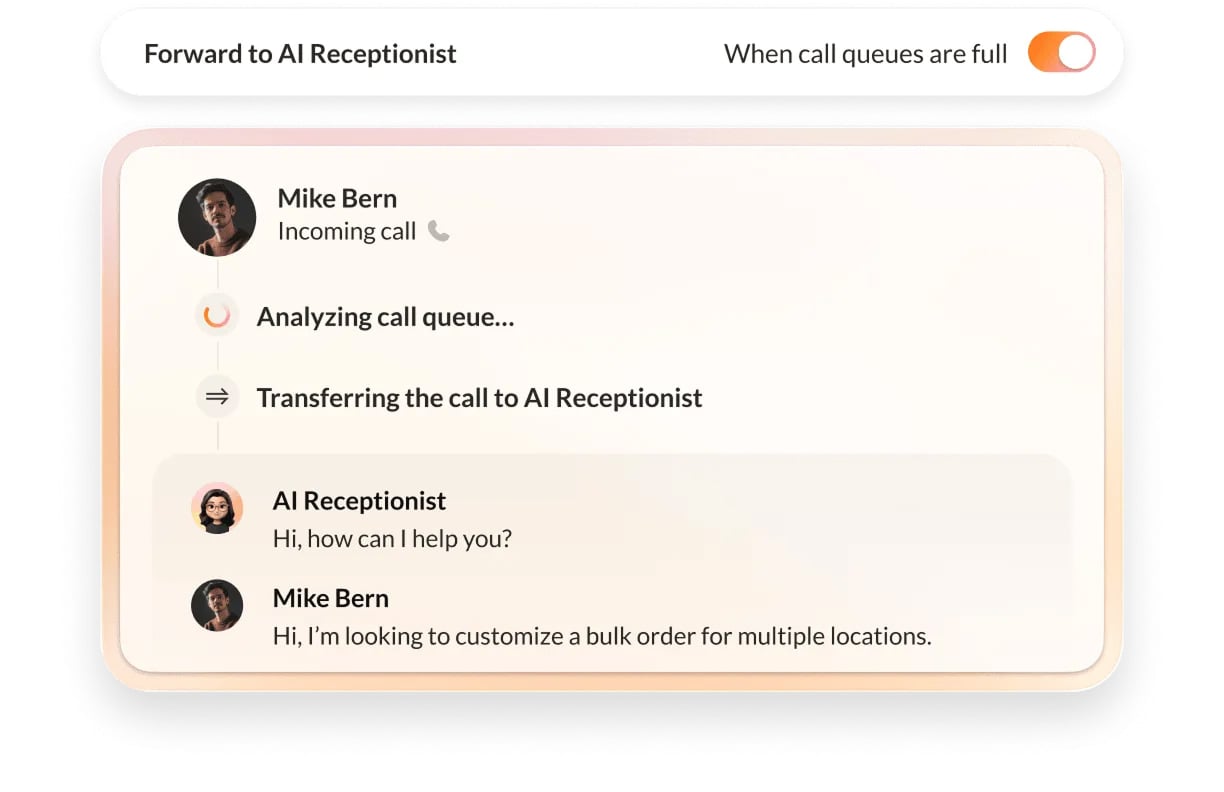
Because AIR processes every call with the same programmed efficiency and logic, it ensures intake is captured and routed consistently across every shift, every location, and every crew. This consistency directly addresses the fragmentation problem that makes basic answering setups unreliable at scale. By providing a uniform, high-quality, and efficient first point of contact, RingCentral AI Receptionist empowers trades businesses to professionalize their communication, capture more leads, and enhance customer satisfaction, regardless of their operational scale or the time of day.
Strategic Implications and Future Outlook
In today’s service economy, consistent and efficient call handling has transitioned from a desirable feature to a baseline expectation, much like customers expect a transparent quote or a technician to arrive on time. The strategic choice between a live, AI, or hybrid answering model is deeply dependent on a contractor’s specific operational context: their crew size, average daily call volume, and the proportion of their business driven by emergency versus routine work. Yet, the underlying imperative remains universal: every call represents a potential job, and every unanswered call is a lost opportunity.
The contractors who are consistently winning more jobs in a competitive market are not necessarily those with the largest crews or the most aggressive marketing budgets. Instead, they are often those whose phone never goes unanswered, those who have optimized their communication channels to ensure seamless, professional engagement from the very first ring. This strategic advantage is poised to grow even more significant as customer expectations for instant service continue to rise.
Looking ahead, the integration of AI in contractor answering services is likely to deepen. We can anticipate advancements in predictive analytics, where AI systems analyze historical call data, weather patterns, and local events to anticipate call volume spikes and proactively allocate resources. Furthermore, AI could facilitate proactive customer outreach based on service history, reminding clients of upcoming maintenance or offering timely upgrades. The seamless integration of AI with smart home devices, allowing for automated service requests triggered by appliance diagnostics, also presents a future frontier.
Ultimately, efficient communication, powered by advanced answering solutions, is not just a tactical improvement; it is a fundamental pillar for the sustained growth and professionalization of the trades sector. By ensuring every call is captured, accurately processed, and swiftly acted upon, contractors can not only increase their revenue but also solidify their brand reputation and build lasting customer loyalty. The competitive edge belongs to those who embrace these technological solutions, transforming their phone line from a potential bottleneck into a powerful, always-on engine for job capture and business expansion.
FAQs About Contractor Answering Services
Do contractors need a 24/7 answering service?
Most contractors, especially those in trades like plumbing, HVAC, electrical, and roofing that frequently handle emergency calls, significantly benefit from around-the-clock coverage. Critical issues such as a burst pipe, a malfunctioning furnace in freezing weather, or a power outage do not adhere to traditional business hours. The contractor who is available to answer at 11 p.m. or on a Sunday morning often secures the job by default, gaining a significant competitive advantage and building a reputation for reliability.
What is the difference between a live and an AI contractor answering service?
A live answering service employs trained human agents to respond to calls. This model excels at handling nuanced conversations, complex problem-solving, and providing empathetic human interaction, but it typically incurs higher costs per call and can face scalability challenges during periods of high call volume or staff turnover.
An AI answering service utilizes artificial intelligence to answer calls. It offers consistent, 24/7 availability at a lower and more predictable cost per call, efficiently handling structured tasks like lead capture, triage, and scheduling. While highly efficient, AI may have less flexibility for highly unusual or emotionally charged scenarios that require human judgment.
Can an AI answering service schedule jobs for contractors?
Yes, modern AI answering services, such as RingCentral AI Receptionist, are designed with advanced capabilities to support appointment scheduling directly during the call. These systems can integrate with a contractor’s existing calendar or scheduling software, allowing customers to book a specific time for service or an estimate without requiring a separate callback, thereby streamlining the process and improving conversion rates.
How much does a contractor answering service typically cost?
The cost of a contractor answering service varies significantly based on factors like call volume, the chosen service model (live, AI, or hybrid), and the specific features included. Live answering services generally charge more per call or per minute due to the human staffing costs involved, often with tiered pricing based on usage. AI answering services, by contrast, typically offer more predictable flat-rate or usage-based pricing structures that tend to be lower per interaction and remain consistent even as call volume fluctuates during busy seasons, making them a cost-effective solution for scalable operations.