Tribunal Rules Refusal of Camera-Off Request for Employee with Anxiety Constitutes Disability Discrimination

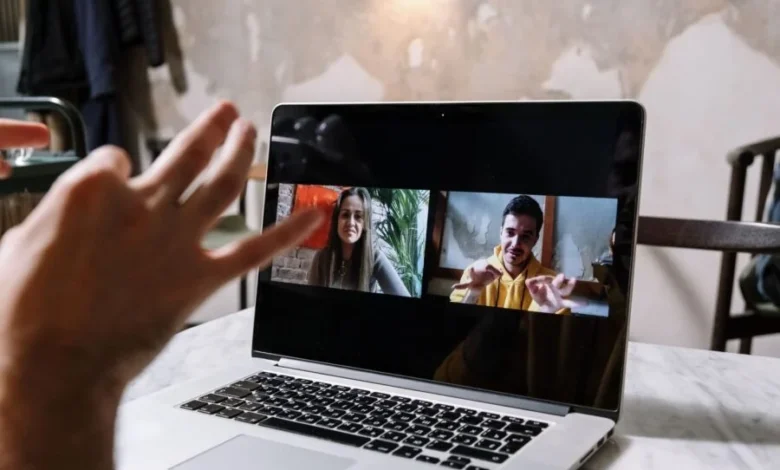
An employment tribunal in the United Kingdom has ruled that a travel insurance company discriminated against an employee suffering from anxiety by refusing her request to keep her camera switched off during a remote training session. The judgment, delivered in Croydon, south London, establishes a significant precedent for the modern hybrid workplace, asserting that "blanket rules" regarding video conferencing etiquette may violate the Equality Act 2010 when applied to individuals with mental health conditions.
The claimant, Laura Tait, a travel consultant for Holiday Extras, successfully argued that her employer failed to make reasonable adjustments for her disability. The tribunal found that forcing an employee with a diagnosed anxiety disorder to appear on camera against their expressed concerns constitutes a failure to mitigate a substantial disadvantage. This ruling comes at a time when many organizations are grappling with the long-term norms of remote work and the psychological impact of "Zoom fatigue" and digital surveillance on employee wellbeing.
Background and Chronology of the Case
Laura Tait began her tenure as a travel consultant with Holiday Extras in June 2021. The role was primarily remote, with approximately 80 percent of her responsibilities involving voice-based customer service and the remaining 20 percent dedicated to email and live chat interactions. From the early stages of her employment, Ms. Tait was transparent with her management regarding her struggle with anxiety. She frequently communicated that voice-heavy tasks exacerbated her stress levels and suggested that a shift toward more text-based communication, such as live chat and email, would better support her mental health.
The friction between Ms. Tait’s needs and the company’s expectations escalated throughout 2023. Records presented to the tribunal showed that Ms. Tait had experienced several periods of work-related stress and absence, which she attributed to the pressure of voice calls.
The pivotal incident occurred on August 24, 2023. Ms. Tait was scheduled to participate in a remote training session. Prior to the meeting, she informed her managers that she was feeling "super anxious" and overwhelmed. She requested that she be allowed to participate with her camera turned off to reduce the sensory and social pressure she was experiencing. Rather than granting the request immediately as a reasonable adjustment, management instructed her to join the session with her camera on to "see how she got on."
The tribunal heard that this approach proved detrimental. Ms. Tait attempted to comply but found the experience of being watched while already in a heightened state of anxiety unbearable. She was forced to leave the meeting prematurely, unable to cope with the perceived scrutiny. Following this incident, her mental health continued to decline, leading to her being signed off with work-related stress and anxiety in October 2023. She has not returned to the workplace since that time.
The Legal Framework: Equality Act 2010 and Reasonable Adjustments
Under the Equality Act 2010, an employer has a legal duty to make "reasonable adjustments" for employees who have a physical or mental impairment that has a "substantial and long-term adverse effect" on their ability to carry out normal day-to-day activities. In this case, Ms. Tait’s anxiety was recognized as a disability within the meaning of the Act.
The tribunal’s focus was on whether Holiday Extras had met its obligation to remove the barriers that placed Ms. Tait at a substantial disadvantage compared to non-disabled employees. Employment Judge Liz Ord noted that while the company eventually agreed to allow Ms. Tait to keep her camera off in subsequent meetings, the failure occurred at the moment the request was first made and refused.

"The respondent did not allow the requested adjustment on 24 August 2023, when they were first made aware of the claimant being overwhelmed," the judgment stated. Judge Ord emphasized that the instruction to "try" having the camera on was an insufficient response to a known disability-related struggle. The ruling clarifies that "wait and see" approaches are often inadequate when an employee has already identified a specific trigger for their condition.
Supporting Data: Anxiety and the Digital Workplace
The Tait v. Holiday Extras case reflects a broader trend in workplace health statistics. According to the Health and Safety Executive (HSE), work-related stress, depression, or anxiety accounted for 49% of all work-related ill health cases in the UK in 2022/23. Furthermore, data from the mental health charity Mind suggests that one in six people report experiencing a common mental health problem (like anxiety and depression) in any given week in England.
The specific phenomenon of "video call anxiety" has become a subject of academic study since the 2020 shift to remote work. Research published in the journal Technology, Mind, and Behavior suggests that "nonverbal overload"—the constant gaze of others and the sight of one’s own reflection—can significantly increase cortisol levels and cognitive load. For individuals with existing anxiety disorders, this "mirror effect" and the pressure of perceived social monitoring can be paralyzing.
In Ms. Tait’s case, the tribunal also found that Holiday Extras failed to adjust her workload distribution. Despite her repeated requests to move toward live chat and email work—tasks she felt more capable of performing—the company maintained her high volume of voice calls. The tribunal concluded that these cumulative failures left her at a substantial disadvantage and were direct contributors to her prolonged sickness absence.
Expert Analysis and Industry Reactions
The ruling has sparked significant debate among employment law specialists regarding the balance between team collaboration and individual accommodation. Jo Mackie, an employment law partner at the national law firm Michelmores, provided a nuanced perspective on the decision.
"It’s an interesting decision which many employers will take issue with," Mackie told HRreview. She noted that while there are obvious reasons for cameras to be off—such as during lunch breaks or for privacy—the general preference for "cameras on" is rooted in the value of non-verbal communication. "A lot of communication is non-verbal, and having a camera on enables a much more integrated and collaborative conversation."
However, Mackie acknowledged that the Equality Act necessitates a move away from rigid policies. "If there are specific reasons to have a camera off… then that makes sense. It could also be the case that a disability that affects the way a person looks could make them feel uncomfortable, and in that case, it could be reasonable to allow a no-camera rule."
The tribunal’s decision does not mandate a "cameras off" policy for all employees. Instead, it serves as a warning against "blanket rules." Employers are encouraged to conduct individual assessments when an employee raises a concern linked to a protected characteristic.
Broader Implications for HR and Management
The Tait case highlights several critical areas for HR departments to review:

-
The Fallacy of "Try it First": The tribunal was clear that forcing a disabled employee to attempt a stressful task to "see how they get on" can be discriminatory. When a reasonable adjustment is requested for a documented disability, the burden is on the employer to prove why the adjustment is not reasonable, rather than forcing the employee to prove their failure through trial.
-
Flexibility in Job Descriptions: Ms. Tait’s request to shift from voice calls to live chat highlights the need for flexibility in how roles are executed. If a role can be performed through multiple channels, refusing to allow a disabled employee to use the channel most compatible with their health may be seen as a failure to accommodate.
-
Remote Training Protocols: Training sessions often require higher levels of engagement, but they also represent high-pressure environments for those with social anxiety. Organizations should consider offering "camera-optional" settings for large-scale training or providing recorded versions for those who struggle with live digital interaction.
-
Documentation and Timeliness: The tribunal noted that Holiday Extras eventually agreed to the adjustment, but the delay was the issue. For HR, this means that the "reasonableness" of an adjustment is often tied to the speed at which it is implemented.
Conclusion and Compensation
While some of Ms. Tait’s other claims were dismissed by the tribunal, the core complaints regarding the failure to make reasonable adjustments were upheld. The tribunal concluded that the company’s actions directly contributed to her inability to remain in the workplace.
A separate remedy hearing will be held to determine the financial compensation Ms. Tait will receive. This compensation typically covers "injury to feelings" and potentially loss of earnings, depending on the severity of the impact on the claimant’s career and health.
For the wider business community, the case of Tait v. Holiday Extras serves as a landmark reminder that the digital workspace is subject to the same legal rigors as the physical office. As remote and hybrid work models become permanent fixtures of the global economy, the definition of a "safe" and "accessible" work environment must evolve to include the psychological safety of employees in the virtual space. Employers who fail to adapt their digital etiquette policies to the requirements of the Equality Act risk not only legal repercussions but also the loss of valuable talent to avoidable mental health crises.
Related posts: