The Definitive Guide to Securing and Maintaining Your Facebook Verification Badge in the Modern Digital Ecosystem

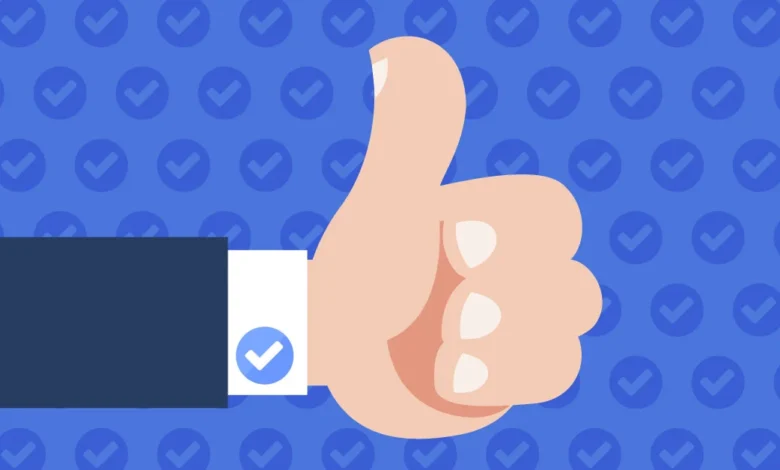
Navigating the digital landscape as an established brand, public figure, or growing enterprise often brings an unfortunate byproduct: the proliferation of malicious actors and impersonation profiles. For businesses and influencers operating on Meta’s flagship platform, the threat of unauthorized actors establishing fraudulent accounts to siphon customer trust, distribute spam, or execute phishing scams is an ongoing operational hazard. To combat this pervasive issue and establish an unambiguous marker of authenticity, platform administrators rely on the coveted blue checkmark: the Facebook verification badge.
Securing this credential remains a primary objective for digital marketers and corporate communication teams alike. While the visual symbol is simple—a small, white checkmark enclosed within a vibrant blue circle—the mechanism by which platforms award it has historically been shrouded in administrative ambiguity. Understanding the systemic requirements, optimization protocols, and long-term retention strategies is critical for any entity seeking to solidify its digital footprint and protect its intellectual property online.
Evolution of the Verification Framework: A Chronological Overview
The concept of digital verification was not pioneered by Meta, though the corporation has continuously refined its approach over the past decade. In May 2013, Facebook officially adopted a verification protocol heavily modeled after early industry standards established by microblogging platforms like Twitter. Initially, this system was strictly exclusive to high-profile public figures, major entertainment entities, global news organizations, and international brands whose vulnerability to impersonation posed immediate public relations or security risks.
![How to Get Verified on Facebook in 2022 [UPDATED GUIDE]](https://adespresso.com/wp-content/uploads/2022/09/how-to-get-verified-on-facebook.jpg)
During this early phase, the identifier was granted entirely through internal evaluation without a public application portal, creating an opaque ecosystem where qualifying criteria felt arbitrary to outside observers. Furthermore, the platform experimented with alternative indicators, such as gray checkmarks designated for local businesses and specific community pages, alongside localized marketplace validations. By 2018, however, Meta streamlined its administrative approach, retiring auxiliary indicators like the gray checkmark to focus exclusively on the universal blue verification badge.
As digital commerce expanded and the creator economy matured, the platform progressively lowered the barrier for eligibility. Verification shifted from an elite tier reserved solely for A-list celebrities and multinational conglomerates to encompass mid-tier influencers, localized enterprises, and public profiles demonstrating substantial community reach and verifiable public interest. Today, any eligible account holder can submit a formal review request, provided they meet rigorous threshold requirements regarding authenticity, uniqueness, and prominence.
Deconstructing the Verification Request Process
Applying for verification is technically accessible, requiring users to navigate a centralized documentation portal within their account settings. However, acceptance is contingent upon meticulous preparation across three core pillars: account categorization, identity confirmation, and public notability.
The foundational step requires applicants to differentiate between personal profiles and professional pages. Once authenticated within the Meta Business Suite or personal dashboard, users must select the precise digital asset they intend to elevate. For individual profiles, a direct uniform resource locator (URL) is required, whereas business pages necessitate comprehensive organizational data.
![How to Get Verified on Facebook in 2022 [UPDATED GUIDE]](https://adespresso.com/wp-content/uploads/2022/09/word-image-6.png)
Following selection, applicants must provide irrefutable proof of legal identity. This safeguard is engineered to eliminate automated bot applications and prevent fraudulent actors from gaming the system. For individuals, accepted documentation typically includes government-issued photo identification, such as a valid driver’s license or passport. Corporate entities, conversely, must furnish official business documentation, including articles of incorporation, tax exemption certificates, recent utility bills, or formal formation filings. These documents must be securely digitized and uploaded via encrypted form fields.
The final phase of the application involves establishing public notability. Meta’s evaluation teams look for empirical evidence that the account is in the public interest and faces a genuine risk of confusion or impersonation. Applicants are required to designate their industry category and primary geographic market. Additionally, they must provide contextual data regarding their target demographic and incorporate up to five independent, authoritative web links. These links may include feature articles from reputable news outlets, industry publications, or cross-platform social media assets. Crucially, Meta explicitly discounts paid promotional content, sponsored press releases, or self-published editorials when assessing notability, prioritizing organic digital footprint growth instead.
Strategic Optimization: Six Pillars for Application Success
Because the platform receives millions of verification requests annually, submission does not guarantee approval. Industry analysts and digital marketing strategists recommend implementing a comprehensive pre-application audit to maximize the probability of a favorable review. Meta’s automated and human moderation teams fundamentally evaluate accounts based on accuracy, completeness, professionalism, cross-platform validation, organizational structure, and community engagement.
-
Rigorous Data Accuracy and Alignment
An account cannot project authority if its underlying metadata is outdated or contradictory. Organizations must ensure that all structural details—including legal business names, contact telephone numbers, physical addresses, and operational hours—are synchronized across all digital touchpoints. Discrepancies between the Facebook asset and official corporate registries are a primary catalyst for immediate application rejection.![How to Get Verified on Facebook in 2022 [UPDATED GUIDE]](https://adespresso.com/wp-content/uploads/2022/09/word-image-8.png)
-
Comprehensive Profile Completeness
The "About" section of a Facebook Page serves as an initial vetting ground for platform reviewers. Enterprise accounts should populate every available field with rich, descriptive text detailing the company’s history, mission statement, product offerings, and executive leadership. Leaving these fields blank signals a lack of active management or professional legitimacy. -
Professional Aesthetic and Content Integrity
A brand’s digital presentation must reflect its real-world reputation. Content moderation teams evaluate the tone, visual quality, and subject matter of a page’s recent post history. Sharing sensationalized clickbait, unverified rumors, or controversial material that damages public credibility can immediately disqualify an applicant. Businesses should curate their feeds to reflect standard corporate governance and professional communication standards. -
Omnichannel Digital Infrastructure
A verified Facebook presence does not exist in a vacuum. To demonstrate authenticity, businesses must build a cohesive web ecosystem. This includes embedding a verified Facebook widget or hyperlink directly onto the official corporate website, while simultaneously cross-referencing the official domain within the Facebook bio. This bidirectional linkage proves to algorithms that the social asset is officially sanctioned by the website owner. -
Leveraging Specialized Business Infrastructure
For commercial entities, maintaining a standard personal profile is insufficient. Establishing a dedicated Facebook Business Page unlocks advanced administrative tools, enhanced analytics, and structured pathways tailored for commercial verification. The structural framework of a Business Page inherently facilitates the submission of corporate tax and registration documents. -
Organic Community Cultivation and Engagement
Notability is intrinsically tied to audience scale and interaction velocity. Accounts that showcase high organic engagement rates, consistent posting schedules, and active comment-section management signal to Meta that the entity holds real-world relevance. Relying on artificial follower-inflation techniques is strongly discouraged, as algorithmic audits frequently detect and penalize synthetic engagement.![How to Get Verified on Facebook in 2022 [UPDATED GUIDE]](https://adespresso.com/wp-content/uploads/2022/09/word-image-9.png)
Post-Approval Governance: Maintaining the Blue Checkmark
Securing the verification badge is a significant milestone, but it is not a permanent, unalterable status. Meta reserves the right to strip an account of its verification badge under specific regulatory conditions. Violations of the platform’s stringent Community Standards—such as engaging in coordinated inauthentic behavior, disseminating hate speech, violating intellectual property rights, or committing severe privacy breaches—result in the immediate revocation of the badge.
Furthermore, accounts that undergo unauthorized ownership transfers, alter their primary identity to represent an entirely different entity, or experience prolonged periods of inactivity may forfeit their verified status. To safeguard against malicious takeovers and ensure compliance, security experts strongly advise enabling two-factor authentication (2FA) across all administrative accounts linked to the verified asset. Utilizing hardware security keys, authentication applications, or encrypted SMS verification significantly hardens the digital perimeter against unauthorized access attempts.
Broader Implications and Strategic Value
In an era defined by digital saturation and the rapid spread of misinformation, the verification badge functions as a vital trust anchor. For enterprises, securing this status transcends mere vanity; it directly influences algorithmic discoverability, enhances search engine placement within the platform’s native directory, and provides psychological reassurance to consumers evaluating digital transactions.
![How to Get Verified on Facebook in 2022 [UPDATED GUIDE]](https://adespresso.com/wp-content/uploads/2022/09/word-image-10.png)
As digital platforms continue to refine their authentication protocols, organizations that proactively align their digital infrastructure with platform compliance standards will find themselves uniquely positioned to protect their brand equity, mitigate impersonation threats, and cultivate resilient, high-trust digital communities.