The Rising Regulatory Crackdown on Ghost Jobs and Its Impact on the Modern Labor Market

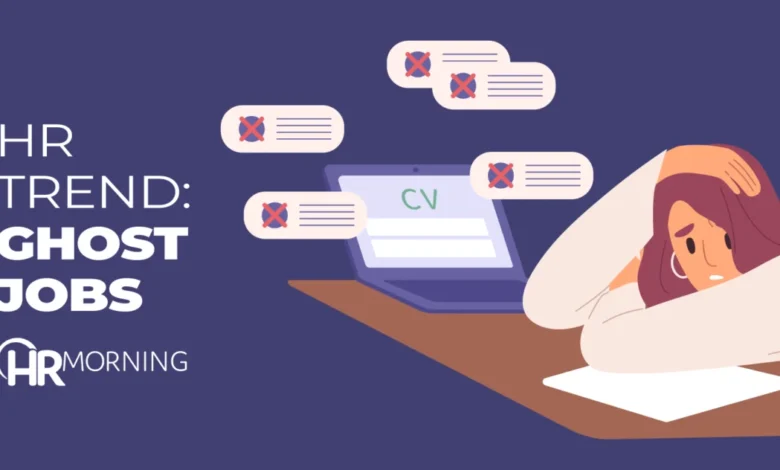
The phenomenon of "ghost jobs"—advertised employment opportunities that are either non-existent, already filled, or intended for a hypothetical future pipeline—has moved from a niche frustration for job seekers to a focal point of state legislative action. As the digital hiring landscape becomes increasingly automated, the disconnect between candidate expectations and corporate recruitment practices has widened, leading to significant reputational risks for employers and potential legal jeopardy.
Recent research suggests that the prevalence of these phantom listings is not merely anecdotal. Data from Clarify Capital indicates that approximately 25% of employers maintain open job postings with no immediate intention of filling them for at least three months. Furthermore, nearly one-fifth of hiring organizations have begun utilizing artificial intelligence to automate and sustain these postings, even when the roles are inactive. This trend is corroborated by industry benchmarks from Greenhouse, which estimate that at any given time, 20% of all posted roles on major job boards may qualify as ghost jobs.
The emergence of this trend coincides with a shift in how companies manage their "talent pipelines." In an era of economic uncertainty, some firms justify keeping job boards active to collect a massive reserve of resumes, ensuring they have a pool of candidates ready should a sudden hiring need arise. However, for the millions of applicants currently navigating a competitive labor market, this practice has become a source of profound disillusionment. More than 90% of surveyed job seekers believe that these ghost listings artificially inflate the perception of a healthy job market, masking underlying corporate stagnation and creating a false sense of opportunity.
The Legislative Response
The legislative landscape began shifting in early 2025 as lawmakers moved to address the perceived deception inherent in ghost hiring. In Pennsylvania, House Bill 2321 was introduced to mandate that employers clearly list hiring timelines, effectively forcing companies to commit to a schedule or remove the listing once the window has closed. Similarly, in New York, Senate Bill S8877 seeks to increase transparency by requiring employers to take down job advertisements within a set period after a role is filled or the recruitment process is terminated.
These legislative efforts are driven by the belief that job boards have become marketplaces of misinformation. In Texas, the issue reached a flashpoint when state Attorney General Ken Paxton launched an investigation into the practices of major job platforms, specifically questioning whether companies like LinkedIn have profited from the dissemination of fake or misleading job advertisements. While LinkedIn has publicly denied these allegations, the investigation underscores a growing concern among regulators: that the business models of recruitment platforms may be inadvertently incentivizing the retention of ghost jobs to keep traffic and user engagement high.
Motivations Behind the Ghost Job Trend
To understand why corporations engage in this practice, one must look beyond the optics. While critics label ghost jobs as inherently deceptive, many HR departments cite operational pressures. According to recent industry surveys, the primary drivers for keeping listings active include:
- Keeping a "pipeline" of talent warm for future growth.
- Complying with internal corporate policies that require certain positions to be posted publicly for a duration, regardless of whether a candidate has already been identified internally or through networking.
- Maintaining a visible corporate brand presence, even when there is no headcount budget.
- Using AI automation tools that refresh postings automatically without human oversight.
Despite these "business justifications," the fallout is tangible. Josh Millet, founder and CEO of Criteria, notes that the practice is fundamentally damaging to an employer’s brand. "Posting ghost job ads is both misleading and disrespectful to candidates," Millet stated. "Unless the opportunity is genuine, it can have serious negative consequences to the employer brand. You only need to look at Glassdoor or Reddit to see just how damaging."
The Impact on Candidate Psychology and Retention
The human cost of ghost jobs is often overlooked in favor of efficiency metrics. When candidates spend hours tailoring resumes and cover letters for roles that do not exist, the resulting "black hole" of non-communication contributes to widespread professional burnout and cynicism. James Neave, Head of Data Science at Adzuna, emphasizes that this practice is a strategic blunder for companies as well. "While this may seem like a harmless practice, ghost jobs can cause job seekers to get their hopes up and waste their time and effort on applications. Additionally, ghost jobs can cause employers to miss out on great candidates in the long run," Neave explained.
When a high-quality candidate realizes they have been ghosted, they are unlikely to apply to that company again. This shrinks the talent pool over time and forces companies to spend more on paid recruitment advertising to reach a fresh—and increasingly skeptical—audience.
Strategies for Authentic Recruitment
As the regulatory environment tightens and the candidate backlash grows, HR departments are being urged to pivot toward more transparent and efficient hiring strategies. Experts suggest that the following seven practices can help rebuild trust and improve the quality of incoming talent:
1. Enhanced Job Description Transparency
Ghost jobs often rely on vague, generic language. Companies should prioritize detailed descriptions that clearly outline the responsibilities, specific schedules, and, crucially, salary ranges. Providing a timestamp on the posting allows candidates to gauge the urgency and relevance of the role.
2. Synchronization of Hiring Timelines
Employers must align their job listings with actual headcount approval. If a role is not ready to be filled, it should not be public. If a search is paused, the posting should be removed. This requires a tighter integration between hiring managers and recruitment software, ensuring that third-party platforms are updated in real-time to match the company’s internal career site.
3. Leveraging Employee Referrals
By encouraging existing staff to share open roles on their personal social networks, companies can bypass the "black hole" of job boards. Referrals act as a filter of authenticity; candidates are more likely to trust a role if it is shared by a current employee, and employees are unlikely to share roles that do not exist.
4. Radical Communication
Transparency is the antidote to the current crisis. Companies should provide candidates with a clear roadmap of the hiring process, including the expected number of interview stages and the timeline for each. Automated updates that inform a candidate about their status—even if it is a rejection—are essential for maintaining a positive brand reputation.
5. Detailed Interview Expectations
Beyond just describing the role, companies should be upfront about the mission, values, and interview structure. Providing a preview of what to expect during the interview process helps align candidates with the organizational culture before they even submit an application.
6. Auditing the Automated Funnel
Many companies unintentionally engage in "ghosting" through aggressive automated screening. When software automatically filters out candidates based on arbitrary metrics—such as the lack of a specific degree or an missing keyword—it essentially functions as a ghost job for that individual. HR departments should conduct regular audits of their applicant tracking systems (ATS) to ensure they are filtering for potential and skill, not just rigid criteria.
7. Closing the Loop
The most effective way to eliminate the "ghost" element is to ensure every candidate receives a definitive conclusion to their application. Implementing a "closure" step in the hiring process, where candidates are notified that a role has been filled or a search has been cancelled, is a basic professional courtesy that prevents the buildup of negative sentiment.
The Future of the Hiring Landscape
The era of the "ghost job" is likely reaching a turning point. As legislative bodies in states like New York and Pennsylvania advance bills that mandate accountability, companies will soon face a legal requirement to be as honest as they expect their candidates to be. The transition from automated, high-volume recruitment to a model focused on authenticity and candidate respect is not just a regulatory necessity—it is a competitive advantage.
Companies that prioritize clear communication and genuine hiring practices will inevitably find themselves with a stronger talent pipeline and a more resilient brand. Conversely, those that continue to rely on phantom listings risk becoming the target of both regulatory intervention and public scrutiny. In the modern labor market, the reputation of an employer is built on every interaction; those that treat candidates as ghosts should not be surprised when the best talent disappears.