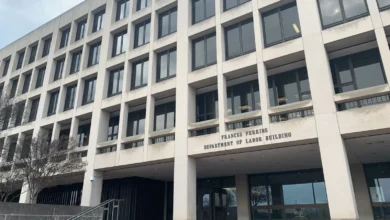
California employer pays nearly 2 million dollars to former workers a decade after abrupt business closure

The saga of 136 former employees of Capital Mailing Services finally reached a definitive conclusion this month, marking the end of a ten-year legal battle over unpaid wages and statutory violations. The California Labor Commissioner’s Office announced that it has successfully recovered nearly $2 million in owed compensation for the staff of the former printing and bulk mailing company. The closure, which occurred without warning in February 2016, left workers stranded without final paychecks or severance, triggering a protracted enforcement effort by state authorities.
This recovery—comprising a $1.3 million judgment upheld on appeal and an additional $688,000 secured through secondary enforcement actions—serves as a stark reminder of the legal obligations companies face when shuttering operations. The resolution underscores the rigidity of California’s labor protections, particularly the Worker Adjustment and Retraining Notification (WARN) Act, which mandates that employers provide advance notice of mass layoffs or plant closures to prevent economic devastation for the workforce.
A Chronology of the 2016 Collapse
The events of February 2016 unfolded with alarming speed for the employees of Capital Mailing Services. Without prior notice or a transition period, the company ceased operations entirely. In an industry where printing and mailing schedules are highly synchronized, the abrupt nature of the shutdown was particularly disruptive. Employees arrived at the facility expecting a standard workday, only to find the doors locked and the business effectively liquidated.
In the immediate aftermath, the California Labor Commissioner’s Office initiated an investigation. The agency quickly identified multiple violations of state labor law. Chief among these was the failure to pay final wages, a fundamental requirement under California law, which mandates that terminated employees receive their final paycheck immediately. Furthermore, the company failed to adhere to the Cal/WARN Act, which requires employers with 75 or more employees to provide 60 days of advance written notice before a plant closing or mass layoff.
The subsequent legal process was arduous. While the initial findings were clear, the owner contested the claims, leading to years of litigation in both administrative hearings and state courts. The $1.3 million judgment represented the core of the back pay and damages for the WARN Act violations, while the subsequent $688,000 represented additional interest and penalties accumulated during the lengthy appeal process.
Understanding the Cal/WARN Act and Worker Protections
The Cal/WARN Act is a critical component of California’s employment law landscape, designed to mitigate the shock of sudden unemployment. Unlike the federal WARN Act, which has specific thresholds and exclusions, California’s version of the law is often interpreted more broadly to protect the state’s workforce.
Under the statute, covered employers must provide notice to the employees, the Employment Development Department (EDD), and the Local Workforce Development Board. The 60-day notice period is intended to give workers a window to secure new employment or access retraining resources. When an employer ignores this requirement, they are liable for back pay and benefits for each day of the notice period that was not provided.
In the case of Capital Mailing Services, the failure to provide this notice left 136 families without a financial buffer. Labor experts point to this case as a prime example of why regulatory agencies must maintain aggressive enforcement postures. Without the intervention of the Labor Commissioner’s Office, these workers would likely have been left as unsecured creditors in a bankruptcy proceeding, potentially receiving only pennies on the dollar, if anything at all.
Economic Implications for the Printing Industry
The collapse of Capital Mailing Services in 2016 occurred during a period of significant transition for the printing and bulk mailing industry. As digital communications began to displace traditional mail-based marketing and document production, many firms faced severe liquidity issues. However, the legal consensus in this case was clear: economic distress does not excuse an employer from their primary obligation to compensate their workers for time already served.
The $2 million recovery is significant not only for the employees who waited a decade for justice but also for the state’s labor enforcement credibility. It sends a message to business owners that the state will continue to pursue unpaid wage claims even when a company has ceased to exist. By piercing the corporate veil in specific instances—where owners are held personally liable for labor violations—the state ensures that business failures do not become a vehicle for wage theft.
The Human Toll of Wage Theft
While the legal documents focus on dollar amounts and statutory citations, the human element of the Capital Mailing Services closure remains a central focus for labor advocates. For the 136 employees, the wait for their final paychecks extended through various life changes, including career shifts, retirements, and personal financial hardships.
In many cases of sudden business closures, the lack of a final paycheck is the "first domino" in a series of financial crises for households. It can lead to the depletion of savings, credit card debt, and a loss of access to healthcare if the company’s benefit contributions are also terminated abruptly. The recovery of these funds, while long overdue, provides a measure of financial restoration that is essential for the workers involved.
Analysis: Enforcement and Future Compliance
The success of the California Labor Commissioner’s Office in this matter highlights the evolution of wage enforcement tools. State agencies have become more sophisticated in tracking assets and utilizing court-ordered judgments to secure funds from shuttered entities.
For current HR professionals and business owners, the Capital Mailing Services case serves as a vital case study in risk management. The lessons are threefold:
- Notice Requirements are Non-Negotiable: Business leaders must be cognizant of their obligations under WARN acts well before a closure becomes imminent. Even in a state of financial crisis, the failure to provide notice is a high-liability error.
- Wage and Hour Compliance is Paramount: Final paychecks are not optional, and the penalties for failing to issue them in a timely manner—especially under California’s stringent laws—can escalate exponentially due to interest and penalties over time.
- Liability Risks: Business owners must understand that the legal corporate structure does not always insulate them from personal liability regarding unpaid wages. When an employer chooses to prioritize other creditors over payroll, they open themselves up to aggressive litigation from state agencies.
A Path Forward for Displaced Workers
The recovery of nearly $2 million is a testament to the persistence of state investigators. For the employees involved, the news of the distribution of these funds provides a sense of closure to a decade-long ordeal. The California Labor Commissioner’s Office has indicated that it is currently in the process of reaching out to the affected workers to ensure the funds reach the individuals entitled to them, even those who have since moved or changed contact information.
This case also underscores the importance of employees maintaining records of their employment, including final hours worked and pay stubs. In the event of a sudden closure, such documentation is crucial for labor agencies to verify claims and calculate the exact amount of back pay owed.
As the labor market continues to shift, the protections afforded by laws like Cal/WARN remain a necessary safeguard. The outcome of the Capital Mailing Services case serves as both a warning to employers and a beacon of hope for workers who have been wronged, reinforcing the principle that labor is an investment that must be compensated, regardless of the ultimate success or failure of the enterprise. The conclusion of this case marks not just the end of a legal dispute, but the final, necessary settlement of a debt that was owed to 136 individuals for more than ten years.
Related posts: