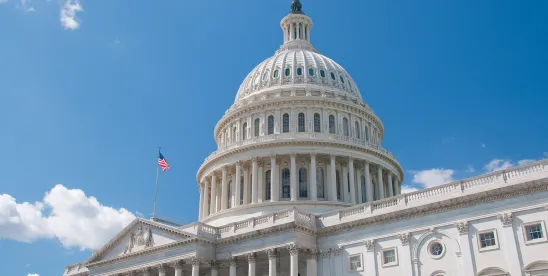
As the United States stands on the precipice of the November 3, 2026, midterm elections, Washington, D.C., is radiating a palpable sense of finality and frantic anticipation. Lawmakers have largely vacated the Capitol to make their final appeals to voters across the country, leaving behind a legislative landscape poised for transformation. While the immediate focus remains fixed on the upcoming ballot boxes and the fate of the 120th Congress, Capitol Hill managed to squeeze in a few notable procedural milestones and symbolic gestures before recessing. From the high-stakes political calculations driving the final days of the campaign trail to a bipartisan nod to nocturnal mammals just in time for Halloween, the Beltway is a microcosm of a nation preparing for a major shift in power. When the smoke clears and the ballots are tallied, the political dynamics of Washington will shift dramatically, carrying profound implications for labor, employment, immigration, and the broader legislative agenda.
The Political Landscape Heading into Election Day
The 2026 midterm elections arrive at a critical juncture in American politics, functioning as a traditional referendum on the sitting administration while setting the chessboard for the 2028 presidential cycle. Campaign analysts and political strategists have spent months dissecting polling data, early voting trends, and economic indicators to forecast the balance of power in the U.S. House of Representatives and the U.S. Senate.
Control of the House remains the ultimate battleground, with dozens of competitive districts scattered across the nation. Historical precedent suggests that the party in the White House frequently faces headwinds during midterm elections, and 2026 is no exception. However, localized issues, reproductive rights, inflation, and immigration enforcement have created a complex and highly volatile electoral map.
In the Senate, the math presents a unique set of challenges and opportunities for both major parties. Defending seats in diverse political terrain requires immense financial resources and targeted ground games. While Senate races often hinge on the personal popularity of individual incumbents, nationalized messaging has increasingly seeped into statewide contests, turning historically predictable races into nail-biters.
Potential Scenarios and Legislative Strategies for the 120th Congress
As political pundits game out the various outcomes of the November 3 election, a prominent narrative has emerged regarding how governance will function in the aftermath. The most widely anticipated scenario points toward a divided government or a subtle realignment where Democrats capture a majority in the House of Representatives and potentially make gains in the Senate.
Should Democrats secure control of the House, the institutional balance of power in Washington will undergo an immediate transformation. A House majority would grant Democrats stewardship over powerful legislative committees, unlocking robust oversight and investigative authorities. Armed with subpoena power, Democratic committee chairs are expected to launch comprehensive inquiries into executive branch agencies, corporate practices, and administration policies.
This oversight mechanism will be particularly crucial given the reality of the executive branch. With a potential presidential veto waiting in the wings for major conservative or progressive policy pushes alike, legislative output could face significant roadblocks. Consequently, a Democratic-led House would likely utilize its platform not necessarily to pass sweeping, signed-into-law statutes, but rather to advance strategic bills designed to shape the national political narrative. These legislative packages would serve as ideological litmus tests, foreshadowing the policy debates that will dominate the 2028 presidential primaries and general election.
Labor, Employment, and Immigration Policy at a Crossroads
The results of the 2026 midterms will resonate far beyond Capitol Hill, directly impacting the daily realities of American workers, employers, and immigrant communities. Labor and employment policy has been a perennial battleground, with ongoing debates centering on federal minimum wage adjustments, worker classification standards, union organizing rules, and workplace safety regulations.
A shift in congressional control would instantly alter the committee agendas that oversee the Department of Labor and the National Labor Relations Board (NLRB). Pro-labor lawmakers would likely press for expanded worker protections and increased funding for enforcement agencies, while a divided Congress could result in legislative gridlock, forcing battles to be fought primarily through regulatory channels and the judicial system.
Similarly, immigration policy remains one of the most contentious and intractable issues in American politics. Comprehensive immigration reform has eluded lawmakers for decades, leading to a reliance on executive actions, border enforcement funding bills, and targeted legislative fixes. The outcome of the Senate races will heavily influence confirmation proceedings for judicial nominees and executive appointments, as well as determine the viability of border security packages and legal immigration adjustments in the 120th Congress. Employers navigating labor shortages and complex visa systems will be watching the legislative returns closely to gauge how federal workforce and immigration strategies will evolve over the next two years.
Legislative Chronology and the Final Weeks Before Recess
The weeks leading up to the final adjournment before the election were characterized by a flurry of activity, punctuated by last-minute floor speeches, committee markups, and symbolic resolutions. While major comprehensive legislation often stalls as lawmakers pivot exclusively to campaigning, Congress maintained a baseline of operational functioning.
The timeline of the final legislative period highlights a deliberate strategy by congressional leadership to clear non-controversial measures and establish messaging bills before members dispersed to their home districts. This rhythm is typical of election-year calendars, where the legislative floor frequently doubles as a messaging board for constituents. Lawmakers balance the dual pressures of negotiating must-pass funding or policy authorizations with the imperative of spending maximum time on the campaign trail in pivotal states and districts.
Spooky Season on Capitol Hill: Senate Pays Tribute to Bats
Amid the high-stakes political maneuvering and heavy policy debates, the U.S. Senate found a moment for levity and ecological advocacy just before departing Washington for the campaign trail. On September 30, 2026, the Senate officially agreed to S. 941, a resolution designating the final week of October (October 24, 2026, to October 31, 2026) as "Bat Week."
While bats are synonymous with the eerie aesthetics of Halloween—sharing cultural billing with ghosts, goblins, and haunted houses—Bat Week carries a serious environmental and economic message that extends far beyond seasonal festivities. The bipartisan resolution bypasses holiday tropes to focus squarely on the ecological and agricultural value of chiropterans.
According to the text of S. 941, bats play a foundational role in maintaining balanced ecosystems and supporting the American agricultural economy. The resolution formally praises bats for controlling damaging insect pests, pollinating plants that yield essential fruits and vegetables, and dispersing seeds that ensure the healthy functioning of forests and fields. Most strikingly, the resolution highlights that bats save farmers in the United States more than $3,700,000,000 annually in pest control costs, reducing the need for chemical pesticides and bolstering crop yields.
Despite their immense economic and ecological contributions, bat populations across North America face a severe existential threat. The Senate resolution draws urgent attention to the presence of white-nose syndrome, a devastating fungal disease that has decimated millions of bats throughout the continent. The affliction has now spread across 41 states and impacts 12 distinct species of hibernating bats, creating a conservation crisis that has alarmed biologists and environmental protection advocates.
The resolution concludes with a formal commitment from lawmakers to work toward the conservation of vulnerable bat species and support scientific efforts to defeat white-nose syndrome. Capitol Hill observers were quick to joke that the robust support for the measure proves the bat community has enlisted some remarkably effective lobbyists. Jokes aside, the unanimous agreement on S. 941 demonstrated that even in a deeply polarized political environment characterized by intense election-year friction, bipartisan consensus remains achievable on critical conservation matters.
Looking Ahead: The Post-Election Horizon
As voters prepare to cast their ballots on November 3, 2026, the trajectory of American governance hangs in the balance. The conclusions drawn from the election returns will dictate the rhythm of the 120th Congress, setting the parameters for economic policy, labor standards, immigration reform, and federal oversight.
When the final precincts report their totals and the political dust settles, analysis will immediately pivot from campaign rhetoric to institutional reality. Lawmakers will return to Washington for the lame-duck session before the new Congress is sworn in, facing unresolved fiscal deadlines and the immediate task of organizing committees based on the new electoral mandate.
Whether the 120th Congress ushers in a new era of divided government oversight or establishes unexpected avenues for bipartisan cooperation, the decisions made by the electorate will reverberate across the federal government for years to come. For now, the campaign ads are playing their final notes, the candidates are making their closing arguments in town squares and gymnasiums across the country, and Washington awaits the definitive verdict of the American people.