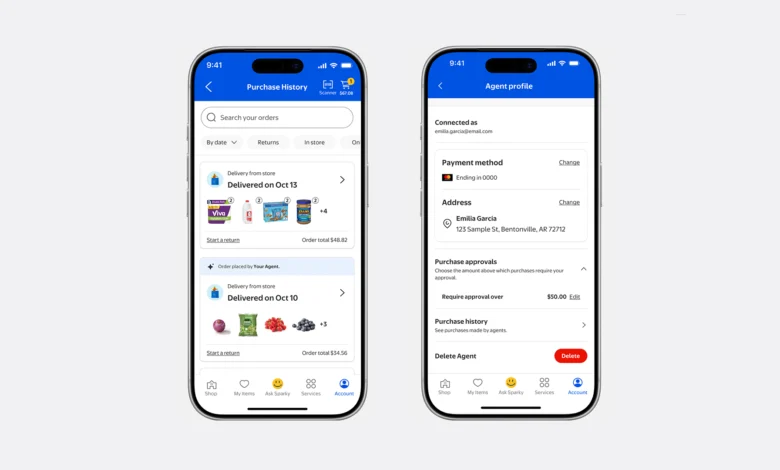
Walmart is officially ushering in a new era of retail autonomy by rolling out advanced oversight tools designed to give shoppers full control over AI agents acting on their behalf. Announced on October 21, these initiatives represent a significant shift in how the world’s largest retailer integrates artificial intelligence into the consumer experience. As AI agents move from simple chatbots to sophisticated procurement tools capable of navigating e-commerce platforms, Walmart is establishing a framework of transparency, security, and user-defined boundaries to ensure that human shoppers remain the primary decision-makers in the purchasing process.
The move comes at a pivotal moment for the retail sector. As consumers grow more comfortable with digital assistants, the industry is transitioning toward "agentic commerce"—a model where AI systems autonomously execute tasks like product research, price comparison, and order placement. While the potential for efficiency is immense, industry research indicates that consumer trust remains a significant hurdle. By implementing these new safeguards, Walmart aims to position itself as the most trusted destination for AI-assisted shopping, effectively mitigating the risks of unauthorized spending or data mismanagement.
A Chronology of Walmart’s AI Evolution
Walmart’s recent announcement is the latest milestone in a multi-year strategy to embed artificial intelligence across its entire supply chain and consumer-facing platforms. The company’s journey began with the deployment of its proprietary AI shopping agent, Sparky, which serves as a foundation for personalized product discovery. Throughout 2025 and 2026, the retailer accelerated its integration efforts, establishing partnerships with industry leaders such as Meta’s Muse, OpenAI’s ChatGPT, and Google’s Gemini.
In early 2026, Walmart focused heavily on optimizing its supply chain through AI, leveraging predictive analytics to manage inventory and logistics. By May 2026, the retailer’s focus shifted toward the consumer experience, specifically how AI could facilitate more natural, conversational shopping. The launch of the new Agent Profiles and the Agent Gateway marks the maturation of these earlier pilots, moving from experimental chatbots to functional, autonomous purchasing agents that require a sophisticated infrastructure of permissions and connectivity.
The Mechanism of Control: Introducing Agent Profiles
The core of Walmart’s new strategy is the implementation of "Agent Profiles," a feature scheduled to roll out within the coming month. Historically, AI-driven purchases were indistinguishable from manual orders within a user’s account, creating potential confusion and complicating financial tracking. Under the new system, AI agents will operate through dedicated profiles linked to a primary customer account.
This architecture provides three critical layers of control:
- Granular Approval: Shoppers can mandate that every AI-initiated purchase requires manual, one-click authorization before the order is finalized.
- Spending Thresholds: Users can set pre-defined budget limits—such as $50, $100, or $200—within which an agent can act autonomously.
- Auditability: A clear, categorized history will allow customers to view which transactions were completed by an AI agent versus those made directly by the user, facilitating easier returns and budget management.
These features address the core concern of user agency. According to an August 2026 survey by NMI, only 11% of U.S. adults have utilized AI to complete a transaction, while a staggering 70% of respondents stated they required the ability to review or override an AI’s decision prior to checkout. By formalizing these approval processes, Walmart is directly addressing the 89% of the population that currently lacks the comfort level to grant AI full autonomy.
Security Protocols and Data Safeguards
The introduction of these tools is accompanied by a robust set of rules governing how AI agents interact with the Walmart ecosystem. A primary concern for consumers in the age of generative AI is data privacy and the protection of financial information. Walmart’s updated terms explicitly prohibit AI agents from accessing, storing, or changing payment card details.
Furthermore, the company has established strict functional boundaries. Agents are barred from accessing information outside the scope of the shopper’s explicit instructions. In instances where a third-party AI app is used—such as an agent powered by a model from a company other than Walmart—the data shared remains subject to that third-party provider’s privacy policy. However, Walmart has stated that any agent found to be violating its terms of service or acting outside the established safety parameters will be immediately blocked from interacting with its digital storefront.

The Agent Gateway and the Model Context Protocol
To solve the technical inefficiencies of current AI shopping, Walmart is launching the "Agent Gateway." Presently, most AI agents attempt to shop by navigating a standard web browser, essentially mimicking human clicks and scrolls. This process is inherently slow and prone to errors, as web interfaces change frequently and are optimized for human eyes rather than machine interpretation.
The new Agent Gateway utilizes the Model Context Protocol (MCP), an open standard championed by Anthropic. This protocol allows AI applications to connect directly with Walmart’s back-end services, bypassing the need for a graphical user interface. This integration enables the agent to perform functions like product discovery, cart management, and order tracking with high precision. Most importantly, the gateway is designed to retrieve essential data—such as a customer’s preferred brand of milk or bread—without exposing the user’s entire purchase history or sensitive personal information.
Implications for the Marketplace Ecosystem
The shift toward agentic commerce is poised to fundamentally alter the dynamics of the Walmart Marketplace, which hosts thousands of third-party sellers. During a recent industry conference, Daniel Danker, Walmart’s executive vice president of AI acceleration, highlighted that many AI-driven purchases begin as broader, contextual conversations rather than specific product searches. For instance, a user might ask an AI to "find the best protein supplement for a post-workout recovery," rather than searching for a specific brand name.
This represents a significant opportunity for smaller brands and niche sellers. If an AI agent can effectively evaluate product quality, price, and customer reviews, it can bridge the gap between high-awareness brands and smaller, high-quality competitors that might otherwise be overlooked in traditional keyword-based search results.
However, this opportunity comes with an increased burden for sellers. Manish Joneja, senior vice president of Walmart Global Marketplace, emphasized that in an AI-driven environment, the quality of product listings will become the single most important factor for success. Sellers must ensure that their product data—including specifications, pricing, and availability—is accurate, structured, and optimized for machine consumption. "The right products must be presented to the right customers," Joneja noted, adding that accuracy in fulfillment promises and delivery windows will become critical as AI agents prioritize reliability to ensure customer satisfaction.
Future Outlook and Industry Positioning
Walmart’s proactive approach to AI governance underscores its position as a leader in the retail technology sector. By focusing on the "human-in-the-loop" model, the company is attempting to standardize the ethics of agentic commerce before regulators or consumer advocacy groups force a more restrictive hand.
Industry analysts suggest that this strategy could pay dividends in long-term customer retention. By reducing the friction associated with repeat purchases—such as replenishing groceries—while simultaneously maintaining a high level of security, Walmart is effectively digitizing the "trusted advisor" relationship that defined the legacy of local brick-and-mortar retail.
As the retail landscape continues to evolve, the competition between major retailers to provide the most seamless, yet secure, AI-shopping experience will likely intensify. Walmart’s early investment in the Agent Gateway and the commitment to transparent, user-controlled profiles provides a blueprint for how legacy retailers can successfully pivot to an AI-first future. For now, the industry will be watching closely as these features roll out to the public, assessing not just the technical efficacy of the agents, but the willingness of the average consumer to delegate their shopping list to an algorithm.
With its current standing as the No. 2 retailer in the Digital Commerce 360 Top 1000 database, Walmart’s decisions carry significant weight. The success of its AI initiatives will likely dictate the adoption curve for the rest of the industry, potentially setting the standard for how AI agents and human shoppers interact in the coming decade. As the line between the physical and digital shopping experience continues to blur, the emphasis on control, privacy, and data integrity will remain the defining characteristics of the next generation of global commerce.