Building a Resilient Productivity Scaffold for High-Performance Professionals and Executives


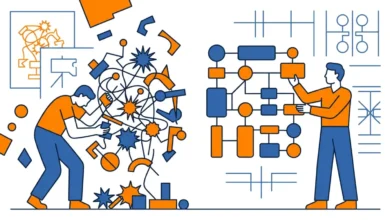
In the modern landscape of high-stakes corporate management and professional output, the reliance on willpower as a primary engine for productivity is increasingly viewed by organizational psychologists as a structural vulnerability. Recent insights from productivity consultants, such as those echoed by industry experts like Brooks, suggest that the most effective systems are those designed not for peak performance, but for the moments when energy levels are at their lowest. This shift in philosophy marks a departure from traditional "hustle culture" toward a model of architectural discipline, where a pre-established system serves as a support structure, or "scaffold," that maintains output even when cognitive or physical stamina is compromised.
The All-or-Nothing Trap and the Psychology of Systems
The common pitfall for many professionals is the "all-or-nothing" approach to task management. On days characterized by high energy and focus, individuals often adhere strictly to methodologies like the Pomodoro technique or comprehensive Getting Things Done (GTD) systems. However, when illness, burnout, or low motivation intervene, these systems are frequently abandoned in favor of an ad-hoc, "muscle-through" mentality. Research into cognitive load theory suggests that this cycle is counterproductive. When an individual abandons their system during a low-energy period, they are forced to expend additional cognitive resources—the very resource they are lacking—to decide what to do and how to do it.
A robust system acts as a persistent framework. By designing a "low-energy version" of a daily workflow—where the duration of focus blocks is reduced but the rituals, such as opening specific lists or activating timers, remain constant—professionals can bypass the need for decision-making. This maintains the habit loop and prevents the psychological negotiation that occurs when one wonders if a difficult day "counts" toward their professional objectives.
The Role of Auditory Cues in Cognitive Flow
Neuroscientific research has long explored the impact of soundscapes on executive function and concentration. While some professionals report heightened productivity through high-BPM (beats per minute) tracks, others require absolute silence or classical compositions to achieve a "deep work" state. Data from cognitive studies indicate that there is no universal "focus audio." Rather, the effectiveness of sound is highly individualized.
Modern productivity tools now incorporate adaptive audio technology, which utilizes biofeedback or user-input loops to adjust soundscapes in real-time. By systematically experimenting with different audio profiles—classical, high-energy, and silence—professionals can identify the specific stimuli that trigger their own neural flow state. Once identified, this becomes an automated trigger for deep work, reducing the time required to achieve concentration.
The Weekly Review as a Systemic Anchor
The GTD (Getting Things Done) Weekly Review remains the most critical, yet frequently neglected, component of personal productivity architecture. Analysis of organizational performance data indicates a direct correlation between the frequency of systemic reviews and the reduction of workplace anxiety. When the review process is skipped, project lists transform into "black holes" of outdated priorities, causing users to lose trust in their own tracking systems. This lack of trust inevitably leads back to "managing by memory," which is prone to error and omission.
Industry benchmarks suggest that while initial weekly reviews may take several hours as a user reconciles their backlog, the process typically condenses to 25–30 minutes once the habit is established. For executives managing high-velocity environments, a weekly review is often insufficient. Many firms have moved toward a hybrid model: a comprehensive weekly audit complemented by a "micro-review" each morning. This daily check-in ensures that the list remains an accurate reflection of current reality rather than a repository of obsolete objectives. By asking a single, simple question—"What on this list is no longer true?"—professionals maintain the integrity of their data.
Kaizen and the Power of Compounding Incremental Improvements
The Japanese management philosophy of Kaizen, popularized by the Toyota Production System, emphasizes the pursuit of continuous, incremental improvement. In a personal productivity context, this is applied by identifying small, recurring tasks and seeking to optimize them by mere seconds. While a two-second saving on a single task appears negligible, the cumulative effect over a fiscal year is substantial.

This approach serves a dual purpose: it improves operational efficiency and fosters a habit of process-oriented thinking. By focusing on one small improvement daily, individuals bypass the psychological resistance associated with massive change, allowing for steady, sustainable growth.
Strategic Thinking and the Integration of AI
A common failure mode for executives is the "reflection loop," where the same, repetitive questions are asked during self-assessment, leading to stagnation. The integration of Generative AI, such as ChatGPT, has provided a tool to break this cycle. By using AI as a brainstorming partner to generate fresh, strategic inquiries, professionals can move beyond their own cognitive biases.
Standard practice now involves a 10-minute "Thinking Time" block. During this session, the professional describes their current operational context and tasks the AI with generating strategic, non-obvious questions. Answering two of these questions in writing can provide the necessary clarity to prioritize tasks more effectively than a standard to-do list would allow.
The Value of Journaling as a Personal Data Record
Just as a scale provides objective data for physical health, a journal acts as a record for personal and professional growth. Without documentation, an individual’s perception of their own progress is subject to the limitations of current emotional states. By maintaining a five-minute journaling habit—guided by specific prompts—professionals create a longitudinal dataset. Reviewing entries from years prior allows for the objective analysis of how problem-solving strategies and reactions to adversity have evolved. This practice provides the clarity needed to make data-driven adjustments to one’s life and career.
Remote Collaboration and the Hybrid Necessity
Despite the proliferation of high-definition video conferencing and collaborative software since 2011, studies on organizational behavior continue to demonstrate the limitations of fully remote interaction. The "chemistry" of brainstorming and complex problem-solving remains significantly more effective in person. Consequently, many remote-first organizations are adopting a hybrid cadence, scheduling quarterly in-person offsites. This "high-touch" interaction is not merely for social cohesion; it is a functional requirement for maintaining the alignment and speed of a high-performance team.
Lessons from Elite Athletics
The wellness protocols utilized by professional athletes often serve as a bellwether for mainstream health trends. Because professional sports organizations have a direct financial incentive to maximize player recovery and longevity, they are typically early adopters of technology such as compression therapy, cryotherapy, and advanced sleep optimization protocols. By observing these elite recovery models, professionals can identify high-impact habits that have been vetted for efficacy.
Conclusion: Preparing the Scaffold
The synthesis of these strategies—the low-energy routine, the daily micro-review, the use of AI for strategic inquiry, and the adoption of professional-grade recovery—creates a comprehensive system of support. The most important step, however, remains the proactive design of the "scaffold."
By documenting a low-energy routine in advance, an individual removes the burden of choice during times of depletion. The timer, the simplified list, and the trusted audio are not luxuries; they are the infrastructure that allows for consistent output. For the modern professional, productivity is not an act of willpower, but an act of design. Those who invest the time to build this framework are significantly better equipped to maintain their performance levels, regardless of the challenges or the energy fluctuations that the week may bring.