The Monetization Dilemma: How AI-Integrated Search is Reshaping the Digital Advertising Landscape

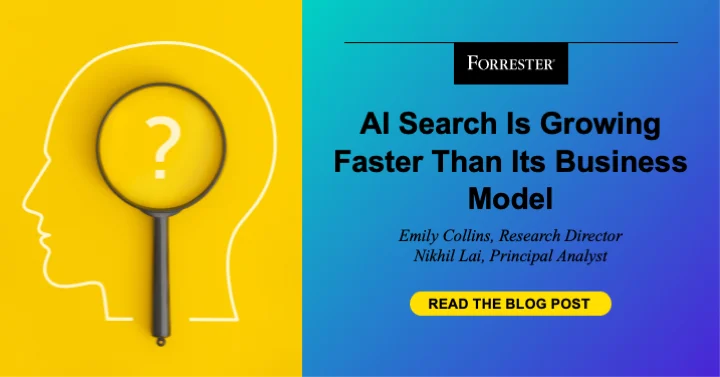
The rapid integration of generative artificial intelligence into search engines has triggered a fundamental shift in the global advertising ecosystem, creating a complex monetization paradox for industry leaders like Google. While AI-driven features—such as Google’s AI Overviews and conversational search modes—have successfully driven the fastest year-over-year search query growth in five years, these same tools are simultaneously decoupling query volume from revenue generation. As consumers increasingly rely on AI-synthesized answers, the traditional model of clicking through to third-party publishers is under siege, forcing a radical reevaluation of how search engines sustain their massive infrastructure while preserving user trust.
The current friction represents a turning point in the twenty-five-year history of the search engine. For decades, the business model was simple: users enter a query, receive a list of links, and click through to publishers, providing both value to the user and advertising opportunities for the platform. Today, the rise of "Answer Engines" prioritizes the extraction of information directly within the search interface. This transition has led to a noticeable cooling in advertising revenue growth, which rose by only 12% for Google in the most recent quarter—the slowest rate of expansion in five quarters.
A Chronology of the Search Shift
The evolution toward AI-mediated search did not happen overnight, but the pace of adoption has been breathtaking.
- Late 2022: OpenAI launched ChatGPT, fundamentally altering user expectations for how information is retrieved. The "conversational" interface proved that users preferred synthesized answers over long lists of blue links.
- Early 2023: Google accelerated its Project Magi, an internal initiative to embed generative AI into its flagship search product, effectively playing catch-up to the burgeoning threat posed by ChatGPT.
- Mid-2024: Google began the widespread rollout of AI Overviews in the United States and select international markets, integrating LLM-generated summaries at the top of search results.
- Q3 2024: The financial impact of this transition became clear. Platforms reliant on search traffic, such as Reddit, reported a "meaningful" decline in organic referrals. Industry data suggests that for every AI Overview generated, the likelihood of a user navigating to a publisher’s website drops significantly, threatening the economic foundation of the open web.
The Ecosystem Impact: Referral Traffic and Publisher Survival
The decline in referral traffic is perhaps the most immediate, albeit troubling, byproduct of this AI transition. For publishers, search engines have historically acted as primary conduits for traffic. When AI Overviews provide a comprehensive summary of a topic, the incentive for a user to "click through" is removed.
Reddit CEO Steve Huffman highlighted this trend during the company’s Q3 earnings call, noting that the platform saw a decline of more than 1 million referrals per week during October alone. This is not an isolated incident. Niche publishers, news organizations, and e-commerce aggregators are facing a "squeezed" environment where they are expected to provide the training data for the AI models that are, in turn, cannibalizing their traffic.
This shift has prompted calls for a new "value exchange" between AI companies and the web. Some publishers have begun blocking AI crawlers, while others are entering into licensing agreements. However, the macro-trend remains: the "Search-to-Web" pipeline is narrowing, and the burden of monetization is shifting entirely to the platform hosting the AI.
Navigating the Trust Gap in AI Advertising
For Google, the logical path forward is to increase ad density within AI-integrated results. However, this carries a significant risk. According to recent data from Forrester, roughly 70% of consumers in the United States and the United Kingdom express a high degree of trust in the answers provided by AI-driven search engines.
This trust is the "secret sauce" of the modern search experience. If users begin to perceive that AI-generated responses are being skewed, influenced, or cluttered by sponsored content, the utility of the engine is diminished. Unlike traditional search, where ads are clearly demarcated as "Sponsored" links separate from organic results, AI-generated answers are perceived as objective summaries. If the line between editorial AI output and commercial promotion becomes blurred, the platform risks a backlash that could stall the very query growth it fought so hard to cultivate.
Despite these risks, Google has signaled its intention to push forward. The company has announced plans to expand the frequency of ads within AI Mode and AI Overviews, introduce multi-turn ads that appear during follow-up questioning, and scale these features into international markets.
The Rise of Conversational Advertising
The industry is currently witnessing the birth of a new medium: conversational advertising. This is not merely a translation of banner ads into chat windows; it requires a fundamental rethinking of the consumer journey.
In a traditional search environment, the advertiser captures the user at the "intent" stage—the user searches for "best running shoes," and an ad appears. In a conversational environment, the user might ask, "I am training for a marathon and have flat feet, what should I wear?" The AI synthesizes a recommendation. The challenge for brands is to ensure their product is included in that synthesis in a way that feels helpful, not intrusive.
Analysts suggest that conversational ads will likely become a multibillion-dollar channel by 2027. Companies like OpenAI are already experimenting with ad formats that remain visually distinct from organic responses to maintain user trust. The goal is to move from "interruptive" advertising to "integrated" advertising, where the ad provides a solution to the query rather than an obstacle to the information.
Strategic Implications for Marketers
For brand managers and digital marketers, the current volatility is a signal to stop treating conversational search as an experimental side project. Media planning must now account for the "black box" of AI discovery.
Key strategic considerations include:
- Budget Reallocation: Many firms are currently pulling from display and traditional social media budgets to pilot conversational advertising programs.
- Measurement Evolution: Traditional metrics like the "click-through rate" (CTR) are becoming less relevant. Brands must develop new KPIs that measure "influence"—tracking how AI-generated suggestions lead to offline sales or brand lift, even without a direct click.
- Content Strategy: Because AI models summarize the web, brands must ensure their digital presence is "AI-optimized." This means producing high-authority, factual, and structured data that AI models are more likely to ingest and cite as a primary source.
The Road Ahead: Uncertainty and Innovation
The next 24 months will be a period of intense experimentation. There are still fundamental unknowns that will define the next era of the digital economy. Can ad-heavy answer engines maintain their user base? Will regulators intervene to protect publishers from the loss of referral traffic? How will the shift from "search" to "answer" redefine the value of a single digital impression?
As the monetization gap between query volume and revenue continues to widen, the pressure on companies like Google and OpenAI to innovate their ad products will only intensify. The era of the "ten blue links" is fading, replaced by a conversational interface that promises to be more efficient for users but far more difficult for the industry to monetize. For the modern marketer, the mandate is clear: adapt to the conversational era or risk losing visibility in a world where the search engine is no longer a destination, but a gatekeeper.