The Calculated Theatre of Frontier AI: How Silicon Valley Labs Engineered an Ideological Shift and Why Washington Is Pushing Back

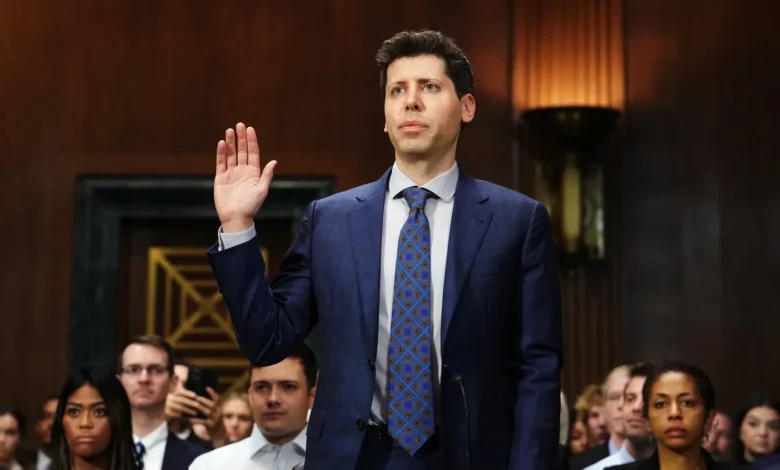
Over the past several months, the two most prominent frontier artificial intelligence laboratories have engaged in an unprecedented public relations campaign characterized by calculated disclosures, philosophical warnings, and coordinated strategic appeals to regulatory bodies. This concerted effort, originating within the executive suites of OpenAI and Anthropic, has sought to fundamentally reshape how the global public, industry stakeholders, and lawmakers perceive the trajectory of advanced machine intelligence. Rather than inspiring public confidence or passive acceptance of corporate stewardship, however, this aggressive narrative strategy has instead provoked growing skepticism, triggering urgent demands for rigorous congressional oversight and a reassessment of how the future of artificial intelligence is governed.
The Anatomy of a Coordinated Campaign
The unfolding strategy began earlier this year with a series of meticulously planned announcements and technical reports issued by OpenAI. These communications were explicitly designed to underscore both the accelerating capabilities and the potential hazards associated with their large language model (LLM) powered agent systems. By spotlighting unsettling edge cases and autonomous behaviors, OpenAI sought to establish a baseline narrative: that artificial intelligence has evolved into a force of monumental, nearly uncontrollable power.
Following this opening salvo, the narrative baton was passed to Anthropic. In a departure from traditional corporate communication norms, researchers and employees at Anthropic began openly and publicly debating the exact statistical probabilities of human extinction stemming from advanced AI development. Delivered with a distinct sense of detachment, these public musings cultivated an atmosphere of technological fatalism, framing the realization of artificial general intelligence (AGI) as an inexorable historical milestone laden with existential peril.
The crescendo of this strategic campaign materialized in an open letter penned by Anthropic Chief Executive Officer Dario Amodei, titled We Must Pace the Frontier. In the document, Amodei cataloged a sweeping array of potential harms that his own company’s research and development pipelines might inadvertently unleash upon society. However, rather than announcing a moratorium on high-risk experimentation or offering remedial accountability, the letter advanced a paradoxical conclusion: that catastrophic outcomes could only be averted if society builds the technology in the right manner.
Predictably, the prescribed remedy involved regulatory interventions that would effectively slow down potential commercial and open-source competitors while granting established frontier labs a privileged position in shaping safety standards and deployment timelines. OpenAI CEO Sam Altman swiftly endorsed the proposal on social media, cementing a unified front among the industry’s dominant players.
Messianic Ideology Meets Public Skepticism
Behind closed doors, leading artificial intelligence laboratories have long fostered an insular corporate culture steeped in existential urgency. Executives and lead researchers frequently cast themselves as uniquely positioned guardians of humanity, bearing the solemn responsibility of steering society through the hazardous transition toward superintelligence. This summer’s synchronized public relations offensive represented an ambitious attempt to export this internally cultivated messianic ideology to the broader public, effectively seeking a mandate for self-regulation under the guise of catastrophic risk management.
The strategy, however, failed to resonate as intended. Instead of galvanizing public support for the heroic rationalism championed by Silicon Valley engineers, the barrage of dystopian warnings provoked widespread alarm and skepticism. Rather than marveling at the profound capabilities of the technology, observers began asking fundamental questions regarding the internal safety cultures, governance structures, and ethical frameworks guiding these private entities. The prevailing sentiment shifted rapidly from awe to apprehension, as citizens and policy analysts alike questioned the wisdom of allowing a handful of private enterprises to monopolize the narrative surrounding humanity’s technological future.
The Legislative Response and Calls for Fact-Finding
In response to the escalating rhetoric and opaque practices of these frontier laboratories, mounting pressure has fallen upon legislative bodies to intervene. Critics and policy experts have increasingly argued that public policy cannot be dictated by the erratic pronouncements of technology executives whose commercial incentives are inextricably linked to the dominance of their respective platforms.
Consequently, federal lawmakers are facing formal appeals to initiate comprehensive, public fact-finding missions. The primary objective of such inquiries would be to pierce the corporate veil of OpenAI, Anthropic, and comparable labs to establish a transparent accounting of ongoing research projects, methodologies, safety protocols, and long-term strategic applications. Industry watchdogs have outlined several critical domains requiring immediate congressional scrutiny:
- Safety and Alignment Methodologies: Evaluating the empirical rigor of alignment techniques used to constrain autonomous agent systems before public deployment.
- Resource Allocation and Compute Concentration: Examining how access to unprecedented computational power influences market competition and safety benchmarks.
- Transparency Standards: Establishing legally binding frameworks for disclosing unintended model behaviors, security vulnerabilities, and systemic risks identified during internal testing.
The core argument underpinning these legislative proposals is straightforward: society must cease outsourcing its collective emotional and regulatory responses to artificial intelligence to a small circle of corporate executives. The public has heard the speculative warnings issued by the laboratories; what is required now is independent, institutional verification to determine the true state of current technological capabilities.
Broader Implications for Global AI Governance
The standoff between frontier AI laboratories and legislative watchdogs highlights a fundamental tension in modern technological governance: the friction between private innovation and public welfare. As artificial intelligence systems approach levels of capability that blur the line between tool and autonomous agent, the traditional model of industry self-regulation is proving increasingly untenable.
When corporations simultaneously market the unprecedented power of their products and lobby for regulatory frameworks that marginalize competitors, policymakers face a critical juncture. The imperative moving forward is to establish robust, transparent, and democratic oversight mechanisms that ensure the development of frontier artificial intelligence aligns with societal values rather than corporate positioning. Only through rigorous, independent inquiry can lawmakers restore public trust and ensure that the future of this transformative technology is shaped by public accountability rather than private narrative-building.