The Art of Strategic Delegation: Transforming Workflow Efficiency Through Asynchronous Management

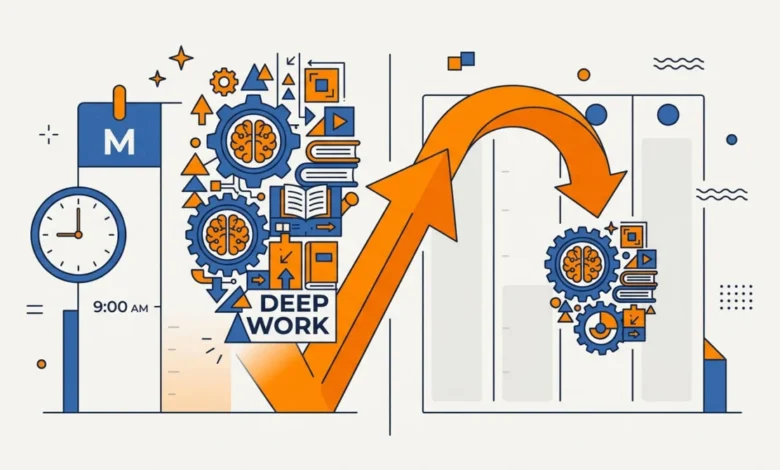
The modern professional landscape is currently undergoing a structural shift as the traditional nine-to-five workday is increasingly replaced by asynchronous workflows. At the core of this transition is a fundamental reevaluation of delegation, moving away from simple task distribution toward a methodology that leverages time zones, artificial intelligence, and human capital development to maximize output. By shifting from the question of "How do I do this?" to "Who can do this?", leaders are discovering that the true bottleneck in productivity is often the manager’s refusal to relinquish control.
The Mechanism of Asynchronous Delegation
The concept of "time arbitrage"—the practice of utilizing global time zones to ensure work continues even when the primary stakeholder is offline—has moved from a niche outsourcing strategy to a standard operational practice. By assigning tasks at the end of a workday, managers can wake up to completed projects, effectively doubling their productive output. This is not merely a logistical convenience; it is a fundamental shift in resource management.
Data from recent workplace productivity studies suggest that organizations utilizing asynchronous communication report a 20% increase in deep-work capacity for managers. By handing off tasks before signing off, professionals reduce the "mental load"—the cognitive tax incurred by keeping pending items in active memory. This practice mirrors the efficiency of AI agents, which can process data sets and generate reports in real-time, regardless of the time of day. Whether the recipient is an offshore virtual assistant or an automated digital tool, the principle remains: batching work and distributing it for completion during non-working hours creates a continuous, 24-hour cycle of productivity.
The 70 Percent Rule and the Perfectionist Trap
A significant barrier to effective delegation is the "perfectionist trap," characterized by the belief that only the originator can perform a task to the necessary standard. Organizational psychologists have long identified this as a primary cause of executive burnout. To counter this, many firms are adopting the "70% Rule." This management guideline dictates that if a team member can execute a task at least 70% as effectively as the manager, the task should be delegated.
The rationale is rooted in the Pareto Principle, or the 80/20 rule, which suggests that 80% of consequences come from 20% of the causes. By accepting a slightly lower, yet sufficient, standard for routine work, leaders reclaim the time necessary to focus on the 30% of high-value tasks that require their specific expertise. This "30% gap" is not a loss of quality; it is a calculated investment in team capability. When managers delegate, they provide the necessary "reps" for subordinates to build competence, turning minor differences in output into long-term professional development.
Strategic Alignment: Aptitude and Interest
A common failure in delegation occurs when managers assign tasks based solely on calendar availability rather than role alignment. Simply because a team member has an open hour does not mean they are the correct person to handle a complex project. Effective management requires a two-pronged assessment: does the individual possess the technical skill or aptitude for the task, and, perhaps more importantly, do they possess the inclination for it?
Assigning tasks that a team member dislikes or lacks the aptitude for—even if they have the capacity—can lead to disengagement and resentment. In professional environments, this is frequently categorized as "abdication" rather than delegation. By contrast, reviewing a team’s strengths and mapping them to specific, recurring tasks creates a culture of ownership. When junior staff members are trained to handle tasks that senior staff find unfulfilling, the entire organization benefits from increased morale and clearer role definition.

The Hierarchical Framework: Tasks, Outcomes, and Vision
Delegation is most effective when it is structured in tiers, allowing for a natural progression of responsibility and trust.
- Level 1 (Tasks): This involves providing explicit, step-by-step instructions. It is the entry point for new team members or for high-stakes projects where the margin for error is minimal.
- Level 2 (Outcomes): This is the gold standard for most organizational tasks. The manager defines the goal and the success criteria, leaving the methodology to the employee. This empowers staff to innovate within defined parameters.
- Level 3 (Vision): The highest level of delegation involves defining the overall territory and key performance metrics, allowing the employee to formulate the strategy.
Many managers remain trapped at Level 1, dictating granular steps for work that could be handled at Level 2. Transitioning to outcomes-based delegation allows for creative problem-solving and significantly increases the capacity for organizational growth.
Operationalizing the Process: Start Small, Finish Strong
Experts advise that those new to the delegation process should begin with "grunt work." Recurring tasks—such as slide deck formatting, basic data entry, or routine scheduling—serve as the ideal training ground for establishing a delegation rhythm. These tasks are typically predictable, allowing the manager to maintain oversight without the risk of catastrophic failure.
To maintain control without resorting to micromanagement, leaders should establish "toe-in-the-process" protocols. These are predetermined feedback loops—such as a brief check-in mid-project—that allow for quality control. By documenting these protocols, the manager ensures that they are evaluating the work against agreed-upon outcomes rather than controlling the individual steps taken to get there.
The Long-Term Implications for Human Capital
Ultimately, delegation is an act of talent development. When a leader passes off a task they are proficient in, they are essentially training their successor. This process facilitates the development of a "Zone of Genius" within the team. For example, when a non-technical staff member is trained to manage marketing automation or basic data analysis, they acquire new skills that increase their overall value to the firm.
This shift in perspective—from "Only I can do this" to "I can teach this"—is the defining characteristic of high-performing leaders. It transforms the delegation process from a simple time-saving measure into a strategic pillar of organizational sustainability. As businesses continue to face increasing pressure to innovate rapidly, the ability to effectively offload, automate, and delegate will separate high-growth entities from those stalled by the inefficiencies of traditional, centralized management.
Summary of Strategic Best Practices
To effectively transition to a more efficient delegation model, leadership teams are encouraged to adopt the following protocol:
- Audit Weekly Tasks: Identify three recurring tasks that currently consume significant time but do not require unique executive oversight.
- Evaluate for Aptitude: Match these tasks to team members based on their existing strengths and genuine interest, rather than their current workload.
- Define the Level: Clearly communicate whether the delegation is at the task, outcome, or vision level.
- Set Feedback Protocols: Before the work begins, establish specific times for review to ensure the output remains aligned with the broader vision.
- Embrace the Gap: Accept that the output may differ from one’s own, and view any discrepancy as an opportunity for coaching rather than a failure of the delegation process.
By implementing these steps before concluding the workday, managers can leverage time zones and distributed teams to ensure that work is not only completed but that the organization is actively building the capacity for future success. In an increasingly global and digital economy, the ability to delegate effectively is no longer a soft skill—it is a critical requirement for competitive advantage.