The Science of Workspace Optimization and Its Impact on Professional Productivity


The modern professional environment has undergone a radical transformation over the last decade, shifting from rigid corporate cubicles to a diverse landscape of remote, hybrid, and open-plan offices. While focus is often framed as a matter of willpower or time management, contemporary research suggests that the physical environment serves as the primary architecture for cognitive performance. Recent inquiries into workspace design reveal that small, intentional modifications to one’s immediate surroundings—ranging from lighting adjustments to the introduction of biophilic elements—can yield measurable improvements in focus, stress reduction, and overall task efficiency.
The Biophilic Hypothesis and Environmental Stressors
The relationship between nature and productivity is well-documented in architectural psychology. A landmark study by the University of Exeter found that employees working in "green" offices—those containing plants and natural elements—were 15% more productive than those working in "lean" environments. The rationale is rooted in the biophilia hypothesis, which posits that humans possess an innate tendency to seek connections with nature and other forms of life.
When a workspace is devoid of these elements, the brain often perceives the environment as sterile or hostile, leading to higher levels of cortisol—the body’s primary stress hormone. By integrating a single plant or a natural focal point, workers can create a psychological "buffer" that promotes calmness. This is not merely an aesthetic choice; it is an ergonomic intervention. When the brain spends less energy processing environmental stressors, that cognitive load is redirected toward complex problem-solving and deep work.
The Four Pillars of Workspace Ergonomics
To analyze the efficacy of a workspace, experts utilize a four-pillar framework: lighting, ergonomics, clutter management, and personal environmental customization. Each pillar functions as a critical component of a broader productivity system.
Lighting and Circadian Alignment
Lighting serves as the most significant variable in regulating the human circadian rhythm. Exposure to natural daylight during the workday has been linked to better sleep quality at night and increased alertness during the day. For workers whose office layout precludes proximity to windows, the use of high-CRI (Color Rendering Index) artificial lighting—which mimics the spectral distribution of the sun—serves as a necessary mitigation strategy. Organizations that prioritize lighting design report lower rates of absenteeism and higher employee satisfaction.
Ergonomics and Physical Sustainability
Ergonomics extends beyond the purchase of expensive office chairs. It involves the alignment of the human body with the tools of labor. Poor screen placement or a chair that lacks lumbar support forces the body into a state of "static loading," where muscles are held in a tense, unnatural position for hours. Over time, this leads to chronic discomfort, which acts as a persistent background distraction. The professional standard for ergonomics involves adjusting existing furniture to ensure the top of the monitor is at or slightly below eye level, and that the chair supports the natural curvature of the spine.
The Economics of Clutter
Visual noise acts as a significant impediment to cognitive task-switching. Research conducted at Princeton University’s Neuroscience Institute suggests that the physical clutter in one’s surroundings competes for neural resources, decreasing the ability to focus. A "five-minute reset"—a standard practice in high-efficiency manufacturing—is now being adopted in corporate settings to combat this. By dedicating the final five minutes of a workday to clearing the desk, employees ensure that their "start state" the following morning is free from the cognitive residue of the previous day.
Personalization as an Anchor
While the corporate trend toward "hot-desking" has minimized individual workspace footprints, the psychological need for personalization remains. The presence of a meaningful object, a photograph, or a specific scent serves as an environmental anchor. These items do not function as distractions; rather, they signal to the brain that the space is "safe" and "owned," which facilitates a faster transition into a flow state.

Technical Mitigation: Audio Management
In the modern, interconnected workplace, the management of audio has become a specialized field of its own. There is a distinct dichotomy between "quiet listening" and "clean outgoing audio." Noise-canceling headphones utilize active wave-interference technology to neutralize ambient sound, creating a vacuum for the wearer. Conversely, AI-driven noise-removal software functions at the software level to strip background chatter from a user’s microphone output.
The distinction is critical: noise-canceling headphones solve the problem of the user’s distraction, while AI noise-removal software solves the problem of the user’s perceived professionalism during virtual meetings. Failing to differentiate between these two requirements often leads to redundant hardware purchases that fail to address the underlying issue.
Chronology of Workplace Evolution
The trajectory of the modern office has evolved through three distinct phases:
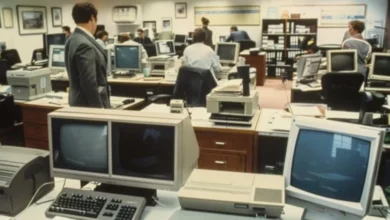
- The Pre-2010 Era: Characterized by fixed, permanent desk assignments and minimal focus on environmental psychology. The primary concern was hardware access rather than environmental comfort.
- The 2010–2020 Era: The rise of the "open office" plan, designed to maximize serendipitous collaboration but often resulting in sensory overload and decreased deep-work capacity.
- The 2020–Present Era: A shift toward "intentional workspaces." Following the global move to remote work, employees gained unprecedented control over their physical environments, leading to the current emphasis on personalization, ergonomics, and home-office optimization.
Broader Implications for Organizational Performance
The implication for managers and employees alike is clear: productivity is not solely a function of time management. It is a function of the environment in which time is spent. If an individual is struggling to maintain focus, the conventional response is often to increase workload intensity or implement stricter time-tracking software. However, if the root cause is environmental—such as poor lighting, constant visual clutter, or physical discomfort—these measures will invariably fail.
A systematic approach to the workspace is a low-cost, high-leverage strategy. By addressing the "weakest link" in the four-pillar framework, an employee can effectively lower the barrier to entry for deep, focused work. This is not about redesigning an office from the ground up, but about the iterative improvement of the conditions under which one operates.
Conclusion: The Minimalist Intervention
The evidence suggests that the most effective interventions are often the smallest. A desk reset, the relocation of a lamp, or the addition of a plant are not trivial tasks; they are strategic environmental adjustments. By treating one’s workspace as a living system—where the "soil" and "light" must be optimized to support the work—individuals can reclaim lost productivity.
As the boundary between physical and digital work continues to blur, the environment remains the final, tangible variable under the individual’s control. Before attempting to "work harder" or "manage hours better," the data suggests that the most logical step is to optimize the place where those hours are actually spent. The goal is not a sterile, perfectly optimized room, but a functional, personalized, and intentional space that supports the unique requirements of the individual’s cognitive output.
By applying these principles, professionals can transition from reactive, distracted workflows to proactive, environment-supported productivity, ensuring that their surroundings work in tandem with their goals rather than against them.