Beyond the Degree: How Strategic Networking and Skill Stacking Redefine Professional Success in the Modern Economy


In an era where traditional academic credentials are increasingly viewed as only one of many pathways to professional advancement, a new paradigm of career growth is emerging. Data from the Bureau of Labor Statistics and various workforce development studies suggests that the modern labor market is shifting away from degree-centric hiring toward competency-based models. This transition emphasizes the value of "skill stacking"—the combination of disparate, high-value skills—and the cultivation of authentic, high-trust professional networks. As industries move toward agile, cross-functional team structures, the ability to pivot and integrate diverse knowledge sets has become a primary driver of job security and career mobility.
The Decline of Credentialism and the Rise of the Connector
The traditional view of the career ladder, built upon sequential academic milestones, is undergoing a significant transformation. Many high-profile industry leaders now point to personal relationships and the ability to demonstrate unique value as more effective tools for advancement than a standard diploma. A professional network, when cultivated correctly, acts as a self-sustaining ecosystem of opportunities. Unlike social media platforms, which prioritize follower counts and broad reach, a functional network is defined by mutual recognition—knowing a person well enough to command their attention and trust.
Research into labor economics shows that a significant percentage of high-level positions are filled through internal referrals and informal introductions rather than public job postings. This "hidden job market" rewards those who treat networking as a long-term investment rather than a transactional necessity. By hosting intentional gatherings or participating in professional forums, individuals can bypass the traditional gatekeeping of formal recruitment, creating a reputation that precedes their formal application.
The Mechanics of Skill Stacking: A Competitive Advantage
At the core of the contemporary professional’s toolkit is the concept of skill stacking, or the "unicorn skill" strategy. This involves reaching the top 10% proficiency level in two distinct, complementary areas. While a professional may be competent in a single field, the intersection of two specialized disciplines creates a niche that is exponentially more difficult for competitors to replicate.
For instance, a software engineer who also possesses advanced expertise in organizational psychology is uniquely positioned to lead cross-functional agile teams. Similarly, a fitness professional who adds high-level video editing and digital marketing to their repertoire can command a significantly higher market share than those who remain generalists in only one domain. This strategy requires a deliberate assessment of one’s existing strengths and the identification of a third, emerging skill to round out the portfolio.
Strategic Planning: The Wide vs. Deep Framework
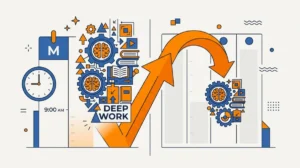
To maintain this momentum, career development must be structured. Many professionals succumb to "the drift"—learning only enough to satisfy the requirements of a current project. To avoid this, career experts recommend a quarterly audit of skill sets, alternating between "going wide" and "going deep."
- Going Wide: This involves acquiring adjacent skills that allow an individual to step into neighboring tasks, increasing their utility within an agile team. This is particularly valuable in fast-paced sectors like technology and creative media, where roles are fluid.
- Going Deep: This involves intense, sustained focus on a single area of expertise to reach the top-tier percentile. This is essential for specialized roles where technical superiority is the primary competitive advantage.
By alternating these approaches on a quarterly basis, professionals can avoid stagnation while ensuring they remain relevant as market demands evolve.
The ROI of Professional Certification
A critical component of professional development is the assessment of Return on Investment (ROI) regarding certifications. Historically, professionals have pursued certifications as a default response to career plateaus. However, market analysis indicates that many certifications offer diminishing returns unless they are directly tied to an immediate, specific role or industry requirement.
If a certification does not provide a clear, observable path to a higher salary, a promotion, or a new role, it may represent a misuse of time and capital. Experts suggest that before enrolling in a certification program, one must verify the industry demand for that credential. If the career trajectory of the certification is ambiguous, the project should be paused in favor of skills that offer a tangible, immediate professional return.

Leveraging Underutilized Public Resources
For those seeking to upskill without incurring significant debt, the public library system remains one of the most underrated assets in the modern economy. Many public libraries have evolved into comprehensive educational hubs, offering free access to premium platforms such as LinkedIn Learning, industry-specific databases, and professional development courses that would otherwise command high subscription fees.
This shift toward decentralized, high-quality education allows professionals to execute their "wide or deep" strategies at zero cost. Furthermore, the modern learner is encouraged to look beyond self-study. While books and online courses provide foundational knowledge, they often fail to identify personal blind spots. Engaging with a coach or mentor provides the feedback loops necessary for rapid mastery. A coach acts as an external observer, identifying ingrained habits and patterns that are invisible to the individual—essentially "updating the software" of one’s professional approach.
The Power of Being Relentlessly Helpful
The most effective way to build a high-trust network is through the principle of being "relentlessly helpful." This involves providing value to others without the expectation of an immediate, direct return. When an individual consistently shares resources, makes relevant introductions, and assists colleagues with their challenges, they cultivate a reputation of reliability and expertise.
This behavior creates a "bilateral relationship" foundation. When a career opportunity arises, the people in one’s network do not need to be reminded of one’s qualifications—the value has already been demonstrated through prior interactions. This approach transforms the network from a passive list of contacts into an active engine for professional advancement.
Sustaining Momentum: The "Glow Green" Approach
To keep this focus sharp, organizations and teams are increasingly adopting formal practices for knowledge sharing. The "Glow Green" philosophy—a practice where team members regularly share what they are currently reading, listening to, or learning—is a prime example of institutionalizing professional growth.
By dedicating a small portion of weekly team meetings to these exchanges, organizations prevent "skill drift" and foster a culture of continuous improvement. This practice ensures that individual learning is aligned with the broader goals of the team, creating a cohesive, high-performing environment.
Implications for the Future of Work
The broader implication of these strategies is a shift in power from the institution to the individual. As the barrier to entry for high-quality information continues to drop, the premium is placed on the ability to synthesize, apply, and network effectively.
Looking forward, the professionals who succeed will be those who treat their careers as a long-term, iterative project. This involves:
- Auditing current skills to identify potential for "stacking."
- Choosing a growth trajectory (wide or deep) on a quarterly basis.
- Utilizing free, high-quality resources to build competence without unnecessary financial burden.
- Prioritizing high-trust connections over volume-based networking.
- Seeking external feedback to bypass self-study plateaus.
As industries become more interconnected and the pace of technological change accelerates, the ability to learn quickly and leverage a strong network will remain the most reliable hedge against economic uncertainty. By moving away from a reliance on credentials and toward a model of continuous, strategic skill acquisition and relationship building, professionals can secure a more stable and prosperous future, regardless of the shifting tides of the traditional labor market.
Related posts: