AI Ethics Meets Ancient Faith: Vatican Summit Highlights Tech’s Spiritual Dilemma

Last fall, a pivotal, albeit discreet, gathering took place within the hallowed walls of the Vatican. Notre Dame philosopher Meghan Sullivan was among a select group of religious thinkers, academics, and prominent figures from the technology industry convened for a closed-door discussion on the complex ethical landscape of artificial intelligence. The meeting, shrouded in confidentiality, aimed to bridge the gap between rapidly advancing technological capabilities and deeply rooted human values.
Sullivan, reflecting on the experience in a recent newsletter, recounted an anecdote that encapsulates the profound — and perhaps unsettling — introspection occurring at the intersection of Silicon Valley ambition and ancient spiritual wisdom. On the first morning, she attended an optional Catholic Mass held in a historic church. To her surprise, a leading figure from the tech world, typically seen in casual attire, was present in the pews. Described by Sullivan as "the kind of guy you typically see in a black t-shirt and chinos," he was this time clad in a "brown suit and tie, quietly taking in the sanctuary as the first rays of morning light filled the room."
Following the service, Sullivan engaged him in conversation. The executive, who identified as not being Catholic, explained his presence with a statement that has since resonated as a stark indicator of the industry’s mindset: "We’re building something that is going to change life as we know it. I want to make sure I keep in touch with what humans have always cared about. This is a place that takes care of those values."
This interaction, as observed by Sullivan, carries a chilling undertone, not solely due to the potential disruptions AI might usher in, but more so for what it reveals about the engineers and leaders at the forefront of this transformative technology. The sentiment expressed suggests a burgeoning, almost quasi-religious fervor within parts of the AI industry. As analyst Elizabeth Lopatto has observed, there appears to be a discernible shift from focusing on the creation of practical, useful products to a grander, perhaps more nebulous, ambition of "inventing the future." This pivot positions these technology companies in a dual role, akin to both priest and prophet, seemingly attempting to appease a digital deity they may feel they have summoned, while simultaneously warning the wider public of its potentially disruptive might.
The allure of such an endeavor is understandable. For the executive in the brown suit, participating in such a dialogue likely offered a sense of profound purpose and intellectual stimulation, akin to embodying multiple historical figures of influence simultaneously. However, this narrative of inevitable technological transcendence is not universally embraced.
A Papal Response to the Digital Age
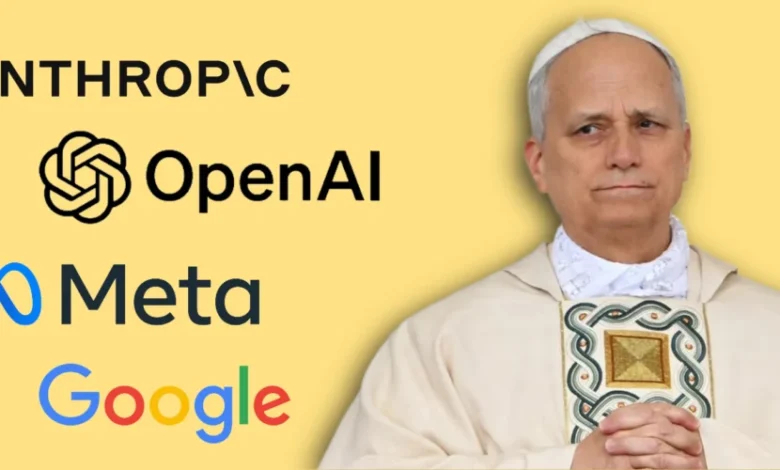
In a significant development, Pope Leo XIV released a comprehensive 42,000-word encyclical titled "Magnifica Humanitas" last week, directly addressing the multifaceted challenges posed by artificial intelligence. While the full document requires extensive study, preliminary summaries suggest a clear departure from passive acceptance of an AI-dominated future. The encyclical serves as a powerful counterpoint to the prevailing narrative of technological determinism.
A particularly poignant exhortation from "Magnifica Humanitas" reads: "With the heart of a shepherd and a father, I ask everyone to abandon the construction of yet another Tower of Babel and to join forces in building up the common good, so that humanity will never lose its beauty, and the world once again will come to recognize the human heart as the place where God desires to dwell." This calls for a fundamental reorientation of technological development, emphasizing the creation of tools that serve humanity’s betterment rather than pursuing abstract, potentially hubristic, visions.
The encyclical underscores a critical distinction: tools should be designed to be useful, to enhance human lives, and to contribute to the "common good." This principle stands in stark contrast to the pronouncements of some AI leaders who, when faced with the prospect of widespread automation, advocate for government-provided universal basic income or enthusiastically describe a future where humans coexist with benevolent "machines of loving grace." Such perspectives, the encyclical implies, are not pragmatic foresight but rather a manifestation of hubris, akin to erecting a new Tower of Babel constructed from advanced computing hardware.
Shifting Tones in the Tech Industry
Interestingly, recent weeks have seen a notable, albeit potentially superficial, shift in the rhetoric employed by some prominent technology executives regarding AI. Nvidia CEO Jensen Huang, for instance, publicly dismissed the notion that layoffs are solely attributable to AI, labeling such excuses as "lazy" and a mere attempt to "sound smart." This public rebuke of a common industry justification suggests a recognition, however belated, of the narrative’s potential to sow unwarranted fear.
Perhaps even more surprising, Sam Altman, a key figure in the AI landscape, recently acknowledged that his prior predictions about AI leading to significant job automation might have been "pretty wrong." While these recalibrations in tone could be interpreted as strategic public relations maneuvers aimed at mitigating negative sentiment, they represent a welcome, if cautious, step away from the more alarmist pronouncements that have characterized recent discourse.
Data and Context: The Unfolding AI Narrative
The rapid ascent of artificial intelligence has been marked by a series of escalating predictions and anxieties. In the past five years alone, investment in AI research and development has surged. According to Statista, global spending on AI is projected to reach over $500 billion by 2024, a significant increase from approximately $50 billion in 2019. This substantial financial backing has fueled innovation but has also contributed to an environment where ambitious claims and speculative futures often overshadow practical applications.
The Vatican summit, occurring against this backdrop, highlights a growing awareness among religious and academic institutions of the profound societal implications of AI. These discussions are not isolated events. International bodies, including the United Nations and the European Union, have been actively engaged in developing regulatory frameworks and ethical guidelines for AI, recognizing the need for a global conversation that transcends purely technological considerations. The ethical considerations encompass a wide range of issues, including algorithmic bias, data privacy, autonomous decision-making, and the potential for AI to exacerbate existing social inequalities.
The "Tower of Babel" Analogy and its Implications
The "Tower of Babel" metaphor, invoked in the papal encyclical and echoed in analyses of the tech industry’s ambitions, carries significant weight. In the biblical narrative, humanity’s attempt to build a tower reaching the heavens was seen as an act of hubris, met by divine intervention that led to the confusion of languages and the dispersal of peoples. Applied to AI, this analogy suggests that an unchecked pursuit of artificial general intelligence, or a singular, all-encompassing technological vision, could lead to unforeseen and potentially catastrophic consequences for human society.
The implications of this "new Tower of Babel" built from GPUs are far-reaching. If the primary focus of AI development shifts from creating practical tools to fulfilling an abstract vision of "inventing the future," there is a tangible risk of neglecting immediate human needs and societal well-being. The discourse around guaranteed income, for example, while addressing potential future economic shifts, can also be seen as a preemptive acceptance of a future where human labor is rendered obsolete, a narrative that carries its own set of psychological and social challenges.
Broader Impact and Future Considerations
The convergence of religious doctrine, academic inquiry, and technological innovation at the Vatican summit underscores a critical juncture in humanity’s relationship with artificial intelligence. The Pope’s encyclical, by emphasizing the "common good" and the intrinsic value of the human heart, offers a moral compass for navigating the complex ethical terrain ahead.
The recent statements from industry leaders, while potentially driven by PR concerns, signal a possible recalibration of the AI discourse. The acknowledgment of past overestimations regarding job automation, for instance, could pave the way for more grounded and realistic discussions about the integration of AI into society.
The challenge now lies in translating these acknowledgments into concrete actions. The anxieties and fears generated by the "x-risk" (existential risk) narratives, often promoted by those positioning themselves as "solemn sages," may prove difficult to fully assuage. The "p(doom)" genie, as it were, has been partially released, and its influence will likely persist.
Ultimately, the goal, as articulated by the Pope and implicitly by the shift in some tech executives’ language, should be to ensure that AI development remains firmly anchored in serving human needs and enhancing the quality of life for all. The focus must return to building useful tools that empower individuals and communities, fostering a future where technology serves as a partner in human flourishing, rather than an object of quasi-religious devotion. The dialogue initiated at the Vatican serves as a crucial reminder that the future of AI is not solely a technological imperative but a profound ethical and spiritual undertaking.
Related posts: