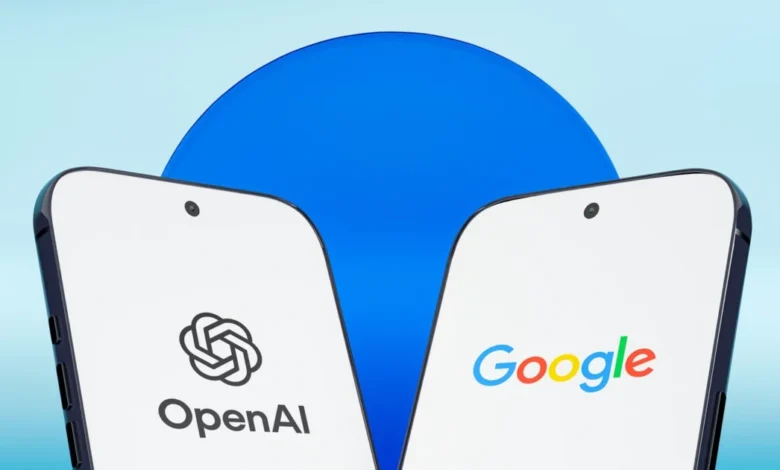
The landscape of digital information retrieval is undergoing a profound paradigm shift, marked by the rapid adoption of generative artificial intelligence as a primary gateway to the internet. According to Adam Fry, consumer product lead for ChatGPT at OpenAI, the platform currently handles roughly one-fifth the volume of search-like queries generated by dominant search engine Google. This revelation provides a rare quantitative glimpse into the scale of conversational search compared to traditional web indexing.
The figures were disclosed during an open discussion at a Monday evening dinner event in New York hosted by OpenAI, featuring an exchange with journalist Alex Kantrowitz. The full transcript of the conversation was subsequently published by the media outlet Big Technology, shedding light on internal metrics that OpenAI rarely shares publicly. While the roughly 20% benchmark highlights the meteoric rise of ChatGPT as an informational tool, industry analysts emphasize that comparing query volumes across fundamentally different technological architectures requires careful parsing of definitions, metrics, and user intent.
Defining the Metric: How OpenAI Counts a Search
The debate surrounding search volume often hinges on semantics and methodology. During the New York discussion, Kantrowitz pressed Fry for clarification on whether a multi-turn user conversation incorporating multiple web lookups counts as a single interaction or multiple distinct searches. Fry offered a straightforward clarification: “Every time you ask a question and go search the web, that’s a search.”
This methodology captures specific behavioral shifts among digital consumers. Fry noted that when ChatGPT first gained widespread public adoption, users primarily leveraged the technology for creative writing assistance, debugging code, and brainstorming tasks—activities that typically bypass traditional search engines altogether. However, over the past year, usage patterns have evolved significantly. Users increasingly rely on the platform for factual inquiries regarding people, places, current events, financial data, and health-related questions. Whenever these queries necessitate up-to-the-minute information sourced from the live internet, ChatGPT initiates a background web search. Fry categorized this segment as any informational request that a consumer would have historically submitted to a traditional text-based search engine.
Despite providing the one-fifth benchmark, Fry’s remarks left several contextual details unaddressed. The OpenAI executive did not specify which exact Google traffic baseline was used for the comparison, the precise chronological timeframe the data covers, or the geographical regions included in the calculation. Furthermore, industry observers have noted that if ChatGPT’s query volume truly sits at 20% of Google’s immense scale, it would render the conversational AI several times larger than Microsoft’s Bing search engine, positioning OpenAI as a formidable secondary player in the broader search ecosystem. Meanwhile, separate industry data indicates that ChatGPT’s weekly active user base expanded by 20% over a two-month window, climbing from 1 billion to 1.2 billion users.
Divergent Perspectives: What Independent Data and Analytics Reveal
While OpenAI’s internal metrics suggest a robust footprint, independent third-party analytics paint a more nuanced picture, particularly when examining downstream web traffic and referral metrics rather than raw prompt counts.
In February, digital marketing and SEO software provider Ahrefs published an independent estimate suggesting that ChatGPT’s search volume hovered around 12 percent of Google’s total. Ahrefs arrived at this figure by utilizing data from a joint Harvard University and OpenAI study published in July 2025, which established a baseline of 2.5 billion daily ChatGPT prompts. Analysts at Ahrefs determined that approximately 65 percent of those prompts constituted queries that users would have previously routed through Google. By cross-referencing this subset with Google’s publicly announced milestone of over 5 trillion searches per year, reported in March 2025, the firm constructed its comparative model.
The divergence between Ahrefs’ 12 percent estimate and OpenAI’s internal 20 percent figure underscores the difficulty of defining an AI "search." Ahrefs categorized prompts based on semantic intent, whereas Fry’s metric strictly counts instances where the AI model actively triggers an external web retrieval tool.
The contrast becomes even starker when evaluating referral traffic—the actual volume of human visitors directed from search engines and AI platforms to third-party publisher websites. Ahrefs maintains a continuous tracking benchmark monitoring traffic sources across a vast pool of sites utilizing its free Web Analytics tool. According to tracking data covering more than 118,000 websites, Google accounted for a commanding 24.74 percent of tracked referral traffic, whereas ChatGPT accounted for just 0.36 percent. This stark disparity highlights that while consumers increasingly use conversational interfaces to synthesize direct answers, traditional search engines remain the primary engines driving traffic to the wider web ecosystem.
The Counterpart: Google’s Continued Search Growth Amid AI Integration
As artificial intelligence platforms capture a growing share of informational queries, the incumbent market leader continues to expand its core operations. Alphabet’s financial disclosures for the third quarter indicate that Google’s search query volume is not shrinking under competitive pressure; rather, it is accelerating.
During the earnings announcement, Alphabet CEO Sundar Pichai reported that ongoing investments in generative AI features—such as Google’s AI-powered search overviews and conversational enhancements—have stimulated overall user engagement. According to Pichai, Google’s year-over-year query growth rate reached its highest level in five years, demonstrating that the total pie of digital search and information seeking is expanding concurrently with the rise of alternative interfaces like ChatGPT.
Analyzing the Implications for Digital Strategy and SEO
The revelation that ChatGPT commands a search-like query volume equivalent to one-fifth of Google’s traffic carries profound implications for digital marketers, content creators, and enterprise strategists. However, industry experts caution against misinterpreting these metrics as a direct one-to-one displacement of traditional search engine market share.
First, the behavioral dynamics of users differ substantially between the two platforms. A user turning to ChatGPT for a synthesized summary of a complex topic may never click through to an external website, whereas a Google search user typically reviews a list of hyperlinks and visits multiple publisher domains. Consequently, relying solely on query volume figures can obscure the realities of web monetization and referral economics.
Second, marketing and channel planning teams must account for the dual nature of modern metrics. When forecasting digital visibility, organizations are advised to evaluate query volume definitions alongside referral traffic analytics. Treating OpenAI’s internal search counts and Ahrefs’ referral tracking as interchangeable metrics can lead to flawed strategic assumptions. Furthermore, neither Fry’s statements nor Alphabet’s growth reports definitively prove whether AI queries are actively cannibalizing Google searches or merely capturing entirely new categories of digital inquiry that did not previously exist.
Looking Ahead: The Evolving Metrics of Conversational Discovery
As the generative AI sector matures, establishing standardized industry benchmarks for measuring search utility and user engagement remains a pressing challenge for the digital ecosystem. OpenAI’s disclosure offers a valuable benchmark, yet comprehensive cross-platform comparisons will remain difficult until technology firms align on transparent definitions of what constitutes a "search query" in an AI-driven environment.
Independent tracking mechanisms, such as monthly web referral audits and ongoing academic research partnerships, will continue to provide critical external perspectives on how consumers navigate the web. For publishers, brands, and advertisers, adapting to this dual-engine reality requires monitoring both direct AI interaction volumes and traditional referral pathways to ensure visibility across an increasingly fragmented informational landscape.