The draft Conversion Practices Bill, currently under scrutiny, represents a significant shift in the legal landscape regarding gender identity and sexual orientation. While the primary objective of the legislation is to eradicate practices intended to change or suppress an individual’s orientation or identity, the breadth of its current wording has ignited a firestorm of debate among legal experts, human resources professionals, and advocacy groups. At the heart of the controversy is the potential for criminal liability to extend to corporate officers who fail to implement "all reasonable steps" to prevent such practices within their organizations.
A Chronology of the Legislative Push
The journey toward this draft legislation has been long and contentious. The commitment to ban conversion practices was first announced by the UK government in 2018, initially as part of an LGBT Action Plan. However, the subsequent years were marked by significant delays and internal government disagreement over the scope of the ban.
In early 2021, the government conducted a public consultation that received over 100,000 responses, reflecting the deep polarization surrounding the topic. By 2022, the government initially suggested a partial ban that excluded transgender identity, a move that sparked widespread protest and led to a policy reversal. The current draft, published recently, represents the government’s attempt to consolidate these competing interests into a single, comprehensive legal framework. The bill is currently in the pre-legislative scrutiny phase, where committees of MPs and Peers evaluate its potential impacts before it formally enters the parliamentary cycle.
Defining the Legal Scope and Liability
The draft Bill proposes a dual-layered approach to criminalization. The primary offence targets individuals who perform or facilitate conversion practices—defined as acts that cause "serious physical or mental harm" or "serious alarm or distress." However, the provisions regarding "senior officer" liability have caused the most consternation in the business community.
According to the text, directors, managers, and governing body members can be held personally liable if the organization itself commits an offence and that offence was committed with the "consent, connivance, or neglect" of the officer. The requirement to take "all reasonable steps" to prevent such conduct places a significant burden of proof on employers. Legal commentators have noted that this language is notoriously vague. Unlike existing health and safety legislation, where "reasonable steps" are well-defined by extensive case law and industry standards, the application of this phrase in the context of protected beliefs and speech remains largely untested.
Data and Financial Implications
The government’s own impact assessment suggests that the cost of compliance will be relatively modest, estimating a £13.6 million burden on businesses over the next decade. This figure accounts for familiarization with the new law, updating internal policies, and providing training for staff.
However, critics, including the Gay Men’s Network and various legal think tanks, argue that these figures severely underestimate the reality of implementation. If an organization feels compelled to hire specialized consultants to navigate the intersection of equality law, employment contracts, and the new criminal provisions, costs could escalate rapidly.
Furthermore, the potential for private prosecutions—a legal mechanism in England and Wales that allows individuals to bring criminal charges without the police—adds a layer of risk that the government’s assessment has not fully addressed. If a private individual initiates a case, a company could face significant legal fees even if the charge is eventually dismissed. The financial impact is not merely in compliance, but in the defensive legal posture organizations may be forced to adopt to protect their leadership from personal criminal exposure.
The Pronoun Debate and Workplace Policy
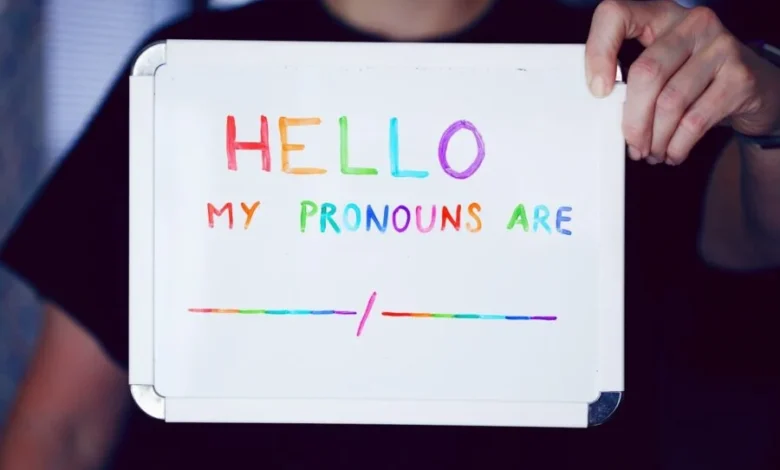
A major point of friction involves the potential for "repeated refusal" to use a colleague’s preferred pronouns to be categorized as a conversion practice. While the government maintains that the law is not designed to police everyday workplace disagreements, campaigners argue that the bill’s lack of a specific "safe harbor" clause for workplace communication is a dangerous oversight.
Sex Matters and other gender-critical advocacy groups emphasize that workplaces often manage competing rights. For example, an employer may have a policy that requires the use of preferred pronouns to foster an inclusive environment, while simultaneously having a policy regarding the use of single-sex facilities based on biological sex. If an employee challenges these policies, the employer is effectively caught between two potential legal claims: one involving potential discrimination or harassment under the Equality Act 2010, and another potentially involving criminal prosecution under the new Conversion Practices Bill.
Helen Joyce, director of advocacy at Sex Matters, has highlighted the "rock and a hard place" scenario: "Let trans-identifying men use female facilities at work and you’re breaching workplace regulations; tell them to stay out and you face criminal charges if they complain." This conflict creates an environment of regulatory uncertainty that many businesses find untenable.
Official Government Stance and Rebuttals
In response to the growing chorus of concern, a government spokesperson has maintained a firm line, dismissing the idea that the bill will result in the criminalization of ordinary discourse. The government argues that the law is targeted specifically at "abusive" practices, defined by the intent to change an identity and the resulting serious harm.
"It is completely untrue that this bill will burden businesses, unless your business is pushing abusive conversion practices, which we will outlaw," the spokesperson stated. The government asserts that the "all reasonable steps" defense is a standard legal threshold designed to ensure that organizations have adequate safeguarding policies in place. They argue that updating employee handbooks and providing sensitivity training—standard practice in modern HR—should be sufficient to satisfy the requirements of the law.
Analysis: Implications for Governance and HR
The introduction of this bill forces a necessary conversation about the role of the modern employer in managing ideological and identity-based conflicts. Traditionally, employers have looked to the Equality Act 2010 for guidance on harassment and discrimination. The Conversion Practices Bill introduces a new, higher-stakes layer of criminal law that operates alongside, but is distinct from, civil employment law.
If enacted in its current form, the bill will likely trigger a massive overhaul of HR policies. Organizations will need to develop sophisticated internal grievance mechanisms that can distinguish between "ordinary disagreement"—which the government claims is protected—and "abusive practice," which is not. This will require not just policy updates, but a fundamental shift in how managers are trained to handle interpersonal disputes.
The concern remains that in the absence of clear, statutory definitions of what constitutes "all reasonable steps," companies may adopt an overly cautious approach. This "defensive management" could lead to the suppression of legitimate, non-abusive discussions in the workplace, or, conversely, a paralysis in decision-making regarding facility usage and dress codes, as senior managers fear that any action taken could lead to criminal repercussions.
Broader Societal Impact
The debate over the draft Conversion Practices Bill is emblematic of the wider cultural and legal struggles in the UK regarding the definition of gender and the limits of free expression. While the intent to protect vulnerable individuals from coercive and harmful practices is widely supported across the political spectrum, the mechanism of achieving this goal has revealed a deep divide.
As the bill moves toward formal parliamentary debate, the government will face increasing pressure to clarify the scope of the criminal provisions. Legal experts suggest that the introduction of an explicit, statutory exclusion for "good faith" discussions or expressions of belief could mitigate many of the fears expressed by business leaders. Without such a clarification, the legislation risks becoming a source of long-term legal volatility, potentially leading to a series of high-profile court cases that will define the boundaries of the law for years to come.
Ultimately, the challenge for the government is to strike a balance: creating a robust legal shield for those subjected to harmful practices while ensuring that the ordinary conduct of business, and the fundamental right to hold and express beliefs, is not inadvertently swept away in the process. For now, the business community remains in a state of watchful waiting, as they assess whether they will need to fundamentally restructure their approach to diversity, inclusion, and internal governance to avoid the specter of criminal liability.