Faces of HR: Kimberly Turnmire on Cultivating Purpose-Driven Leadership and Human Capital Strategy at Organic Valley

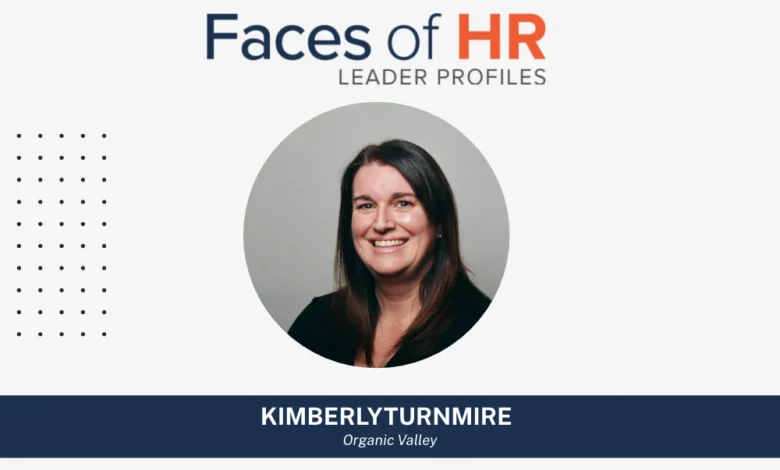
Driven by an enduring commitment to unlocking human potential and aligning workforce capabilities with organizational goals, Kimberly Turnmire has spent more than 25 years shaping the trajectory of learning, leadership development, and talent strategy. Today, she serves as the Executive Vice President of People at Organic Valley, the largest farmer-owned organic food cooperative in the United States. Operating out of its headquarters in La Farge, Wisconsin, Organic Valley represents approximately 1,500 family farms, producing organic dairy, eggs, and an array of sustainably sourced food products. In this role, Turnmire oversees enterprise-wide human capital strategies, steering an organization where corporate culture is deeply intertwined with agricultural heritage and ecological stewardship.
The Evolution of an HR Leader: A Strategic Journey
Turnmire’s entry into the human resources and Learning and Organizational Development (L&OD) space was forged through deliberate adaptation rather than a conventional, linear career path. Unlike many of her peers who drifted into human resources from unrelated disciplines, Turnmire pursued formal academic training in adult learning. However, entering the job market immediately after college proved challenging, forcing her to pivot. Recognizing that corporate investment in workforce training was a growing sector, she proactively obtained her insurance license and accepted a position at an insurance firm renowned for its heavy emphasis on employee development and continuous learning.
This calculated career move laid the groundwork for her long-term professional trajectory. Just two years into her insurance career, an instructional designer position opened within the firm, allowing Turnmire to transition directly into the field she had originally targeted. This foundational experience served as a springboard for a decade-long tenure at Summit Credit Union. During her time there, Turnmire steadily ascended the organizational ladder, moving from foundational instructional design and training roles into executive leadership as the Vice President of Financial Education and Business Development.
In 2015, Turnmire brought her extensive expertise to Organic Valley, initially joining the cooperative as the Director of Learning & Organizational Development. Her strategic oversight of training frameworks and culture building quickly yielded results, leading to a promotion to Vice President of Organizational Development. Her recent elevation to Executive Vice President of People cements her role as a primary driver of the cooperative’s long-term human capital vision, bridging the gap between operational agricultural demands and modern workforce expectations.
Industry Influences and Mentorship
Throughout her quarter-century career, Turnmire has consistently emphasized the vital role of mentorship in leadership development. When asked about the most significant influence on her professional journey, she points directly to Tracy Nelson, the current President and CEO of Aspire Talent Group. Nelson served as Turnmire’s manager during her formative years at Summit Credit Union, acting as a crucial catalyst for her career advancement.
According to Turnmire, Nelson possessed an innate ability to identify potential and advocate for stretch assignments long before Turnmire recognized her own readiness for executive responsibilities. As a seasoned trainer and instructional designer, Nelson provided hands-on coaching and maintained a supportive presence as Turnmire navigated increasingly complex corporate environments. Even after transitioning to separate organizations, Nelson remained a trusted mentor and friend. This foundational relationship underscores Turnmire’s broader philosophy on leadership: while individual accountability remains paramount for career growth, the presence of an engaged, visionary mentor can fundamentally alter an executive’s professional trajectory.
The Dual Nature of Human Resources: Rewards and Operational Friction
Reflecting on the realities of the modern HR profession, Turnmire offers a candid assessment of the field’s distinct rewards and structural challenges. On the positive side, she highlights the unique privilege human resources holds in influencing every phase of an employee’s lifecycle—from initial recruitment and onboarding to continuous development and executive succession.
For Turnmire, the most rewarding aspect of her role is witnessing the tangible correlation between supportive workplace cultures and high-performing business outcomes. She champions workplaces rooted in psychological safety, active inclusion, and mission alignment. When employees feel a deep connection to an organization’s core purpose, and when they are provided with clear pathways for professional growth, both the individual and the enterprise experience sustainable success.
Conversely, Turnmire identifies operational reactivity as the most persistent challenge facing contemporary human resources departments. Too frequently, HR professionals are relegated to fighting immediate fires rather than proactively designing workforce frameworks, cultivating future leaders, and engineering resilient organizational cultures. Furthermore, Turnmire points to a recurring structural dilemma within corporate governance: human resources is frequently tasked with enforcing policies and cultural standards that executive leadership fails to consistently model or hold their direct reports accountable for. This disconnect often casts HR in the role of an administrative disciplinarian rather than a strategic business partner.
To resolve this friction, Turnmire advocates for a fundamental redistribution of accountability. She argues that human resources must act as the architect of strategy, systems, and tools, while operational leaders must retain equal ownership in modeling expectations and enforcing cultural standards. Fostering this shared accountability would liberate HR professionals to focus on proactive talent optimization while simultaneously strengthening internal governance across all tiers of the organization.
Navigating the Next Five Years: Flexibility, Purpose, and Trust
Looking toward the horizon, Turnmire evaluates the macroeconomic and cultural shifts transforming the global workforce. Over the next five years, she anticipates an accelerated departure from rigid, one-size-fits-all employment models in favor of hyper-flexible, highly personalized, and deeply purpose-driven workplace frameworks.
Modern employees increasingly demand autonomy regarding the modalities of their work—including when, how, and where tasks are executed—while simultaneously seeking a profound connection to an organizational mission. At Organic Valley, this dynamic is uniquely supported by the cooperative’s business model. Because the enterprise is owned by family farmers rather than external shareholders, employees maintain a direct, tangible connection to a larger social purpose: sustaining rural agricultural communities, protecting family farms, and advancing sustainable organic farming practices.
Turnmire emphasizes that operational flexibility cannot exist in a vacuum; it must be anchored by institutional trust, rigorous accountability, and a vibrant organizational culture. Organizations capable of successfully balancing remote or hybrid flexibility with cohesive team collaboration and high employee engagement will ultimately secure a distinct competitive advantage in the war for specialized talent.
Strategic Advice for Emerging HR Professionals
For individuals entering the human capital profession today, Turnmire offers actionable, pragmatic guidance rooted in decades of cross-industry experience. Her primary recommendation is for aspiring HR practitioners to invest equal time mastering foundational business acumen as they do studying employment law and human resource theory.
The most effective human resource executives, Turnmire notes, do not merely understand personnel practices; they possess a comprehensive grasp of how their specific organization generates market value, manages supply chains, and drives financial performance. Building robust cross-functional relationships, maintaining intellectual curiosity, and practicing active listening are essential competencies, as trust remains the single most valuable currency within the profession.
Additionally, Turnmire reiterates that culture and employee engagement are not the exclusive property of the human resources department. Every individual within an enterprise—particularly those in management and executive oversight roles—directly influences the daily employee experience. Therefore, the mandate of modern human resources is to equip, educate, and empower leaders to cultivate exceptional workplace environments while simultaneously safeguarding the economic viability of the business. Approaching every operational hurdle with a commitment to continuous learning and a resilient growth mindset ensures that HR professionals remain indispensable partners in enterprise-wide success.
Broader Implications for the Agricultural and Cooperative Sectors
Turnmire’s leadership trajectory at Organic Valley highlights a broader evolution within the agricultural and cooperative sectors. Traditionally viewed through the lens of supply chain management, logistics, and commodity pricing, modern agricultural cooperatives are increasingly recognizing that human capital strategy is just as vital to long-term viability as agronomic science or financial capital.
As rural labor markets tighten and consumer expectations regarding corporate social responsibility intensify, organizations like Organic Valley must compete not only with regional agribusinesses but with remote-first technology enterprises for top-tier talent. By centering its human capital strategy on authenticity, ecological purpose, and developmental support, Organic Valley illustrates how traditional industries can successfully modernize their employee value propositions without compromising their founding ethos. Turnmire’s leadership trajectory serves as a case study in aligning workforce development with cooperative values, demonstrating that organizational growth and human-centric leadership are mutually reinforcing objectives in the modern corporate landscape.