Salesforce’s Futureforce program is fundamentally reshaping the landscape of corporate talent development, moving beyond traditional internships to cultivate a generation of professionals who are not merely observers but active contributors from day one. This strategic initiative prioritizes long-term success over short-term staffing, yielding tangible results and fostering a dynamic workforce characterized by innovation, adaptability, and a profound understanding of artificial intelligence. The mechanics of the program are meticulously structured to ensure that graduates like Hampton, whose journey exemplifies genuine impact through building products that reach customers’ hands, are not outliers but the standard.
A New Paradigm in Talent Cultivation: Real-World Contributions from Day One
The core philosophy of Futureforce diverges sharply from conventional entry-level hiring models. Instead of assigning manual, peripheral tasks, the program integrates new talent directly into critical projects, allowing them to shadow experienced teams, engage with customers, and develop real, impactful solutions. This immersive approach is evident in the rapid ascent of individuals like Raymond Dinh, a Technical Product Marketing Manager on the Agentforce team, who joined Futureforce in 2024. Within a mere few months, Dinh had already developed a Lightning web component for Agentforce’s chat interface that quickly gained internal traction. His contributions extended to creating Agentforce Consultations, a popular series of customer-facing activations showcased at Dreamforce, designed to highlight Agentforce Builder and its native Agent Script language. These activations have since engaged thousands of customers globally, with the underlying work establishing a new standard for learning Agentforce. Another significant project, Buildify, a demo-planning tool, is now utilized by demo engineers company-wide. Demonstrating the program’s emphasis on visibility and direct impact, Dinh co-demoed a live Agentforce build in front of the entire company at the FY27 Company Kickoff in March 2026, a testament to the accelerated growth and responsibility entrusted to Futureforce graduates.
Alex Murray, Senior Director of Programs and Marketing for Global Futureforce, underscores this shift, stating, "Instead of doing manual tasks, interns are shadowing teams, working in front of customers, and building real things." The outcome of this experience is a distinct cohort of professionals who lead with compelling narratives and empathy, leverage artificial intelligence to streamline and amplify their work, and infuse their teams with an infectious hunger that often reenergizes seasoned colleagues. This approach aligns with broader industry trends recognizing the imperative of experiential learning and early responsibility in developing future leaders.

The Strategic Imperative: Cost-Efficiency and AI Proficiency
The strategic value of programs like Futureforce is further solidified by compelling data. Emerging talent within Salesforce is four times more likely to utilize AI daily compared to their more experienced counterparts, showcasing a native comfort and proficiency with cutting-edge tools that are becoming indispensable in the modern workplace. Furthermore, building this talent internally through programs like Futureforce is approximately one-third the cost of recruiting experienced workers externally. This significant cost advantage, coupled with the proven efficacy of internal talent development, reframes entry-level hiring from a mere operational necessity into a sophisticated talent strategy with demonstrable returns on investment.
Murray highlights a critical insight for other organizations: "The entry-level worker of today probably looks like somebody who was three, four, five years into their role just a few years ago. They learn, unlearn, and relearn as fast as our technology is changing, and that velocity is exactly what we need." This observation underscores a fundamental shift in the capabilities and expectations of new graduates entering the workforce, driven by rapid technological advancements and a greater emphasis on continuous learning. Companies that fail to recognize and harness this accelerated learning capacity risk falling behind in a competitive global market.
Beyond Technical Prowess: Storytelling as a Strategic Tool
The success of Futureforce graduates extends beyond mere technical aptitude; it encompasses a profound understanding of how to communicate value and drive adoption. Raymond Dinh, despite his rapid accomplishments, maintains a tenacious drive, asserting, "I’m still fighting. I don’t think I’ll stop fighting anytime soon." He views his generation’s role in explicitly strategic terms: "Let’s be little Davids inside this massive Goliath of a company. We’re standing on the shoulders of giants, but we can build small things that help us stay relevant." For Dinh, the most potent tool in this endeavor is not just the technology itself, but the compelling story woven around it.

This instinct for narrative is echoed by Ireoluwa Bayo-Tofowomo, an Associate Account Solutions Engineer. Faced with the challenge of engaging McLaren Automotive without prior customer history, she initiated her approach with a vivid story: tracing the journey of a 10-year-old F1 enthusiast who grows up to become a high-net-worth individual, only to find McLaren lacking a connected data strategy to recognize and cater to their lifelong loyalty. Bayo-Tofowomo meticulously mapped the entire customer journey, from the F1 fan app and car configurator to the dealership experience and the untracked loyalty loop. She then leveraged AI to transform this intricate narrative into a compelling infographic. Her principal solutions engineer, upon seeing the presentation, was reportedly "completely shocked" by the depth and clarity of her vision. For Bayo-Tofowomo, this innovative application of AI is a natural extension of her creative process, articulating, "I am the ideas. AI is the painter."
Similarly, Liz Awad, a Senior Product Manager on the Agentforce team and a Futureforce alumna, describes a similar dynamic in her role. "I’m not just handing off requirements," she explains. "With AI, I’m synthesizing customer feedback, drafting technical specs, and prototyping in a single flow that collapses weeks of back and forth into hours." For this generation, AI is not merely a destination or a separate tool; it is an intrinsic medium through which their ideas take form and achieve rapid realization, fundamentally transforming traditional workflows and significantly compressing development cycles. This seamless integration of AI into the creative and development process highlights a paradigm shift in how work is conceived and executed.
A Symbiotic Learning Environment: Mutual Growth and Energy Infusion
The relentless pace of technological change is met head-on by Futureforce graduates’ eagerness to absorb new information. Hampton, for instance, has cultivated deliberate habits to remain current, including listening to AI-focused podcasts during her daily commute. She finds this casual exposure to new concepts invaluable, allowing her to familiarize herself with emerging ideas before they surface in formal meetings. "The hardest part is the initial discomfort of hearing something unfamiliar for the first time," she notes. "But the more you get exposed to an idea, the more comfortable you feel with it." This simple, consistent habit has an outsized effect, fostering a mindset where curiosity drives engagement and proactive learning.
While Futureforce hires arrive ready to assimilate knowledge, what often surprises senior colleagues is the profound reciprocal flow of insights. Alex Murray vividly recalls a meeting with Raymond Dinh, where she and two colleagues sought his input on building a similar tool for recruiting. The outcome was unexpectedly energizing. "We agreed it was probably the best call we’d been on all month," Murray recounts. "We were energized. We were thinking about things in a new light. He thought even bigger than how we were thinking." She left the conversation with "a pep in her step," experiencing a renewed energy that can be rare for professionals with a decade or more of experience. This interaction underscores how fresh perspectives from emerging talent can disrupt conventional thinking and ignite new avenues of innovation within established teams.

Dinh consciously fosters this environment of shared ideas and encouragement. He famously urged one executive to begin building her own applications after she observed his rapid coding prowess during a collaborative project. "If I can do something like this, then so can my senior colleagues," he challenged. "Go out there and learn it yourself. Be curious." He emphasizes that this open and willing engagement is bidirectional. Despite his significant contributions, Dinh identifies humility as the most crucial lesson learned since joining Salesforce – the readiness to admit when he doesn’t have all the answers and an eagerness to continually learn. "You have to be humble enough to understand that you don’t know things as much as you think you do," he advises, highlighting a maturity that belies his early career stage.
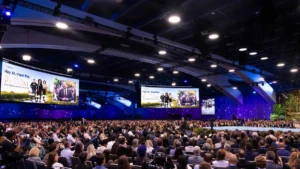
This dynamic exchange of curiosity and knowledge was strikingly evident at a senior leadership offsite, where a panel of interns and new graduates fielded questions from executives for a full hour. Murray recalls, "There was not a more engaging panel at the entire offsite. For the rest of the week, every session, people were saying, ‘Well, the intern yesterday told us that…’" This anecdote powerfully illustrates the significant impact emerging talent can have, not just on specific projects, but on the overall strategic discourse and cultural ethos of an organization.
Strategic Lessons for Companies: The Emerging Talent Playbook
The success witnessed within Salesforce’s Futureforce program is not accidental; it is the product of a deliberate, codified framework outlined in the Salesforce Emerging Talent Playbook. This comprehensive guide translates the actions that lead to such impactful outcomes into actionable strategies for other organizations seeking to build similar talent pipelines. While specific details of the playbook are extensive, its core principles emphasize proactive engagement, empowerment, and a strategic integration of emerging talent into the organizational fabric.
For executives contemplating the creation of a similar pipeline, Quinn, a key figure in Salesforce’s talent strategy, advises starting long before the first job requisition is even opened. This involves a fundamental re-evaluation of how entry-level roles are perceived and structured, ensuring they offer genuine opportunities for impact and growth. Raymond Dinh further advocates for throwing new employees into challenging, real-world scenarios. "Hammer into them what the company is about, then give them the challenge of going into the wild and being hunted by wolves," he suggests. "Life after Futureforce can feel a little bit daunting, so that taste of independence will give people the experience and autonomy they need to be successful after they come out of the program." This philosophy champions resilience and self-reliance, preparing graduates for the dynamic and often demanding realities of a fast-paced tech environment.

Alex Murray offers straightforward advice to skeptical managers: "Spend an hour with them. Have them show you how they use AI. You’re going to come off that conversation reenergized." This simple interaction, she argues, often provides the most compelling evidence of the value and fresh perspective that emerging talent, particularly those adept with AI, can bring. While the Emerging Talent Playbook offers a structured framework, Murray contends that the most persuasive proof resides in the tangible innovations being developed daily by Futureforce graduates, often creating solutions that the market doesn’t even realize it needs yet.
The Employees of the Future Are Already Here
The narrative around talent acquisition must shift from merely "taking jobs" to "changing jobs," as Quinn articulates. She emphasizes that "AI is augmenting jobs at all levels," fundamentally altering the nature of work across the board. Murray concurs, stating, "The entry-level role of today does not look like the entry-level role of yesterday. AI is the great equalizer. It has upleveled all of us." This perspective highlights a crucial point: AI is not merely a tool for efficiency; it is a catalyst for professional evolution, enabling individuals at all career stages to achieve more and contribute at higher levels.
Hampton, now a year and a half into her role, is steadily accumulating the institutional knowledge that she initially lacked – the invaluable lessons derived from navigating organizational complexities, experiencing failures, and ultimately understanding who to consult for specific challenges. This journey from a new graduate to a knowledgeable internal resource is precisely what Salesforce envisioned when bringing her into the Futureforce program. By strategically investing in and empowering emerging talent, Salesforce is not just filling roles; it is proactively cultivating the next generation of innovators and leaders who are inherently equipped to navigate and shape the future of technology and business. The Futureforce program stands as a powerful testament to the transformative potential of investing in internal talent pipelines, proving that the employees who will define tomorrow’s successes are already here, actively building the future.
Related posts: