The Untapped Potential: Sales Intelligence Software Redefines Revenue Growth and Operational Efficiency in 2026


The conventional sales paradigm, where a deal is closed, a quick log entry is made, and the team moves to the next prospect, is rapidly becoming obsolete. Between the initial outreach and a signed contract, hundreds of hours of critical interactions—calls, messages, video meetings—occur, yet historically, over 99% of this invaluable conversational data remained unreviewed, an expansive, unaddressed blind spot for businesses. Sales intelligence software, powered by advanced artificial intelligence (AI), has emerged as the transformative solution to this challenge, converting raw, unstructured interaction data into actionable business insights and fundamentally reshaping how companies approach revenue generation and customer engagement in 2026.
The Evolution of Sales Enablement and the Rise of Intelligence
The journey to modern sales intelligence is rooted in the increasing complexity of the sales landscape. For decades, Customer Relationship Management (CRM) systems served as the backbone for managing customer data, tracking opportunities, and standardizing sales processes. However, CRMs primarily function as databases, relying heavily on manual input from sales representatives. As sales cycles grew longer, customer expectations soared, and communication channels proliferated, the limitations of manual data entry became starkly apparent. Sales teams found themselves grappling with a "Documentation Tax"—a significant portion of their valuable selling time diverted to administrative tasks, logging calls, summarizing meetings, and updating records. This not only reduced selling time but also introduced inconsistencies and inaccuracies into the CRM, painting an incomplete or even misleading picture of pipeline health and customer sentiment.
The early 2020s saw the rise of sales enablement tools, designed to equip sales teams with resources, content, and training to improve performance. While effective in their scope, these tools often operated independently of the actual customer interactions, failing to provide real-time, granular insights into the content and quality of conversations. The sheer volume of digital interactions—from cold calls to complex video negotiations—created an insurmountable data challenge. Sales managers, even with dedicated quality assurance teams, could realistically review only a minuscule fraction, often less than 1%, of customer communications. This left the vast majority of potential risks, coaching opportunities, and market insights buried within unexamined recordings.

By 2026, the imperative for a more sophisticated solution became undeniable. The convergence of powerful AI, machine learning, and natural language processing capabilities provided the technological breakthrough. Sales intelligence software stepped in to bridge this critical gap, moving beyond mere data storage to active data analysis, making every interaction a source of strategic insight. This shift represents not just an incremental improvement but a fundamental paradigm change in how sales organizations operate and how executive leadership makes decisions.
Defining Sales Intelligence: Beyond Traditional CRM
At its core, sales intelligence software is a sophisticated technology platform designed to collect, analyze, and distribute data derived directly from customer and prospect interactions. This includes a comprehensive range of communication channels: phone calls, instant messages, emails, and video meetings. Its primary objective is to empower sales teams with superior decision-making capabilities, automate tedious administrative tasks, and proactively identify potential revenue risks or opportunities.
It is crucial to distinguish sales intelligence from a CRM system. A CRM is a foundational database that stores customer records, tracks deal stages, and manages contact history. Sales intelligence software, however, is not a replacement; it is a powerful augmentation. It acts as an intelligent layer that automatically populates and enriches the CRM with accurate, context-rich data, ensuring that records reflect the true nature of interactions rather than relying on a sales representative’s often hurried or incomplete post-call notes. This synergy transforms the CRM from a static record-keeping system into a dynamic, insight-driven engine.
A key distinction that buyers must grasp in 2026 is the difference between traditional point solutions and modern, platform-native software. Many standalone tools operate external to a company’s core communication infrastructure. They often rely on external recording bots that "join" meetings as a third party. While functional, this approach introduces several challenges: increased IT overhead for maintenance and integration, potential data security vulnerabilities due to external data processing, and workflow friction that can lead to missed recordings or inconsistent data capture. Furthermore, some leading standalone platforms levy additional annual platform fees on top of per-seat pricing, adding significant costs to an already existing communication stack.
In contrast, a modern, platform-native approach integrates sales intelligence directly into the communication platform itself. When intelligence is an inherent component of the system used for calls, video, and messaging, data capture occurs automatically and seamlessly across sales, customer service, and business intelligence operations. There are no third-party bots to manage, no custom integrations to build and maintain, and the data flows directly into existing workflows without additional setup. This native integration offers superior data hygiene, reduces IT complexity, enhances security by keeping data within a single ecosystem, and ensures that no critical conversation falls through the cracks due to an external bot failing to connect or a complex integration breaking down.
How Sales Intelligence Platforms Function: The Three-Step Processing Loop
Regardless of the vendor, sales intelligence platforms follow a consistent, highly automated processing loop. Understanding these steps is vital for buyers to evaluate whether a platform truly captures the full scope of their operations or merely scratches the surface.
Step 1: Data Collection and Ingestion. This foundational step involves the platform capturing raw interaction data across every communication channel utilized by the sales team. This includes inbound and outbound phone calls, scheduled and ad-hoc video meetings, and various messaging platforms. For native platforms, this capture is instantaneous and automatic, occurring within the communication system itself, guaranteeing comprehensive coverage. In the case of standalone tools, this is where external bots are typically deployed to join and record meetings or integrate with dialers. The quality and completeness of this initial data capture are paramount, as it forms the basis for all subsequent analysis.
Step 2: Automated Analysis and Scoring. Once the raw interaction data is ingested, the platform employs sophisticated AI and machine learning models to process and interpret the content. This step involves:
- Transcription: Converting spoken words into highly accurate text, often with speaker diarization to identify who said what.
- Topic Identification: Automatically recognizing recurring themes, product mentions, competitor discussions, and common objections.
- Sentiment Analysis: Detecting emotional tones and shifts in conversation, identifying moments of frustration, agreement, or hesitation from both the customer and the rep.
- Risk Signal Detection: Flagging specific keywords or phrases that indicate potential issues, such as a customer mentioning churn, a compliance concern, or a competitor’s name.
- Categorization: Classifying interactions by outcome (e.g., demo booked, objection handled), urgency, or deal stage, providing structured context.
- Behavioral Analysis: Identifying patterns in sales rep behavior, such as talk-to-listen ratio, use of discovery questions, or adherence to sales scripts.
Step 3: Workflow Integration and Synchronization. The processed insights from Step 2 are then seamlessly pushed into the tools and systems that teams already use daily. This ensures that the intelligence is not siloed but actively informs operations:
- CRM Updates: CRM records are automatically enriched with call summaries, action items, sentiment scores, and identified topics, eliminating manual data entry for reps.
- Manager Alerts: Sales managers receive prioritized notifications for flagged interactions, allowing them to intervene in real-time or provide timely coaching.
- AI Sales Coaching: Individual representatives receive personalized recommendations and feedback based on patterns detected across their calls, enabling continuous skill development.
- Executive Dashboards: Leadership gains access to high-level strategic observability, allowing them to query conversation data using natural language to uncover macro trends across the entire business, such as prevalent market objections or product feedback.
This three-step loop runs continuously and at scale, processing every interaction with a consistency and depth impossible for any manual review process. It transforms vast amounts of qualitative data into quantitative, actionable intelligence.
Core Features Redefining the Sales Lifecycle
Modern sales intelligence platforms extend their value far beyond mere sales development. While often perceived as another tool in the sales enablement stack, their capabilities span the entire customer lifecycle, including customer service, account management, and post-sale retention. Limiting visibility to just the sales team means missing crucial data trends that often predict churn or highlight cross-sell opportunities before they become apparent.
Automated Database Sync and Workflow Optimization: Eliminating the Documentation Tax. One of the most immediate and tangible benefits of sales intelligence software is the radical reduction, and often elimination, of the "Documentation Tax." Operations leaders have long grappled with the systemic drain on productivity caused by high-value sales representatives and customer-facing staff spending hours each week manually transcribing call summaries, action items, and follow-up notes into their CRM. This time, better spent engaging with prospects and customers, is instead consumed by administrative overhead.
A comprehensive platform removes this burden entirely. Immediately after a call or meeting concludes, an integrated AI sales assistant automatically generates a concise summary, extracts key action items, and syncs the full interaction record directly into the CRM. The representative is freed to move immediately to the next conversation, maximizing their productive selling time. Concurrently, the CRM is updated in the background with accurate, structured data, ensuring that leadership operates from a real-time, precise picture of pipeline activity, rather than a patchwork of manually entered notes with varying degrees of completeness and accuracy. This not only improves individual productivity but also enhances the integrity of pipeline forecasting and sales reporting across the organization.
Interaction Risk and Signal Isolation: Tapping the 99% Blind Spot. The stark reality that most sales leaders acknowledge but rarely articulate aloud is the inherent limitation of human bandwidth for quality assurance. Sales managers and QA teams simply do not possess the capacity to review more than a tiny fraction of recorded calls—typically less than 1%. The remaining 99% of customer interactions reside in storage systems, unexamined, often harboring critical risk signals that go unnoticed. Implementing conversation intelligence is the only viable method to access and analyze this vast, unreviewed data and uncover these hidden risks.
Within that 99% lie myriad critical moments: a customer expressing dissatisfaction and hinting at switching to a competitor, a sales representative making an unapproved discount promise, a prospect raising a significant compliance concern that was inadvertently dismissed, or a subtle shift in sentiment indicating a weakening deal. Any one of these unaddressed moments can quickly escalate into a substantial revenue leak, a legal exposure, or a lost customer relationship.
Sales intelligence software functions as a tireless virtual supervisor, automatically processing every single interaction. It does not rely on sampling; it reviews everything and intelligently surfaces only those moments that genuinely require human attention. Managers receive a prioritized feed of flagged interactions, complete with transcripts and timestamps, eliminating the need to manually sift through hours of recordings. By deploying an AI sales agent, teams can automate interaction reviews, take proactive action based on these critical signals, and ensure that no revenue risk goes unaddressed, often resolving issues in hours rather than weeks. This proactive risk mitigation is a game-changer for customer retention and brand reputation.
Strategic Observability via Natural Language: Empowering Executive Leadership. Beyond the daily operational benefits, advanced sales intelligence software provides executive leadership with a capability historically impossible to achieve at scale: strategic observability. Traditional feedback loops in most organizations are inherently reactive and slow. Leadership often discovers product issues when negative reviews surface online, or when a customer escalates a complaint directly to the C-suite. By the time such a signal reaches decision-makers, weeks or even months of accumulated damage, customer dissatisfaction, and lost opportunities may have already occurred.
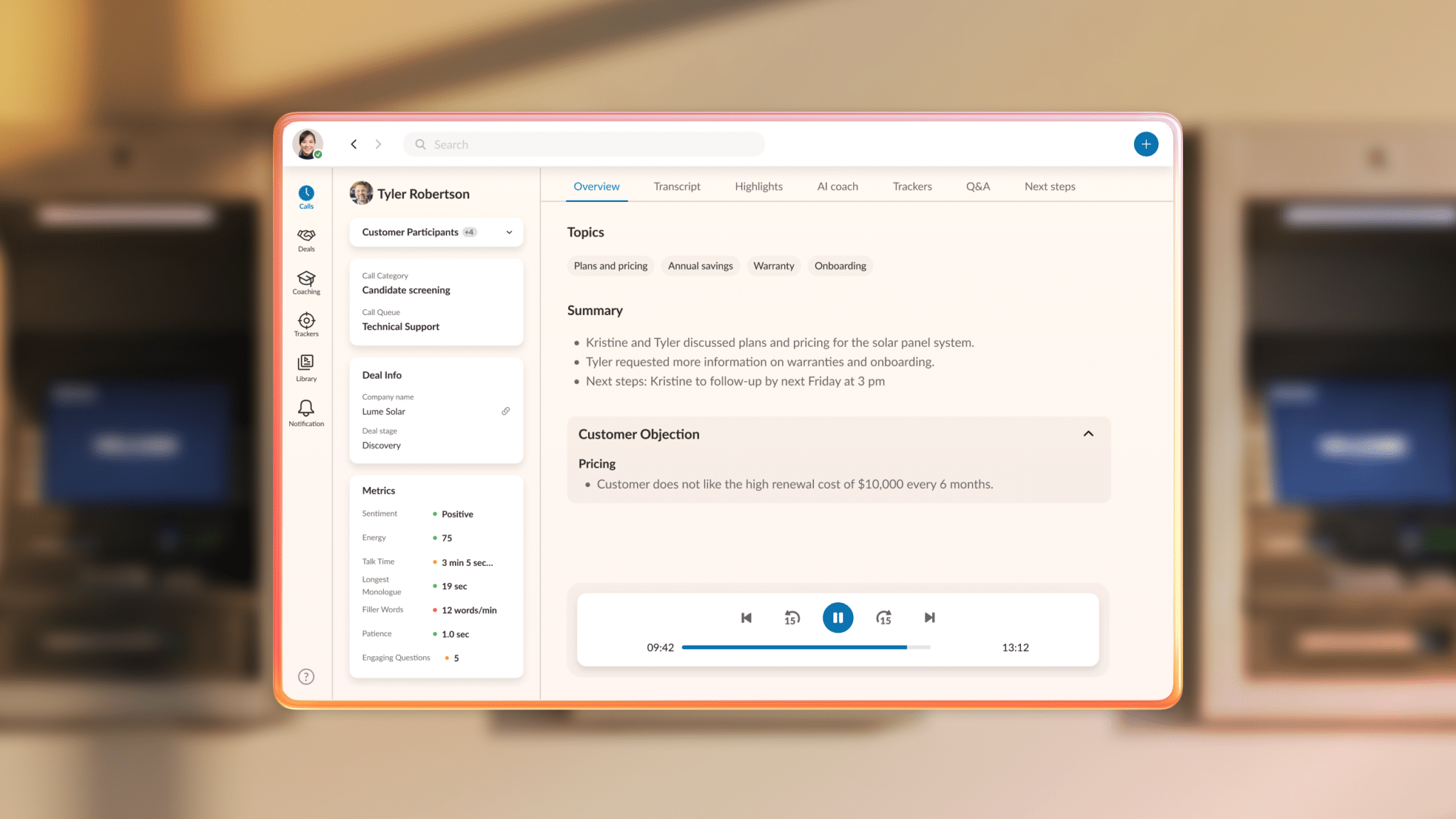
Sales intelligence software closes this critical gap by allowing executives and operations leaders to query the entire corpus of customer conversations using natural language. Instead of waiting for a quarterly business review or relying on anecdotal evidence, a VP of Sales can instantaneously ask the platform, "What were the most frequent objections raised by prospects last month?" or "Which accounts are showing early signs of frustration with our new feature?" or "How effectively are our reps handling competitor mentions?" This level of revenue intelligence empowers leaders to make data-driven decisions based on real conversation data, rather than relying on aggregated survey responses or subjective manager reports. This profound shift from a reactive feedback lag to proactive, real-time mastery of market and customer insights is what truly differentiates organizations that leverage sales intelligence strategically from those that merely treat it as a note-taking add-on. It informs product roadmaps, marketing messaging, and overall business strategy, providing a significant competitive edge.
The 2026 Landscape: A Dual Approach to Sales Intelligence
The sales intelligence landscape in 2026 is characterized by two fundamentally distinct, yet often complementary, operational layers. These layers are not in direct competition; rather, they capture different types of data at different stages of the sales cycle. The most robust enterprise sales stacks frequently utilize both to achieve comprehensive market coverage and deep interaction insights.
1. Prospecting and Data Enrichment Engines: These platforms function as static databases, designed to help organizations map their target market before any direct conversation takes place. They are essential for identifying potential leads, understanding market dynamics, and building targeted account lists. Their data sources primarily include vast company databases, web scraping, public records, and third-party data providers.
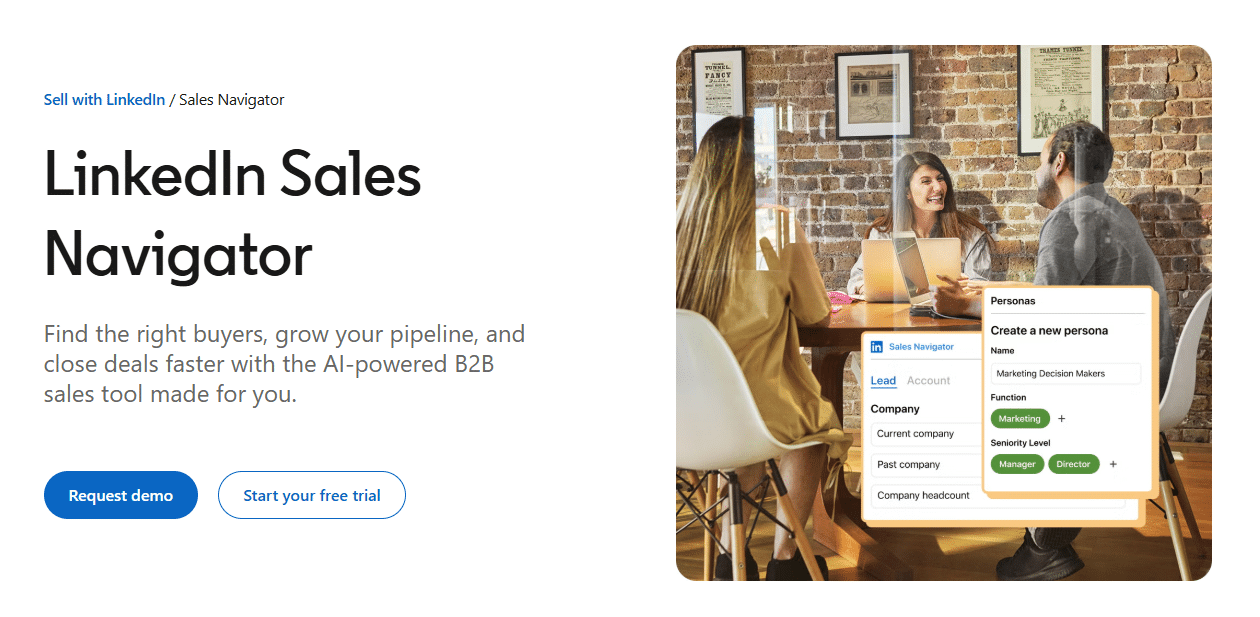
- LinkedIn Sales Navigator: Remains the industry standard for social selling and account-based prospecting. It provides sales teams unparalleled access to LinkedIn’s extensive professional network, offering advanced filters for precise targeting by role, company size, industry, and buying committee membership. Its core strength lies in relationship mapping, identifying warm paths into target accounts, and understanding professional networks. However, it does not capture or analyze the content of actual sales conversations.
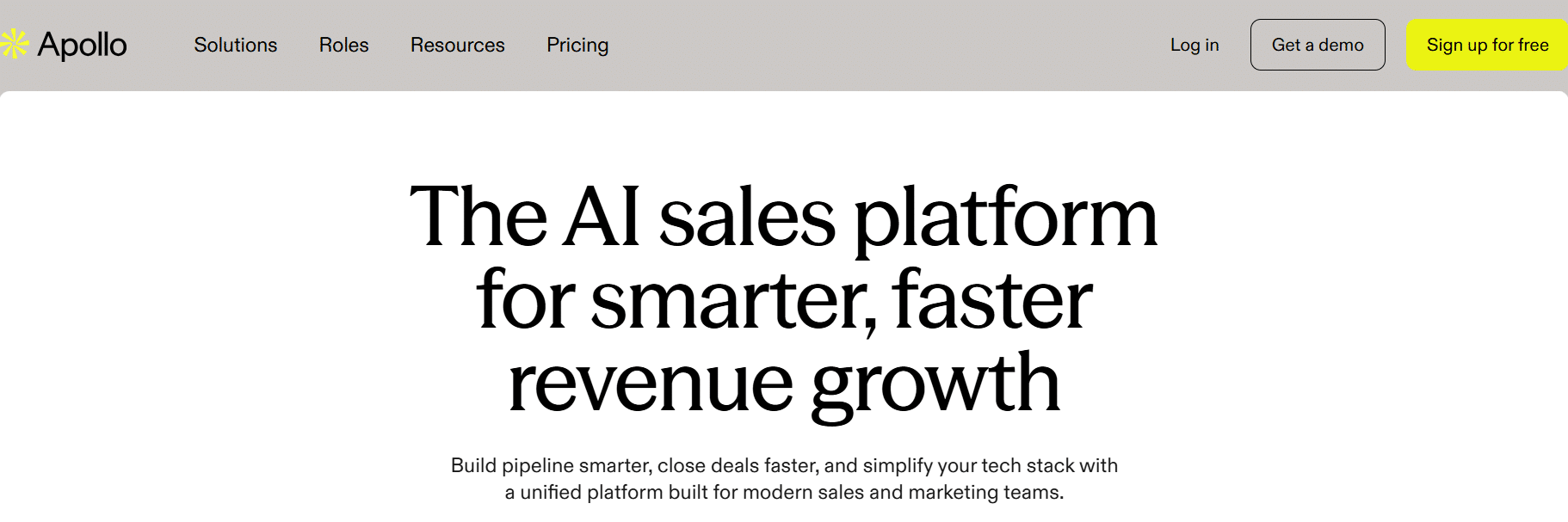
- Apollo.io: A popular choice for teams seeking to integrate prospecting with outbound outreach. Apollo.io combines a proprietary B2B contact database with robust outbound sequencing tools, allowing users to manage lead generation and initial communication from a single platform. It also provides intent data signals and CRM enrichment features to keep contact records updated. Like other prospecting tools, its utility is primarily focused on the pre-interaction phase.
- ZoomInfo: Recognized as one of the most comprehensive B2B intelligence databases available. ZoomInfo delivers detailed firmographic data (company size, industry), technographic insights (tech stack used), and buyer intent signals derived from extensive web activity. Enterprise teams leverage ZoomInfo to prioritize accounts and identify contacts actively researching solutions in their category. Its focus is exclusively on the pre-interaction stage of the sales cycle, providing market context rather than conversational content.
2. Interaction and Conversation Intelligence Engines: These are active data capture and analysis systems that operate during and after live interactions. They record, transcribe, and analyze the actual content of calls, messages, and video meetings where sales representatives engage with prospects and customers. Their data is sourced directly from the organization’s own communication stack.
- RingCentral AI Conversation Expert (ACE): Positioned as a leading platform due to its native integration within the RingCentral communication platform. Because ACE operates inside the same system used for calls, video meetings, and messaging, it captures interaction data without the need for third-party bots or external integrations. ACE automatically transcribes and analyzes conversations across both sales and customer service operations simultaneously, flags risk signals, automates CRM updates, and enables leadership to query conversation data using natural language. Its native architecture significantly reduces IT overhead, ensures data integrity, and eliminates the need for managing additional software or separate logins.
- Gong: Continues to be one of the most established names in dedicated revenue intelligence. Gong offers deep deal analytics, forecasting capabilities, and AI coaching scorecards specifically designed for enterprise sales organizations. It typically operates as a standalone platform, layered on top of existing meeting and dialing stacks via integrations. Its pricing reflects its enterprise focus, often involving premium per-seat costs plus annual platform fees, frequently under multi-year contracts. While powerful for sales-centric deal intelligence, organizations requiring comprehensive visibility across customer service and post-sale interactions may need additional tooling.
- Zoom Revenue Accelerator: Zoom’s built-in conversation intelligence layer, designed for teams that primarily conduct their sales calls and meetings through Zoom Meetings. It provides essential deal tracking, coaching insights, and automated call summaries for both sales representatives and managers, tightly integrated within the Zoom ecosystem.
- Dialpad AI: Offers robust transcription, real-time live coaching prompts, and post-call summaries for teams utilizing the Dialpad communication platform. It is particularly strong for contact center and customer service use cases, offering immediate assistance and analytics during live interactions. Like other platform-specific tools, its intelligence capabilities are intrinsically tied to interactions that run through Dialpad’s own infrastructure.
Strategic Selection: Beyond the Feature Checklist
Choosing the right sales intelligence software in 2026 is a complex vendor evaluation, extending far beyond a simple feature checklist. Platforms that appear similar in a comparison table can yield vastly different outcomes depending on how they integrate with an organization’s existing communication infrastructure, their data security protocols, and the extent of operational coverage they provide. Before committing to an enterprise contract, organizations should challenge every prospective vendor with a comprehensive set of questions:
- Native vs. Standalone Integration: How does the platform integrate with your existing communication stack? Does it require external bots or custom integrations? A native solution minimizes IT complexity, enhances data security by keeping data within a single ecosystem, and ensures higher data capture reliability compared to standalone tools that might introduce integration points of failure.
- Scope of Coverage: Does the platform offer visibility across the full customer lifecycle, including sales, customer service, and post-sale interactions, or is it limited to specific departments? Comprehensive coverage is crucial for identifying churn signals early, understanding cross-sell opportunities, and gaining a holistic view of the customer journey.
- AI Sophistication and Actionability: What is the depth and accuracy of the AI and machine learning models used for analysis? Can the platform move beyond basic transcription to provide nuanced sentiment analysis, intelligent risk flagging, and actionable coaching recommendations? Can executives query data using natural language, and how easily can these insights be integrated into daily workflows for immediate impact?
- Scalability, Security, and Support: Is the platform built for enterprise-level scale, handling large volumes of data and users securely? What are the data privacy and compliance certifications? What level of ongoing support, training, and professional services are provided to ensure successful adoption and long-term value realization?
The answers to these questions will reveal not just technical capabilities, but the true operational impact and strategic advantage a sales intelligence solution can deliver. The right choice can significantly impact ROI, enhance competitive posture, and future-proof an organization’s sales and customer engagement strategies.
Frequently Asked Questions About Sales Intelligence Software
What is sales intelligence software?
Sales intelligence software is an advanced platform that captures, analyzes, and distributes data from all business conversations, including phone calls, video meetings, and messages. Its purpose is to empower sales and operations teams to make superior decisions, automate CRM updates, identify potential risks, and uncover growth opportunities across the entire customer lifecycle. It leverages AI to transform unstructured conversational data into structured, actionable insights.
What is the best AI tool for sales?
The "best" AI tool for sales is highly dependent on an organization’s specific needs and the stage of the sales cycle it aims to optimize. For prospecting, lead identification, and market mapping, platforms like ZoomInfo and Apollo.io are widely recognized leaders. For deep conversation analysis, automated CRM updates, real-time coaching, and comprehensive post-sale visibility, a native conversation intelligence platform such as RingCentral ACE offers broader operational coverage and seamless integration without the complexities of standalone tools. The optimal strategy often involves combining tools from both categories.
How does sales intelligence software differ from a CRM?
A CRM (Customer Relationship Management) system serves as a central database for storing customer records, tracking deal stages, and managing contact history. Sales intelligence software, conversely, is an intelligent layer that automatically populates and enriches that CRM database. Instead of relying on sales representatives to manually enter notes and updates—a process prone to delays and inaccuracies—sales intelligence platforms directly capture interaction data, analyze it, and sync relevant insights into the CRM. They are complementary technologies, working in tandem to provide a complete, accurate, and dynamic view of customer relationships and sales pipeline activity.
How is sales intelligence software typically priced?
Most sales intelligence platforms employ a per-seat, subscription-based pricing model, billed either monthly or annually. Prospecting and data enrichment tools like ZoomInfo and LinkedIn Sales Navigator often base their pricing on the number of users, the depth of data access, and the volume of credits for contact information. Conversation intelligence platforms are typically priced per user per month and may include additional fees for advanced features such as executive-level analytics, custom AI model training, or API access for deeper integration. Enterprise contracts frequently involve custom pricing tailored to the organization’s team size, usage volume, and specific functional requirements, often with multi-year commitments.
RingCentral ACE provides unparalleled conversation intelligence, natively integrated into the communication platform teams already use every day. With no external bots, no complex integrations, and no blind spots, it offers a seamless and secure path to comprehensive insights. Explore RingCentral AI Conversation Expert and discover how native intelligence can fundamentally change what your sales data can actually tell you, driving unprecedented growth and efficiency.
Related posts: