Salesforce Expands Agentforce Coworker with Advanced AI Capabilities and Cross-Platform Integration to Drive Enterprise Productivity

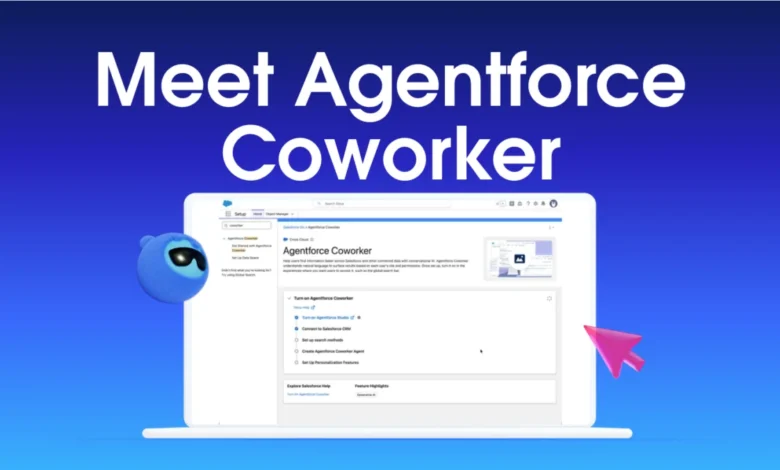
Salesforce has officially announced a significant expansion of its Agentforce Coworker platform, a move that marks a pivotal shift in how global enterprises integrate artificial intelligence into daily operational workflows. Following a period of rapid adoption that saw usage grow 21-fold over the last three months, the platform now serves more than 185,000 users. This latest update introduces sophisticated AI capabilities, enhanced business context awareness, and seamless integration across Microsoft Teams, mobile devices, and desktop environments. By positioning Coworker as a centralized AI teammate rather than a fragmented set of tools, Salesforce aims to resolve the "app fatigue" currently plaguing modern digital workplaces.
The trajectory of this technology reflects a broader market trend: moving from simple, generative AI chatbots to proactive, agentic systems capable of executing multi-step business processes. Since its initial introduction, Agentforce Coworker has been designed to act as a bridge between high-level human objectives and low-level technical execution. By leveraging existing Salesforce data—including customer records, business metadata, and information synced through Data 360—the platform allows employees to delegate complex tasks without the need for manual data reconciliation or switching between disparate software applications.
A Chronology of Rapid Adoption and Strategic Evolution
The rise of Agentforce Coworker is not an isolated development but the result of a deliberate, multi-year strategy by Salesforce to embed intelligence into the core of the Customer Relationship Management (CRM) ecosystem. Over the past year, Salesforce shifted its product focus toward "Agentforce," a framework for building autonomous agents.
The timeline of this adoption has been swift:
- Initial Launch Phase: Salesforce introduced the concept of AI-driven agents to reduce the manual burden of data entry and administrative tasks.
- Early Pilot Programs: Organizations such as Fulton Bank and BACA Systems began integrating these agents, reporting significant reductions in time spent on routine inquiries.
- Scaling Period (Q3/Q4 2024): Usage metrics surged 21x as companies realized that Coworker could handle more than just simple prompts, but rather coordinate workflows across multiple departments.
- Current Expansion: The latest update marks the transition of Coworker from a browser-based tool to a cross-platform solution, integrating with Microsoft Teams and mobile operating systems to mirror the way employees actually work.
Technical Architecture and Functional Enhancements
The core value proposition of the latest Agentforce Coworker update lies in its ability to understand "business context." Unlike standalone LLMs that may lack insight into specific organizational hierarchies or customer histories, Coworker operates within the guardrails of existing Salesforce permissions and governance frameworks.
New features introduced in this release address specific enterprise pain points:
Cross-Platform Parity: Through the new integration with Microsoft Teams, users can delegate tasks such as deal reviews or service escalations directly from their chat interface. This eliminates the "swivel-chair" effect—where employees must move back and forth between messaging platforms and CRM databases to perform a single action.
Enhanced Data Connectivity: A major limitation of previous AI iterations was the "data silo" problem. By connecting to Google Workspace and Microsoft 365, Coworker now synthesizes data from emails, calendars, and external files. This creates a 360-degree view of the customer, ensuring that AI-generated summaries and meeting briefs are grounded in comprehensive information rather than isolated CRM fields.
Operational Efficiency through Skills: The introduction of "reusable Skills" allows organizations to standardize best practices. When a top-performing employee develops an effective renewal workflow, that process can be codified into a single-line request. This effectively democratizes high-performance behaviors across entire departments, ensuring that the team’s standard is always maintained.
Automation of Recurring Work: Scheduled tasks and the "Daily Digest" feature are slated for release in December. These tools are designed to handle routine administrative work, ensuring that employees start their day with a prioritized list of actions and completed documentation, significantly reducing the "cognitive load" associated with starting each workday.
Economic and Strategic Implications
The introduction of a $50 per-user, per-month pricing model is a strategic move to simplify procurement for large enterprises. Historically, AI implementations have been plagued by opaque pricing structures and hidden costs associated with token usage or compute power. By offering a predictable cost, Salesforce is attempting to lower the barrier to entry for large-scale deployments.

From an industry perspective, this model has broader implications for the AI-as-a-Service market. By embedding agents directly into the workflow, Salesforce is challenging traditional "SaaS" (Software as a Service) models. Instead of users manually navigating software, the software is increasingly expected to perform the navigation on behalf of the user. This shift is likely to put pressure on other CRM and ERP providers to follow suit, potentially accelerating the transition toward "agentic" software architectures across the entire enterprise software landscape.
Perspectives from Early Adopters
The real-world impact of these capabilities is best illustrated by the organizations that have already integrated the platform.
Fulton Bank, which implemented over 20 distinct use cases in just a few weeks, serves as a primary example of how financial institutions are utilizing AI to maintain compliance while increasing efficiency. According to Brandon Bernard, Senior Vice President and Sales Technology Strategist at Fulton Bank, the platform has become a "game changer," enabling team members to locate complex information and prepare for client interactions with unprecedented speed.
Similarly, The Adecco Group has leveraged Coworker to manage candidate and client data across 40 countries. CEO Denis Machuel noted that the platform provides a unified interface that understands the nuances of human judgment. By offloading the retrieval and summarization of candidate histories to the AI, human recruiters can focus more heavily on the qualitative aspects of their roles.
BACA Systems, a manufacturing firm, reported an even more immediate benefit: the elimination of "swivel-chairing." By enabling the system in an environment with over 1,300 custom objects, they found that tasks previously requiring 45 to 60 minutes of manual research could be resolved in minutes. This underscores the potential for AI to act as a significant force multiplier for teams operating in highly specialized or data-intensive environments.
The Future of Enterprise AI Governance
A critical component of this announcement is the emphasis on security and governance. In the current enterprise landscape, concerns regarding data privacy and the potential for AI to leak sensitive information are paramount. Salesforce has addressed this by ensuring that Coworker inherits all existing user permissions, sharing rules, and access controls.
By maintaining these boundaries, the company aims to build trust with IT leaders who are otherwise hesitant to deploy generative AI. The ability to audit agent actions—and to ensure that the AI only accesses information the user is already authorized to view—is a cornerstone of the Salesforce approach to "Trusted AI."
As the platform moves toward a more proactive state, the role of the employee is also expected to evolve. The focus is shifting from "managing agents" to "managing outcomes." James Nakashima, SVP of Product Management at Salesforce, emphasized that the goal is not to force users to navigate an ever-growing dashboard of disparate AI tools, but to provide a single, unified interface that coordinates the necessary resources to complete a job.
Looking Ahead: Challenges and Considerations
While the adoption of Agentforce Coworker is robust, the challenge for Salesforce—and indeed the entire industry—remains the long-term maintenance of these systems. As enterprises create more complex "Skills" and automated workflows, the need for rigorous oversight and "human-in-the-loop" verification becomes more critical.
Furthermore, as the platform expands into more specialized industries, the demand for deeper, sector-specific integrations will likely grow. The current reliance on Microsoft and Google ecosystems is a strong start, but the future of enterprise AI will depend on the platform’s ability to act as a truly universal agent across all possible data sources.
For the present, the expansion of Agentforce Coworker represents a significant step in the maturation of enterprise AI. By moving beyond the novelty of chatbots and into the realm of integrated, task-oriented agents, Salesforce is setting a clear precedent for what the future of work looks like: a workplace where technology does not just assist, but actively participates in the fulfillment of business objectives. As more organizations adopt this technology, the focus will likely shift from the capabilities of the AI itself to the organizational strategies that allow businesses to harness these new efficiencies at scale.