Salesforce Unveils New Washington D.C. Innovation Center to Accelerate Public Sector Digital Transformation

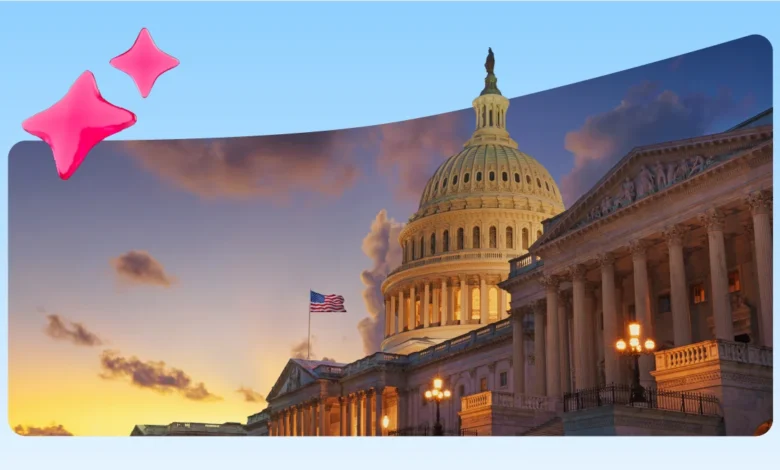
Salesforce has officially announced the development of its new Washington, D.C. Innovation Center, a strategic facility located at 1401 New York Avenue NW that signifies a major intensification of the tech giant’s commitment to the U.S. federal and public sector markets. Situated just blocks from the White House and the Metro Center hub, this purpose-built facility is designed to function as a bridge between the private sector’s rapid technological evolution and the complex regulatory and operational needs of government agencies. By establishing this high-profile foothold in the heart of the capital, Salesforce aims to facilitate deeper collaboration with policymakers, defense leaders, and civic organizations, ultimately positioning itself as the primary infrastructure provider for the federal government’s ongoing modernization initiatives.
The decision to secure this landmark location at 1401 New York Avenue, managed by Carr Properties, represents more than a simple real estate acquisition. It is a calculated move to centralize the company’s influence in a city where policy decisions directly dictate the trajectory of technological adoption. With construction slated to commence in late 2026 and an anticipated grand opening in early 2028, the site is being engineered as an immersive ecosystem for policy summits, technical briefings, and high-stakes collaboration.
A Two-Decade Evolution in the Capital
To understand the gravity of this announcement, one must look at the arc of Salesforce’s presence in the D.C. metropolitan area. Over the last twenty years, the company has grown from a niche provider into a foundational pillar of federal IT architecture. Currently, the company maintains a robust workforce of over 2,000 employees spread across the District, Maryland, and Northern Virginia. While the McLean, Virginia, office will remain a primary operational hub, the New York Avenue facility shifts the company’s geographic center of gravity toward the urban core, signaling a desire for closer proximity to the agencies it serves.
This evolution tracks with the broader digitalization of the federal government. In the early 2000s, government technology was largely characterized by legacy on-premises infrastructure. Today, the focus has shifted toward cloud-native solutions, AI-powered automation, and the integration of "agentic" technology—autonomous software systems capable of executing complex administrative tasks. Salesforce’s transition into this new D.C. home reflects a transition from being a software vendor to being a strategic partner in national policy and government operations.
Strategic Focus on Government Modernization
The new Innovation Center is specifically intended to support federal agencies as they navigate the complexities of the "agentic era." Kendall Collins, President and CEO of Missionforce and Government Cloud at Salesforce, has emphasized that the facility will be instrumental in modernizing citizen services and strengthening national security.
The scope of this commitment is evidenced by the current portfolio of federal clients utilizing Salesforce’s infrastructure. The company currently supports all 15 Cabinet-level agencies, as well as critical defense branches including the U.S. Army and the U.S. Air Force. Furthermore, agencies such as the Department of Veterans Affairs and the U.S. Department of Transportation have integrated Salesforce GovCloud and Missionforce solutions to streamline their internal operations. By providing a physical space where these agencies can interact with the technology in a hands-on environment, Salesforce is effectively reducing the friction between procurement and implementation.
Strengthening Leadership and Organizational Capacity
The announcement of the facility coincides with a strategic reorganization of Salesforce’s public sector leadership team. The company has aggressively recruited high-level talent to steer its government affairs and public sector strategy. Key appointments include Wendy R. Anderson as Senior Vice President of Government and Global Public Affairs, Geof Kahn as Vice President of Federal Government Affairs & Public Policy, and Virginia Sharma as CMO of Missionforce.
This influx of leadership suggests that Salesforce is preparing for a period of intense engagement with regulatory bodies. As the federal government grapples with AI governance, cybersecurity standards, and the ethical use of data, having a permanent, centralized hub for discourse allows Salesforce to participate in the conversation rather than simply reacting to it. This organizational expansion serves as the intellectual backbone for the physical space being built on New York Avenue.
Architectural and Functional Design for Collaboration
The facility at 1401 New York Avenue is being designed with the explicit goal of fostering high-level interaction. Beyond traditional office space, the building will feature:
- Immersive Briefing Centers: Specialized rooms equipped with advanced connectivity to simulate cloud-based government workflows and AI agent demonstrations.
- Policy Summit Spaces: Dedicated areas designed to host large-scale forums for policymakers, industry experts, and academics to discuss the future of civic technology.
- Indoor-Outdoor Rooftop Venues: A space intended for informal networking and hosting community events, offering panoramic views of the downtown district.
- Wellness and Conferencing Amenities: A modern workplace design that prioritizes employee well-being and productivity, reflecting Salesforce’s corporate culture of "Ohana" or family.
Ryan Lopez, Vice President of Leasing at Carr Properties, noted that the selection of the property by Salesforce underscores the building’s stature as a premier business destination in D.C. "We have seen consistent leasing momentum," Lopez stated, "and this partnership reinforces our commitment to providing high-quality infrastructure for organizations that are shaping the future of our nation."
The Impact of the 1-1-1 Philanthropic Model
A defining characteristic of Salesforce’s corporate philosophy is the 1-1-1 model, which mandates that the company dedicate 1% of its equity, 1% of its product, and 1% of its employees’ time to community causes. In the D.C. region, this commitment has materialized in significant tangible outcomes, including over $76 million in contributions and 16,000 volunteer hours dedicated to local non-profits and community organizations.
The new Innovation Center is expected to become the central headquarters for these philanthropic efforts. By integrating civic engagement into the physical design of the building, Salesforce intends to ensure that its presence in D.C. is not merely commercial but also deeply embedded in the social fabric of the city. This approach is increasingly common among large tech firms looking to cultivate "social license" in the regions where they operate, particularly in a high-stakes environment like the nation’s capital.
Market Implications and Future Outlook
The establishment of the Salesforce Innovation Center D.C. carries significant implications for the broader IT services market. First, it signals that the federal cloud market is shifting toward a period of consolidation, where agencies are looking for platforms that can support a wide range of services—from veteran care to transportation logistics—on a single, unified, and secure architecture.
Second, the move demonstrates the growing importance of physical presence in the era of hybrid work. Despite the shift toward remote operations, the federal government still relies heavily on in-person trust-building and face-to-face demonstrations of security compliance. By investing in a high-profile, permanent location, Salesforce is signaling to both shareholders and government stakeholders that it is in the federal market for the long haul.
Looking forward, the success of this facility will be measured by its ability to facilitate "co-creation." If the center successfully becomes a hub where agency leaders can test, refine, and deploy mission-critical solutions in real-time, it could significantly shorten the government’s technology adoption cycle.
As construction proceeds through 2026 and 2027, the industry will be watching to see how the facility evolves. The intersection of government policy and private-sector innovation is a complex and often volatile landscape; however, by anchoring its operations in the heart of Washington, Salesforce is positioning itself to be a primary architect of that future. The opening in 2028 will represent the culmination of a multi-year effort to align the company’s internal capabilities with the external demands of a modern, digitized American government.