Sazo Revolutionizes Cross-Border E-Commerce with Agentic AI Integration and US Market Expansion Following Ten Million Dollar Funding Round

The global landscape of cross-border e-commerce is undergoing a fundamental transformation as agentic artificial intelligence moves from theoretical application to operational execution. Sazo, an AI-powered commerce firm headquartered in Nagoya, Japan, has officially entered the United States market, marking a significant milestone in its mission to eliminate the traditional frictions associated with international shopping. By leveraging agentic AI—a form of artificial intelligence capable of making decisions and executing complex tasks autonomously—Sazo aims to provide a "local" shopping experience for consumers purchasing goods from foreign markets. This expansion follows a successful Series A funding round and a period of rapid growth that has seen the company’s gross merchandise value (GMV) increase sevenfold in just six months.
The move into the United States, finalized in June 2024, allows American consumers to access a curated selection of products from Japan with the same ease as domestic transactions. This development represents the third major phase of Sazo’s expansion strategy. The company initially launched its services in early 2024, facilitating commerce from South Korea to Japan. By June 2025, it successfully established a bidirectional corridor between the two Asian nations. The entry into the U.S. market signifies Sazo’s ambition to bridge the gap between Asian supply and Western demand, focusing initially on Japanese exports to the American consumer base.
The Strategic Shift in Global Trade Dynamics
The timing of Sazo’s U.S. entry is particularly noteworthy given the shifting macroeconomic and regulatory environment. For years, cross-border e-commerce relied heavily on the "de minimis" duty exemption, which allowed low-value shipments to enter the U.S. without being subject to tariffs or intensive customs inspections. However, recent regulatory shifts have signaled the end of this era, with the U.S. government moving toward more restrictive trade policies and enhanced scrutiny of small-parcel imports.
Gavin Jung, Chief Financial Officer of Sazo, suggests that this ostensibly restrictive environment actually provides a competitive advantage for the company. In previous years, the cross-border game was largely about exploiting duty-free loopholes to maintain low prices. In the current climate, the focus has shifted toward logistics efficiency and the seamless absorption of customs requirements. Sazo’s model is built specifically to navigate these complexities, ensuring that the shopper never has to deal with the "execution layer" of international trade, such as duty calculations or foreign exchange fluctuations.
Agentic AI: The Execution Layer of Modern Commerce
At the heart of Sazo’s operation is its proprietary agentic AI technology. Unlike standard AI models that might simply recommend a product or translate a page, Sazo’s agentic AI handles the structural "break points" of a cross-border transaction. This includes estimating duties and shipping costs upfront, translating product listings with cultural nuance, and consolidating items from disparate sellers into a single, efficient shipment.
One of the primary pain points for international shoppers is the unpredictability of final costs. Sazo addresses this by integrating tariffs, duties, and international shipping into the initial price displayed to the consumer. This "all-in" pricing model eliminates the common problem of customers receiving separate customs invoices or being surprised by foreign exchange surcharges after the purchase is complete.
Furthermore, Sazo is positioning its technology as a "back-end" infrastructure for the broader AI ecosystem. The company is currently developing an application programming interface (API) that will allow other AI agents—those designed for personal shopping, searching, or recommending—to plug into Sazo’s fulfillment engine. As autonomous AI agents become more prevalent in consumer behavior, they will require a physical execution layer to handle the "real-world" aspects of commerce, such as Harmonized System (HS) code classification for customs and local fulfillment. Sazo intends to be that layer.
Operational Logistics and the Proxy Buying Model
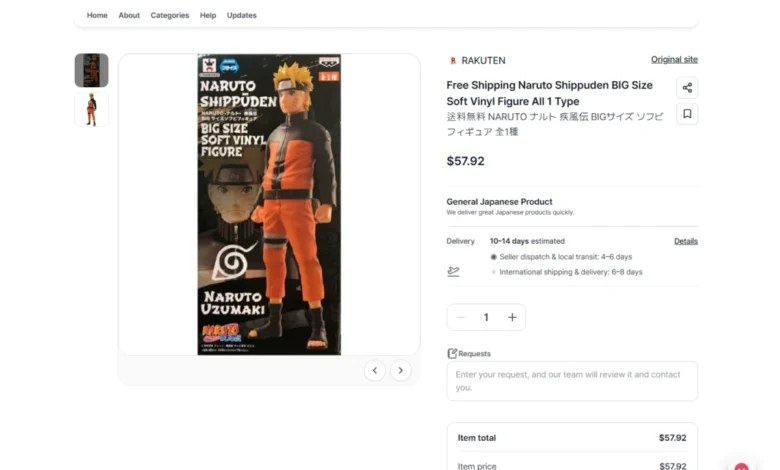
Sazo functions as a proxy buyer, a model that simplifies the relationship between international sellers and foreign buyers. When a consumer in the U.S. selects multiple products from different Japanese vendors, Sazo purchases those items locally on the consumer’s behalf. These items are then sent to Sazo’s regional hubs, where they are repackaged and consolidated into a single international shipment. This process significantly reduces shipping costs for the consumer and minimizes the carbon footprint associated with multiple small-parcel deliveries.
Currently, Sazo’s product catalog is region-specific. For the U.S. market, the platform highlights high-demand Japanese goods. However, the company is exploring a shift toward a more traditional inventory model. According to Jung, Sazo is looking into purchasing and stocking high-turnover products in advance. This would allow the company to negotiate better wholesale prices and offer even faster delivery times, moving closer to the "prime" delivery speeds that domestic shoppers have come to expect.
Funding and Financial Growth
Sazo’s rapid expansion is backed by a robust financial foundation. The company recently secured $10.3 million in a Series A funding round, led by prominent institutional investors including Japan Post Capital and Suzuyo & Co. Both firms had previously participated in the company’s pre-Series A financing, indicating strong confidence in Sazo’s long-term viability.
The investor pool is a mix of logistics giants and financial powerhouses. Notable contributors include Naver, the South Korean internet conglomerate; Sumitomo Mitsui Banking Corporation (SMBC); and Mizuho Bank. Other participants include the Japanese venture capital firm Partners Fund and D4V (Design for Ventures). This diverse backing provides Sazo with not only the capital required for expansion but also the logistical and financial networks necessary to scale a global commerce platform.
The company’s financial performance justifies this investor interest. Sazo is currently reporting a month-over-month growth rate of 25%. CEO Maro Gil, who founded the company in 2023 while studying AI in Nagoya, noted that the monthly gross merchandise value has increased approximately sevenfold over the last half-year. This capital influx will be used to recruit top-tier talent in software development and service operations, as well as to facilitate the opening of a new office in California within the coming year.
Consumer Trends: K-Pop, Anime, and the "IP Maniac"
Sazo’s data reveals fascinating insights into the diverging shopping habits of consumers in East Asia. While the technology remains consistent across regions, the products driving the growth differ significantly.
In the Japanese market, consumers purchasing from South Korea are predominantly younger males. Their interests are heavily skewed toward K-pop merchandise and specialty Korean food items. Conversely, in the South Korean market, the demographic profile is unexpectedly mature. While the company initially anticipated a teenage or 20-something audience, more than half of Sazo’s Korean customers are females in their 30s and 40s. These consumers are largely driven by "IP mania"—a deep interest in Japanese intellectual property, including anime, character goods, and hobbyist collectibles.
One of the most surprising metrics for the Sazo executive team has been the Average Order Value (AOV). Despite expectations that consumers would use the platform for small, inexpensive impulse buys, the AOV has consistently exceeded $100. This suggests that the platform is being used for high-intent, high-value purchases related to specific hobbies or cultural interests. Jung noted that "IP maniacs" are often willing to spend significant sums on authentic items that are difficult to procure through traditional domestic channels.
Historical Context and the Nagoya Connection
The genesis of Sazo is rooted in the personal experience of its founder, Maro Gil. As a South Korean student studying AI in Nagoya, Japan, Gil found it frustratingly difficult to purchase hobby-related items from his home country, despite the geographical proximity of the two nations. Nagoya, while a major industrial hub, lacks the cosmopolitan retail density of Tokyo or Seoul, which exacerbated the difficulty of finding niche international products.
Gil’s first prototype was born out of this personal necessity. While the initial architecture was inefficient, it proved the viability of using AI to bridge the cross-border gap. The decision to remain headquartered in Nagoya, rather than moving to the more traditional tech hubs of Tokyo or Seoul, reflects a "humble" and focused corporate culture that prioritizes engineering and logistical problem-solving over the flashiness of the metropolitan tech scene.
Implications for the Future of Global Retail
Sazo’s entry into the U.S. market and its focus on the "execution layer" of AI commerce signal a broader shift in the retail industry. As AI agents become more sophisticated, the bottleneck for global trade will no longer be the discovery of products, but the logistics of moving them across borders.
By automating the most difficult parts of the transaction—customs clearance, duty estimation, and consolidation—Sazo is lowering the barrier to entry for small-to-medium enterprises (SMEs) in Japan and Korea to reach global audiences. Simultaneously, it is providing Western consumers with a level of access to Asian markets that was previously reserved for those with the patience to navigate complex shipping and duty requirements.
As Sazo prepares to open its California office and roll out its API for third-party AI agents, the company is positioning itself as the "connective tissue" of a new, AI-driven global economy. The success of this model will likely depend on its ability to maintain its 25% monthly growth rate while navigating the increasingly complex regulatory landscape of international trade. However, with $10.3 million in new funding and the backing of major Japanese financial institutions, Sazo appears well-equipped to lead the next generation of cross-border commerce.