TikTok Advertising Costs and Strategic Performance Benchmarks for Modern Digital Marketing

The digital advertising landscape has undergone a seismic shift over the last three years, with TikTok emerging from a niche platform for short-form entertainment into a dominant force in global commerce and brand discovery. Recent data-driven analysis of TikTok’s advertising ecosystem reveals that the platform now offers a highly competitive alternative to traditional giants like Meta and Google, with average costs per click (CPC) ranging between $0.30 and $1.50. As businesses increasingly pivot their budgets toward social commerce, understanding the granular mechanics of TikTok’s auction-based system has become essential for maintaining a viable return on investment.
The Economic Reality of TikTok Advertising in 2024
To provide a definitive guide on the financial requirements of the platform, market analysts have aggregated data from thousands of active ad accounts, comparing internal performance metrics with large-scale industry studies. The findings suggest that while TikTok was once viewed as an experimental channel, it has matured into a sophisticated performance marketing tool.
The primary metrics governing TikTok’s cost structure are divided into three categories: Cost Per Click (CPC), Cost Per Thousand Impressions (CPM), and Cost Per View (CPV). Currently, the average CPM—the cost to reach 1,000 users—fluctuates between $4.00 and $10.00 for campaigns demonstrating medium to high performance. In comparison, the Cost Per View remains remarkably low, averaging between $0.01 and $0.07. This low entry point for views is attributed to TikTok’s unique measurement system, which counts a "view" the moment a video begins playing on a user’s screen, rather than requiring a three-second or ten-second dwell time as seen on competing platforms.
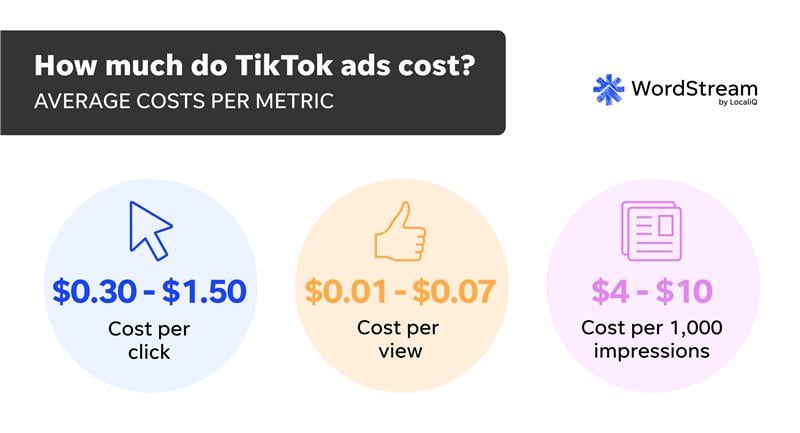
For conversion-focused advertisers, the CPC remains the most critical benchmark. At $0.30 to $1.50 per click, TikTok often undercuts the cost of Instagram Reels and Facebook Feed ads in several high-competition verticals. However, TikTok’s definition of a click is strictly enforced; advertisers are only charged when a user interacts with the specific Call to Action (CTA) button, the profile nickname, or the "Learn More" link. Standard social interactions, such as "likes" or "comments," do not trigger a charge in CPC-based campaigns, offering a layer of "free" engagement for high-quality creative content.
The Evolution of TikTok: From Entertainment to Search and Commerce
The current pricing structure is a reflection of TikTok’s rapid evolution. Originally launched as a platform for lip-syncing and dance challenges, the app has transitioned into a primary engine for product discovery. According to recent consumer research, 82% of TikTok users report discovering a small or medium-sized business (SMB) on the platform before encountering it through any other channel.

This shift has led to the introduction of diverse ad formats, each with its own pricing model and strategic purpose:
- In-Feed Ads: These native video ads appear in the "For You" feed and are the most accessible for SMBs, typically costing between $4 and $8 CPM.
- Search Ads: A recent addition to the platform’s arsenal, these ads target specific keywords. With a CPC ranging from $0.10 to $0.30, they allow brands to capture high-intent traffic similar to Google Search.
- TopView Ads: Positioned as the "Super Bowl" of social media ads, these full-screen placements appear immediately upon opening the app. They carry a premium flat rate, often cited around $50,000 per day.
- Branded Hashtag Challenges: Designed for viral reach, these campaigns invite user participation and carry a significant price tag, often exceeding $150,000 per campaign.
- Shopping Ads: Integrated with TikTok Shop, these ads allow for direct-to-consumer transactions within the app, following a CPM model similar to In-Feed placements.
Chronology of TikTok’s Advertising Maturity
The trajectory of TikTok’s ad platform can be traced through several key milestones that have influenced current market pricing.

- 2019-2020: TikTok launches its self-serve ad platform, initially targeting large enterprise brands with high-cost "Takeover" ads.
- 2021: The introduction of the "TikTok for Business" suite allows smaller advertisers to set daily budgets as low as $20, democratizing access to the platform’s algorithm.
- 2022: The launch of "Spark Ads" changes the cost-efficiency landscape, allowing brands to boost organic posts. This hybrid approach reduced creative costs and improved CPMs by leveraging existing social proof.
- 2023: The global rollout of TikTok Shop and Search Ads shifts the platform’s utility toward the "bottom of the funnel," increasing competition and slightly raising the average CPC in Western markets.
Algorithmic Bidding and Budget Requirements
TikTok operates on an auction-based bidding system where price is not the sole determinant of success. The platform’s algorithm determines ad placement based on a "Total Value" score, which combines the advertiser’s bid, the predicted engagement rate (ad quality), and the relevance of the ad to the specific user’s context.
This means that a highly relevant, engaging ad with a lower bid can frequently outperform a generic, high-budget ad. To participate in this auction, TikTok enforces strict minimum budget requirements. At the campaign level, a minimum daily budget of $50 is required, while ad groups require at least $20 per day. For advertisers utilizing "Lifetime Budgets," the minimum is calculated based on the number of days the campaign is scheduled to run, multiplied by the $20 daily minimum.

Industry experts recommend a "Testing Phase" budget of $50 to $150 per day. This allows the algorithm to move through the "Learning Phase"—a period where the system identifies which segments of the audience are most likely to convert. Once an ad group achieves stable performance, scaling usually requires a budget increase to the $200–$500 per day range to maintain momentum against competitors.
Comparative Analysis: TikTok vs. Meta and Google
When placed in the broader context of digital marketing, TikTok’s costs offer a unique value proposition. While Google Ads remains the gold standard for high-intent search traffic, its CPCs in industries like legal or insurance can exceed $50.00. Meta (Facebook and Instagram) offers sophisticated targeting but has seen rising CPMs as the platform reaches saturation.

TikTok’s current advantage lies in its high "Ad Recall" and engagement rates. Because the ads are full-screen and audio-on by default, the impact per impression is often higher than the muted, scrolling experience of a Facebook feed. Furthermore, the "Spark Ads" format—which allows brands to use real creator content—often yields a 30% higher completion rate and a 140% higher engagement rate than standard In-Feed ads, effectively lowering the "True Cost" of a conversion.
Official Guidelines and Market Reactions
TikTok’s official business documentation emphasizes that "Creative is the new Targeting." This sentiment has been echoed by marketing agencies globally. As privacy regulations like Apple’s App Tracking Transparency (ATT) have limited the effectiveness of traditional data-based targeting, the burden of performance has shifted to the content itself.

Market analysts observe that brands failing on TikTok often do so not because of high bids, but because of "Creative Fatigue." TikTok users consume content at a faster rate than users on any other platform, requiring brands to refresh their ad creative every 7 to 14 days to maintain low CPCs. Official statements from TikTok’s creative lab suggest that ads should "feel like TikToks, not commercials," a strategy that has proven to reduce the cost-per-acquisition (CPA) by up to 40% for retail brands.
Strategies for Budget Optimization
To mitigate rising costs and maximize the efficiency of every dollar spent, successful advertisers are increasingly turning to automation and native content strategies.
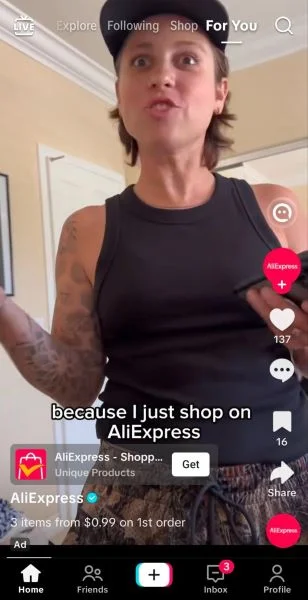
Native Content Integration: The most cost-effective ads on TikTok are those that utilize the app’s native features, such as green screens, trending audio, and "Lo-Fi" production styles. High-production, "glossy" commercials often trigger immediate scrolling, leading to poor engagement scores and higher auction prices.
Strategic Timing: Bidding costs are subject to seasonal fluctuations. Data shows that during major retail events like Black Friday or the holiday season, CPMs can double. Small businesses are advised to run brand awareness campaigns during off-peak months to build a "Retargeting Audience" that can be converted more cheaply during high-competition periods.
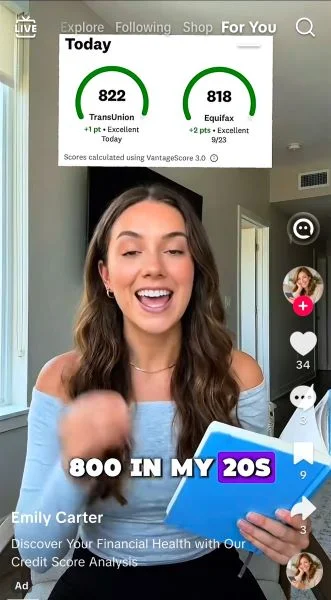
Smart Automation: TikTok’s "Smart Creative" and "Automated Rule" tools allow the platform’s AI to shift budget toward the best-performing assets in real-time. By allowing the algorithm to handle budget allocation, advertisers can reduce manual errors and prevent overspending on underperforming ad sets.
The Broader Impact and Future Outlook
The influence of TikTok’s ad cost structure extends beyond individual business balance sheets. It is currently reshaping the influencer economy and the way SMBs approach global markets. The platform’s ability to turn a $20 daily ad spend into a viral trend has lowered the barrier to entry for international trade, allowing a small workshop in Detroit or a craftsman in Houston to reach a global audience.
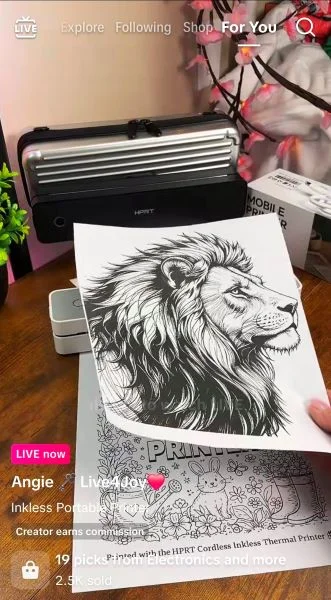
Looking forward, the integration of Artificial Intelligence in ad creation is expected to further lower the "cost of entry" for high-quality video content. However, as the platform continues to grow, competition for the "For You" feed will inevitably drive up floor prices in the auction. For now, TikTok remains a high-yield channel for those who can balance the technical requirements of bidding with the creative demands of a fast-moving, content-hungry audience.
In conclusion, while the average TikTok ad cost remains accessible at $0.30 to $1.50 per click, the true price of success on the platform is measured in creative agility. Businesses that treat TikTok as a two-way engagement channel rather than a one-way broadcast medium are the ones most likely to see their ad spend translate into sustainable growth.