The Evolution and Economic Impact of Referral Marketing in the 2026 Digital Landscape


Referral marketing has emerged as a cornerstone of modern customer acquisition, formalizing traditional word-of-mouth into a trackable, data-driven strategy that utilizes unique links, defined rewards, and measurable conversion metrics to drive business growth. Unlike organic word-of-mouth, which remains spontaneous and unmanaged, referral marketing provides a structured framework where existing customers are incentivized to introduce new clients to a brand. Recent market data and academic research highlight the increasing importance of this channel, particularly as traditional paid advertising channels face rising costs and heightened privacy regulations.
Industry benchmarks indicate that referred customers are approximately 16% more valuable over their lifetime compared to those acquired through other channels. This value is driven not only by higher initial spending but by a significant propensity for long-term loyalty. As digital landscapes become more saturated, the "trust transfer" inherent in a personal recommendation has become a premium asset for brands ranging from small businesses to global enterprises.

The Economic Foundation of Referral Programs
The financial viability of referral marketing is supported by three primary measurable factors: increased recruitment rates, lower acquisition costs, and higher trust levels. A landmark 2024 study published in the Journal of Marketing Research revealed that referred customers are not merely passive consumers; they are active advocates. According to the study, referred customers make 31% to 57% more referrals of their own than customers acquired via paid channels. The research suggests that firms often undervalue a single referral by 20% to 36% because they fail to account for these "downstream" effects.
From a cost perspective, referral marketing typically offers a Customer Acquisition Cost (CAC) that is 25% to 50% lower than paid digital channels. While vendor-reported benchmarks vary, the efficiency stems from the fact that the brand only pays for successful conversions rather than impressions or clicks. Furthermore, the 2021 Nielsen Trust in Advertising Study found that 88% of global respondents trust recommendations from people they know more than any other form of marketing. This trust acts as a structural advantage, allowing brands to bypass the skepticism often associated with traditional ad creative.
Data from a multi-year study of a German financial institution found that referred customers had a contribution margin 25% higher in their first year. Over a six-year horizon, these customers maintained a 16% higher lifetime value (LTV) even after adjusting for demographic variables. These figures provide a "conservative floor" for businesses modeling the potential ROI of a referral initiative.

A Chronology of Strategy and Regulation
The trajectory of referral marketing has moved from simple "tell-a-friend" buttons to sophisticated, multi-tiered systems integrated into CRM stacks.
In the early 2010s, the focus was on "viral growth," popularized by companies like Dropbox and PayPal. These pioneers used in-product rewards (such as extra storage space) and direct cash incentives to scale rapidly. By the early 2020s, the focus shifted toward "advocacy and loyalty," where rewards became more nuanced, including status-based tiers and charitable donations.
The mid-2020s marked a significant turning point in the regulatory environment. In June 2023, the Federal Trade Commission (FTC) updated its Endorsement Guides to address the "material connection" between brands and referrers. By late 2024, enforcement updates increased civil penalties for non-compliance into the five-figure range per violation. This shift forced companies to move away from "stealth" referrals and toward transparent disclosure, ensuring that every shared link or message clearly states that the referrer receives a benefit.
Strategic Framework: The Eight Types of Programs
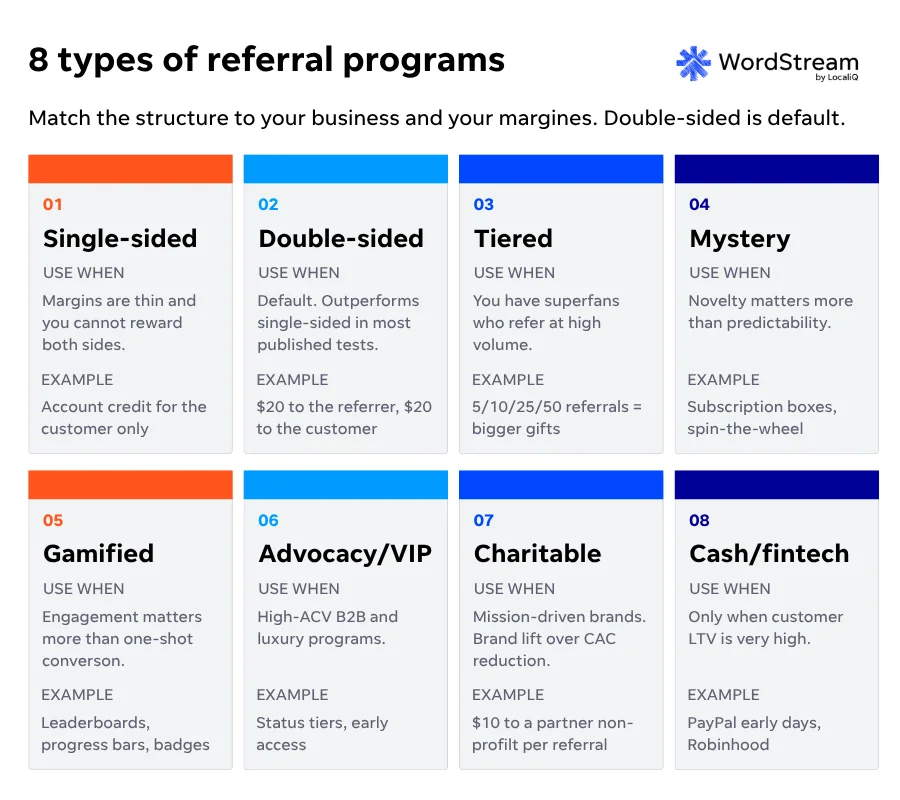
Marketing analysts categorize referral structures into eight distinct types, each designed to solve specific business constraints and psychological triggers.
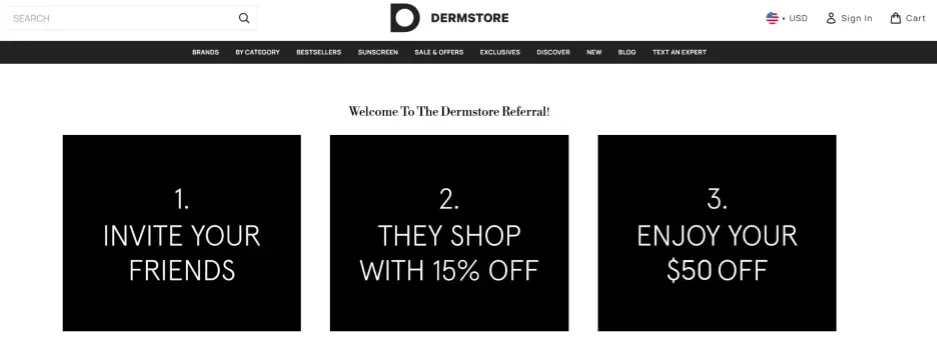
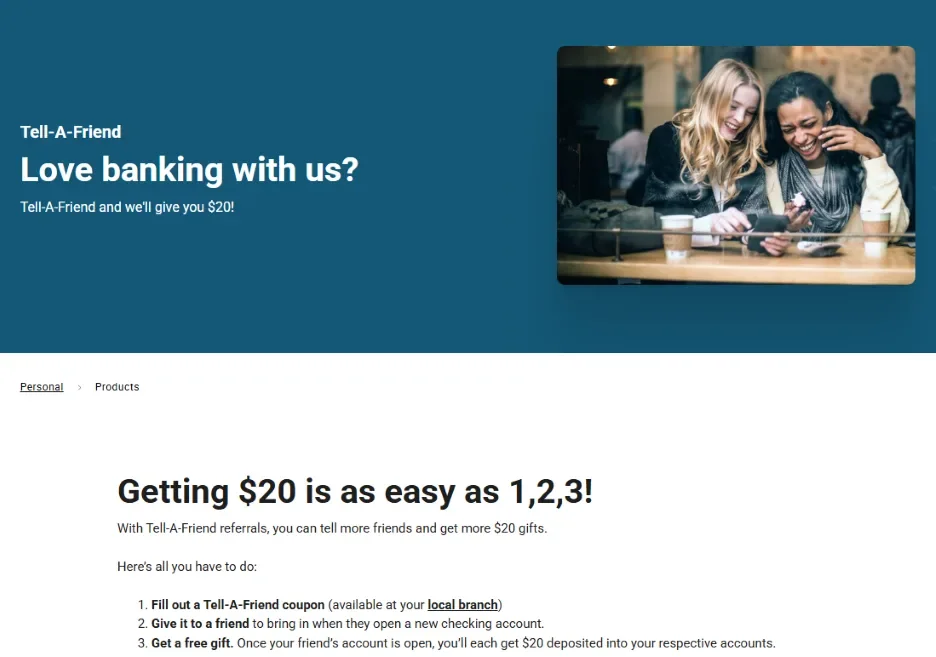
- Double-Sided Programs: The industry default, where both the referrer and the referee receive a reward. This utilizes the principle of reciprocity, making the existing customer feel that the share is a "gift" rather than a selfish act.
- Single-Sided Programs: Only the referrer or the referee receives a reward. While less effective in broad consumer markets, these are sometimes used in high-demand niches where the product itself is the primary draw.
- Tiered or Milestone Programs: Rewards scale as the customer brings in more referrals. This structure, famously used by Harry’s and Tesla, gamifies the process and identifies high-value "super-advocates."
- Mystery Rewards: Randomized incentives that use the psychology of variable rewards to increase engagement.
- Gamified Programs: Utilizing leaderboards and badges to drive competition among a user base.
- Advocacy or VIP Programs: Focusing on status and early access rather than monetary rewards, often used by luxury brands and high-end software.
- Charitable Programs: A donation is made to a non-profit in the customer’s name for every successful referral, appealing to the values-driven consumer.
- Cash-Based Programs: Direct monetary payouts, common in fintech and high-LTV industries where the cost of the reward is easily offset by the long-term margin of the new account.
Operational Implementation: The Eight-Step Blueprint
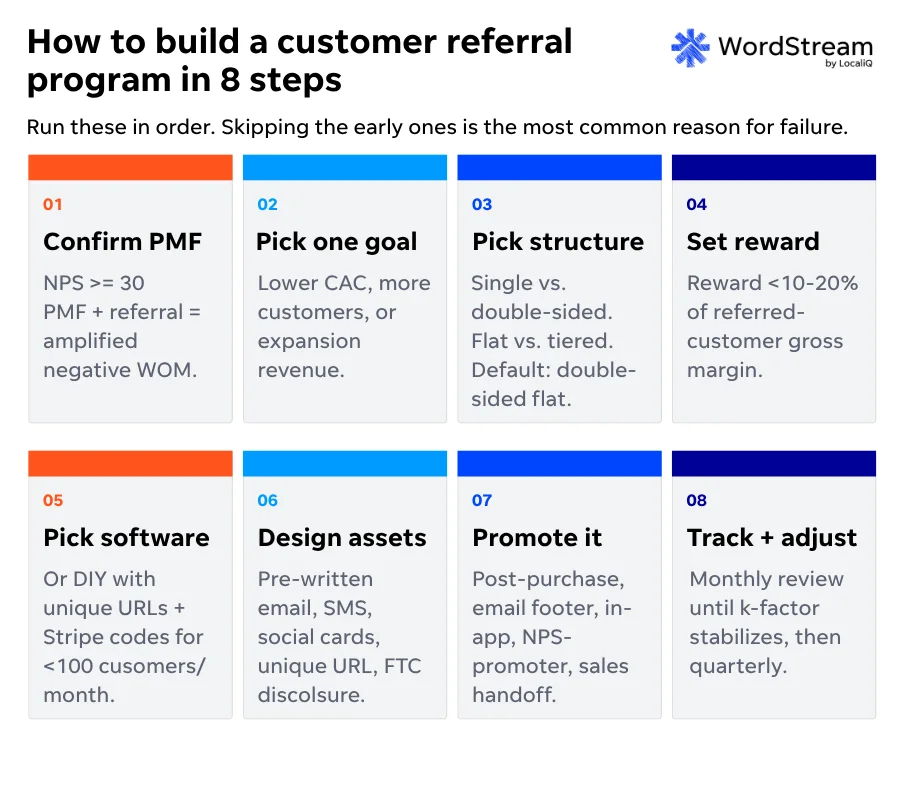
For a referral program to succeed, industry experts suggest a rigorous implementation sequence. Launching a program without a solid foundation often results in "dead" links on settings pages that no one visits.
The first and most critical step is confirming product-market fit. Analysts recommend using the Net Promoter Score (NPS) as a signal; if a brand does not have a positive NPS, a referral program may backfire by amplifying negative sentiment. Once a positive signal is confirmed, brands must define a singular goal—whether that is lowering CAC, increasing the total customer count, or driving expansion revenue.
The subsequent steps involve choosing the reward structure based on customer lifetime value math. A general rule of thumb is that the total reward should not exceed 10% to 20% of the referred customer’s gross margin. Brands then select a software stack—such as ReferralCandy for Shopify or GrowSurf for B2B SaaS—and design assets that include mandatory FTC disclosures. The final stages involve promoting the program at "high-trust" moments, such as immediately after a successful purchase or a positive customer support interaction, followed by monthly performance reviews.
Comparative Analysis: Referral vs. Affiliate vs. Influencer Marketing
A common point of confusion for many businesses is the distinction between referral marketing and related channels. Journalistic analysis of the 2026 marketing landscape clarifies these roles:
- Word-of-Mouth: This remains organic and untracked. It is considered the most powerful but the least manageable channel.
- Referral Marketing: Focuses on existing customers and one-to-one sharing. It is highly trusted and typically has the highest ROI for small to medium-sized businesses (SMBs).
- Affiliate Marketing: Involves third-party publishers, such as bloggers or deal sites, who are paid a commission for public traffic. This is a "publisher-led" strategy designed for scaling reach beyond an existing customer base.
- Influencer Marketing: A "creator-led" strategy where fees are paid for content reach and brand awareness. While it has higher reach, its direct ROI is often lower than targeted referral programs.
Metrics and the "K-Factor"
To measure the health of a program, marketers track participation rates (the percentage of eligible customers who share) and share-to-conversion rates. However, the most sophisticated metric is the "K-factor," or the viral coefficient.
K is calculated by multiplying the number of invites sent per user by the conversion rate of those invited users. A K-factor greater than 1 indicates "viral" growth, where each new user brings in more than one additional user, creating a compounding loop. While rare in practice—most successful businesses operate at a K-factor between 0.1 and 0.5—this metric remains the gold standard for measuring the "virality" of a product’s referral engine.
Legal Implications and Regulatory Compliance
The regulatory landscape in 2026 is stricter than ever regarding consumer transparency. The FTC’s "material connection" rule requires that any recommendation involving a reward must be disclosed in plain language. This disclosure must be "clear and conspicuous," meaning it cannot be buried in a "Terms and Conditions" link or hidden behind a "read more" button.
In industries such as healthcare and financial services, legal considerations are even more complex. Rules under HIPAA and various state-level financial regulations often prohibit "pay-for-referral" entirely or require specific licensing. Marketing directors are increasingly consulting with compliance counsel before launching programs in these verticals to avoid significant legal exposure.
Broader Impact on the B2B Sector
While often associated with consumer e-commerce, referral marketing has seen significant adoption in the B2B sector. However, the mechanics differ substantially. B2B programs often involve longer sales cycles and higher average contract values (ACV), necessitating rewards that are tied to pipeline stages rather than just an initial sign-up.
In the B2B context, a referral program functions more like a "partner program." It requires CRM integration to track leads through multi-month sales funnels and often involves manual outreach from sales representatives to "closed-won" accounts. For these companies, the referral is not just a link; it is a high-value introduction that requires a professional handoff.
Future Outlook
As the digital economy moves toward 2027, referral marketing is expected to become even more integrated into the customer experience. AI-driven personalization is already beginning to tailor referral rewards to individual customer preferences, while blockchain technology is being explored to provide transparent, immutable tracking of referral chains.

The fundamental truth of the strategy, however, remains unchanged: people buy from people they trust. By formalizing this trust into a measurable marketing channel, businesses can create a sustainable, low-cost engine for growth that is resilient to the fluctuations of the paid advertising market. Successful programs in the coming years will be those that prioritize customer satisfaction first, ensuring that the "ask" for a referral is a natural extension of a positive brand relationship rather than a desperate attempt at acquisition.