Omnichannel sales represents a fundamental shift in how businesses engage with customers, moving beyond fragmented interactions to create a unified, continuous buyer experience across all touchpoints. In an era where customer expectations for seamless and personalized engagement are at an all-time high, the traditional siloed approach to sales — where email, phone, chat, and in-person conversations operate independently with their own data and processes — is increasingly leading to lost revenue and diminished customer trust. This gap, often characterized by inconsistent follow-up and repetitive information requests, is precisely where companies stand to lose significant market share and customer loyalty. The evolution towards omnichannel strategies is not merely a technological upgrade but a strategic imperative, driven by shifting consumer behavior and the competitive pressures of a digitally interconnected marketplace.
The Evolution of Sales: From Siloed to Seamless
The journey towards omnichannel sales is a natural progression reflecting the broader digital transformation across industries. Historically, sales operated primarily through single channels, such as face-to-face meetings or phone calls. The advent of the internet and digital communication ushered in the era of "multichannel" sales, where businesses began using multiple avenues like email, websites, and social media to reach customers. While multichannel approaches expanded reach, they often suffered from a lack of coordination; each channel typically functioned as a separate entity with its own data and metrics, leading to a disjointed customer experience.
Today’s customers, whether B2C shoppers or B2B decision-makers, interact with brands across numerous channels simultaneously and expect these interactions to be connected. Research from Capital One Shopping indicates a significant trend, with the share of omnichannel shoppers climbing to an impressive 91%. This statistic underscores a profound change in buyer behavior: customers no longer tolerate starting a conversation from scratch when they switch from a website chat to a phone call or from an email to a social media message. They expect businesses to remember their past interactions, preferences, and journey stage, creating a cohesive narrative regardless of the specific touchpoint.
This shift is particularly pronounced in the B2B sector. A Gartner 2025 B2B Buying Survey revealed that 61% of B2B buyers now prefer a "rep-free buying experience," and 73% actively avoid suppliers who send irrelevant outreach. The modern B2B buying journey is dominated by independent research, peer consultations, and digital self-service. Omnichannel sales acknowledges this reality by building a coordinated, intelligent presence across every touchpoint where buyers gather information and make decisions, ensuring that human outreach is timely, relevant, and value-driven.
Defining Omnichannel: Beyond Multichannel
While often conflated, omnichannel and multichannel sales differ fundamentally in their approach to customer data and interaction coordination.
-
Multichannel sales utilizes various channels (email, phone, social media, chat) to engage buyers. However, these channels typically operate in isolation. Data from one channel rarely informs interactions in another, leading to fragmented customer context and uncoordinated outreach sequences. Each channel maintains its own data silos, metrics, and often, its own dedicated team. The customer, in essence, navigates multiple independent brand interfaces.
-
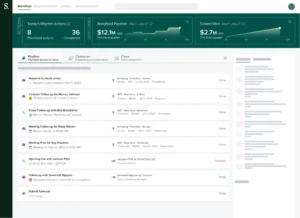
Omnichannel sales, conversely, is characterized by a unified customer record. This central repository integrates identity, activity history, preferences, and consent across all channels. This unified record transforms the nature of every subsequent interaction, ensuring context continuity, reducing repetitive inquiries, and delivering consistent messaging across all revenue teams. The buyer experiences a seamless journey, feeling "known" and understood rather than merely "managed" by disparate departments. A robust Customer Relationship Management (CRM) system acts as the central nervous system, maintaining customer context so that any sales representative or automated sequence can pick up precisely where the last interaction concluded.
The distinction is critical for business success. While multichannel strategies add coverage, only omnichannel strategies add coordination. Companies that fail to grasp this difference risk investing in additional channels without resolving the core problem of fragmented data and inconsistent buyer experiences, which ultimately erodes trust and extends deal cycles. The table below highlights these structural differences:
| Dimension | Single-Channel | Multichannel | Omnichannel |
|---|---|---|---|
| Data Continuity | Siloed – no shared record | Partial – separate systems per channel | Unified – single customer record across all channels |
| Coordination | None | Minimal – each channel acts independently | Proactive – next best action triggered by buyer signals |
| Handoffs | Not applicable | Manual, prone to dropped context | Structured SLAs with full context transferred |
| Reporting Visibility | Single source, limited insights | Channel-by-channel, fragmented view | Cross-channel attribution and revenue impact |
| Customer Context | None retained across interactions | Inconsistent – depends on channel | Continuous – buyer history and preferences inform every touchpoint |
Pillars of an Effective Omnichannel Strategy
Successful omnichannel implementation rests on several core operating principles that fundamentally reshape how revenue teams engage with buyers.
-
Unified Customer Identity: This is the bedrock of any omnichannel interaction. A comprehensive customer record must encompass identity details, a complete history of engagement across all channels, stated preferences, and consent status. Without a unified identity layer, true channel coordination is impossible, as teams would be attempting to orchestrate a journey they cannot fully perceive. Practically, this means customer data from website visits, email campaigns, phone calls, social media interactions, and even in-person meetings must feed into a single, centralized profile. Advanced data platforms combine scattered information, enhance data quality through automation, and activate customer intelligence across the entire sales and marketing ecosystem.
-
Journey Orchestration: This principle involves dynamically selecting the most appropriate channel, message, and action based on the buyer’s current stage and real-time engagement signals. Rather than adhering to a rigid, fixed outreach sequence, orchestration-driven teams respond fluidly to buyer behavior. For example, if a prospect opens an email but does not click a link, the next touchpoint might be a personalized LinkedIn message or a targeted ad, rather than another email repeating the same offer. Effective orchestration requires clearly defined buyer stages, precise signal definitions (identifying which actions indicate readiness to advance), and automation rules that trigger the right channel at the optimal moment.

-
Sales SLAs and Handoff Protocols: Service-Level Agreements (SLAs) are crucial for defining responsibilities, channels, and response times following specific trigger events. Without explicit SLAs, handoffs—whether between Sales Development Representatives (SDRs) and Account Executives (AEs), or between marketing and sales—become frequent points of failure, leading to dropped context and lost deals. A prospect who fills out a demo request form should not receive a generic introductory email from an AE who lacks visibility into their prior engagement history. Well-designed SLAs specify who follows up, through which channel, by when, and with what level of contextual detail, transforming handoffs from a risk into a competitive advantage.
-
Context Continuity Across Teams: This principle aims to eliminate repetitive questions and ensure consistent messaging as a prospect moves through different stages and teams within an organization. When a prospect transitions from an SDR to an AE, or from an AE to customer success, the experience should feel seamless to the buyer. The insights gained during discovery, the prospect’s stated priorities, and any objections raised should inform every subsequent interaction, regardless of the individual leading the conversation. This not only enhances the buyer experience but also accelerates deal cycles, as AEs can focus on validating solutions rather than re-discovering pain points already identified by an SDR.
-
Channel Complementarity, Not Channel Competition: In a truly omnichannel model, various communication channels reinforce each other rather than competing for individual credit. An email sequence might warm a prospect for a subsequent phone call. A LinkedIn engagement could trigger a personalized follow-up message. Each channel serves a distinct, complementary purpose within the broader buyer’s journey. Attribution reporting in an omnichannel environment moves beyond simple first-touch or last-touch models to reflect the cumulative contribution of each channel, enabling teams to optimize their orchestration resources for maximum impact.
Strategic Implementation: A Phased Approach
Implementing an omnichannel sales strategy demands a systematic approach encompassing aligned data architecture, refined processes, and the right technology stack. It impacts how revenue teams operate across every channel, not just their use of tools.
-
Audit Current Channel Activity and Data Architecture: Before embarking on an omnichannel strategy, sales leaders must thoroughly assess their existing channel coverage and data quality. This audit should address:
- Which channels are currently in use?
- How is customer interaction data captured and stored for each channel?
- What are the common data silos or gaps across channels?
- What is the current level of data completeness and accuracy within the CRM for key contact and deal properties?
A common discovery in such audits is that while email and deal-stage data are often well-recorded, interactions like phone calls, LinkedIn activity, and in-person meetings are logged inconsistently or not at all, leading to a structurally incomplete customer record.
-
Define Your Unified Customer Record: This involves establishing a structured data model within the CRM that captures all essential identity, engagement history, preferences, and intent signals necessary for coordinating omnichannel execution. Sales and RevOps teams must collaboratively define the minimum required fields for a record to be considered actionable. Key fields typically include: contact information, company details, lead source, deal stage, recent activity (calls, emails, meetings, web visits), channel preferences, marketing engagement history, and consent status. Workflow automations can then flag incomplete records for enrichment.
-
Map Your Buyer Journey by Stage and Channel: Journey orchestration necessitates a clear, detailed map outlining which channels are most effective at each stage of the buyer’s journey. For each stage, define the primary channel, secondary channel, and an escalation path if the primary channel does not elicit a response. For example:
- Awareness Stage: Content marketing, social media, targeted ads.
- Consideration Stage: Email nurturing, webinar invites, direct outreach on LinkedIn.
- Decision Stage: Demo calls, personalized proposals, follow-up calls, in-person meetings.
By mapping out the customer journey, teams can identify critical touchpoints and design coordinated sequences that leverage the strengths of each channel.
-
Build Coordinated Sequences with Clear SLAs: Once the buyer journey is mapped, the next step is to construct coordinated outreach sequences within the CRM. These sequences enforce the correct channel, message, and timing for each stage. SLAs should explicitly define:
- The responsible party for each touchpoint.
- The specific channel to be used.
- The maximum response time or action deadline.
For instance, a sequence might start with an automated email, followed by a manually assigned phone call task, and then a LinkedIn message, with full context maintained across all interactions. Establishing an SLA for inbound leads—e.g., a personalized response within four business hours in the channel of engagement—is crucial, as response time is a strong predictor of connection rates.
-
Connect Your Sales Intelligence Stack: Omnichannel execution thrives on high-quality signals. This requires integrating intent data, news alerts, social engagement signals, and firmographic enrichment tools directly into the CRM. These integrations provide sales representatives with a real-time view of buying intent and account context before they initiate outreach, enabling more precise and relevant conversations. Platforms offering extensive marketplaces for sales intelligence integrations allow businesses to feed diverse signals directly into their CRM, enhancing the precision of journey orchestration.
-
Implement AI-Powered Prospecting and Automation: Artificial intelligence (AI) is a game-changer for omnichannel execution, automating research, personalization, and timing decisions that previously consumed significant manual effort. AI-powered prospecting agents can automatically research accounts against an ideal customer profile, draft personalized outreach, and recommend optimal times and channels for each touchpoint. This enables true omnichannel outreach at scale without a proportional increase in headcount. AI systems can prioritize accounts based on fit and engagement signals, focusing sales efforts on opportunities most likely to convert, thereby augmenting rather than replacing human judgment.
-
Streamline Quoting, Payment, and Deal Closure: The final stage of the omnichannel journey—quoting, invoicing, and payment—is often where otherwise well-designed processes falter. When reps must exit the CRM to generate quotes or process payments in separate systems, deal context is lost, approval cycles slow, and the buyer experience degrades. Integrated commerce hubs allow teams to generate quotes, send invoices, and collect payments directly within the CRM record. Quotes, invoices, and payment links are generated from existing deal data, sent through the buyer’s preferred channel, and automatically logged upon engagement, maintaining momentum and ensuring a smooth close.
Omnichannel Sales Success Metrics to Track
To assess the effectiveness of an omnichannel strategy, businesses should track a comprehensive set of metrics at both the process and revenue levels.
-
Cross-Channel Engagement Rate: This metric measures the percentage of prospects who interact with two or more distinct channels before advancing to a new deal stage. A rising rate indicates that the orchestration model is successfully fostering meaningful multi-touchpoint relationships rather than simply adding channels without coordination. Tracking this by deal stage can highlight areas where channel diversity needs strengthening.

-
Handoff-to-Opportunity Conversion Rate: This measures the percentage of leads that successfully transition into active opportunities following a handoff (e.g., from marketing to sales, or SDR to AE). A low conversion rate often points to a context gap, where the receiving representative lacks sufficient information to effectively continue the conversation. Monitoring this metric before and after implementing structured handoff protocols is crucial for demonstrating improvement.
-
Deal Velocity by Channel Mix: Deal velocity tracks the speed at which deals progress through each stage of the sales pipeline. Segmenting this metric by the specific mix of channels used (e.g., deals involving two channels versus four) reveals whether expanded channel coverage genuinely accelerates deal progression. Experience shows that adding channels without proper coordination often yields no improvement in velocity; true omnichannel execution should result in measurable acceleration.
-
Channel Attribution Contribution: Moving beyond simplistic first-touch or last-touch models, multi-touch attribution allocates revenue credit across all channels that contributed to a closed deal. This provides a more nuanced understanding of which channel combinations are most effective in driving conversions, informing future investment and optimization decisions for orchestration resources.
-
CRM Data Completeness Score: This leading indicator assesses the percentage of active contact and deal records that meet the minimum required field thresholds for effective omnichannel orchestration. Teams with higher completeness scores are better positioned to execute precise sequences, leverage AI for relevant insights, and maintain strong context continuity. A target of at least 80% completeness on required fields should be established before scaling automation.
-
Customer Retention and Expansion Rate: The ultimate validation of an omnichannel strategy lies in long-term retention and expansion metrics. According to McKinsey’s 2024 B2B Pulse Survey, B2B decision-makers now utilize an average of 10 channels during their purchase journey, a significant increase from five in 2016. The survey also found that over half (54%) would switch suppliers after a poor omnichannel experience. This underscores that a coordinated presence across every touchpoint is no longer a luxury but a critical factor in preventing customer churn and fostering revenue growth. Tracking net revenue retention by cohort and correlating it with omnichannel engagement scores provides a robust business case for continued investment.
Industry Spotlights and Expert Perspectives
Leading companies across various sectors have successfully implemented omnichannel strategies, demonstrating its profound impact on customer experience and revenue.
-
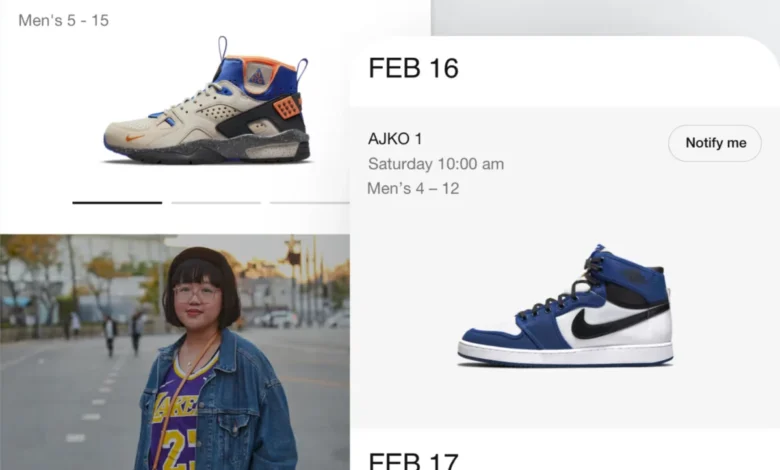
Nike: Unified Commerce From Digital to Physical: Nike’s omnichannel execution is frequently cited as a benchmark in retail. Their Nike app, Nike.com, and physical retail stores operate from a shared customer identity layer that tracks purchase history, browsing behavior, product preferences, and membership tiers. For instance, if a customer adds an item to their cart on the app but doesn’t complete the purchase, in-store staff can access that cart context to facilitate a seamless pickup experience or offer relevant assistance. The Nike SNKRS app further exemplifies this by using engagement signals (watched product drops, launch entries) to personalize subsequent communications, resulting in a consistent customer experience and higher conversion rates due to built-in context. Analysts often commend Nike for treating the physical store as an integral node in a broader digital ecosystem, rather than an isolated sales point.
-
Zoom: Omnichannel B2B Sales With Product-Led Data: Zoom’s rapid growth model showcases effective omnichannel B2B sales at scale, heavily leveraging product-led data. Its free tier generates crucial usage data (meeting frequency, participant counts, feature adoption) that directly feeds into its CRM. This data informs sales outreach timing, channel selection, and messaging. An account consistently hitting free-tier limits, for example, receives targeted outreach that specifically references their usage patterns, rather than a generic upsell pitch. Zoom’s sales team operates with clear SLAs: product signals trigger specific outreach windows, and the channel sequence (email, then phone, then in-product message) is standardized. This ensures human outreach is delivered precisely when a buyer is experiencing friction, with context that makes the conversation relevant and non-intrusive.
-
Apple: Channel Coordination Across Self-Serve, Retail, and Enterprise: Apple’s omnichannel model spans distinct buyer journeys—consumer self-serve via Apple.com, retail with Genius Bar support, and enterprise sales through Apple Business—all while maintaining a unified customer experience. An enterprise IT leader managing a personal Apple ID, for example, maintains a separate yet connected enterprise profile, allowing Apple’s account teams to reference both when discussing device procurement or support. What makes Apple’s model distinctive is the physical store’s role as a channel complement, serving not just as a point of sale but also as a service touchpoint, a discovery environment, and a post-sale support channel. This integrated approach contributes significantly to a unified customer journey, enhancing lifetime value well beyond the initial transaction. Industry observers highlight Apple’s ability to seamlessly blend digital and physical interactions, treating each as part of a larger, cohesive narrative.
Challenges and the Road Ahead
While the benefits of omnichannel sales are clear, implementation is not without challenges. Data integration remains a significant hurdle, as many legacy systems are not designed to share information seamlessly. Overcoming organizational silos—where marketing, sales, and service teams operate independently—requires strong leadership and a cultural shift towards collaborative revenue operations (RevOps). Furthermore, training sales teams to leverage a unified CRM and adapt to dynamic, orchestrated sequences demands ongoing investment.
Looking ahead, the role of artificial intelligence will only grow, moving beyond automation to predictive analytics that can anticipate buyer needs and recommend hyper-personalized next steps. The future of omnichannel sales will emphasize even greater personalization, leveraging vast amounts of data to create truly one-to-one customer journeys. Businesses that embrace this strategic imperative, investing in the right technology, processes, and people, will be best positioned to thrive in an increasingly competitive and customer-centric market.
In conclusion, omnichannel sales is about intelligently connecting existing channels so that every customer touchpoint builds upon the last. Buyers who experience this continuity convert faster, exhibit higher loyalty, and expand their engagement more consistently. The success of such strategies hinges on a robust, unified CRM, AI capabilities that surface critical signals at opportune moments, and human sales professionals who apply their judgment where it matters most. This integrated approach is not merely an operational improvement but a strategic differentiator that aligns sales efforts with modern buyer expectations, transforming fragmented interactions into a cohesive, trust-accelerating journey that drives sustained revenue growth.
Related posts: