The Supreme Court Docket Centers on Administrative Minutiae and Fundamental Legal Shifts

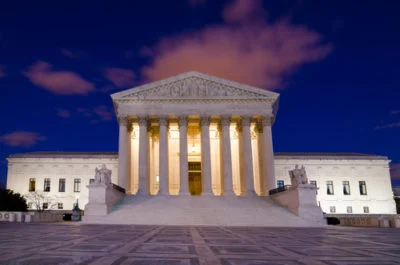
The United States Supreme Court has officially opened a judicial term that, while initially appearing heavily populated by dense administrative technicalities and procedural nuances, fundamentally threatens to reshape the American legal and regulatory landscape. Beneath the surface of seemingly dry jurisdictional disputes lie monumental questions regarding civil rights enforcement, the constitutional boundaries of executive authority, and the fundamental mechanics of federal immigration enforcement. Legal scholars, labor practitioners, and constitutional experts are closely monitoring a docket that will ultimately determine who can seek judicial vindication under foundational civil rights statutes, the constitutional reach of administrative law judges, and the extent to which the executive branch can execute broad deportation directives.
At the core of this term’s docket is a profound tension between administrative efficiency and constitutionally protected individual rights. For decades, the administrative state has operated on the premise that specialized federal agencies, equipped with administrative law judges (ALJs) and internal adjudication processes, could swiftly resolve complex regulatory, labor, and immigration disputes. However, a string of recent high-profile Supreme Court decisions has aggressively clipped the wings of federal regulatory bodies, raising existential questions about the separation of powers and the right to a jury trial under the Seventh Amendment. As the high court navigates these competing pressures, its rulings threaten to upend how federal agencies enforce everything from wage-and-hour rules and workplace safety standards to educational equity and immigration control.
Expanding Title IX Protections in the American Workplace
Among the active dockets directly impacting employers and employees, the Title IX case Crowther v. Board of Regents of the University System of Georgia stands out as a potential watershed moment for workplace discrimination law. The case addresses a critical intersection of federal statutes: whether employees of federally funded educational institutions possess the right to sue for sex discrimination under Title IX of the Education Amendments of 1972, in addition to traditional claims brought under Title VII of the Civil Rights Act of 1964.
The practical implications of this legal distinction are immense. Title VII imposes strict procedural hurdles, requiring plaintiffs to first exhaust administrative remedies by filing a timely charge with the Equal Employment Opportunity Commission (EEOC) before heading to federal court. Furthermore, Title VII caps compensatory and punitive damages based on the size of the employer, limiting financial recovery for victims of severe workplace discrimination. In contrast, Title IX does not require the exhaustion of administrative remedies through the EEOC, nor does it impose statutory caps on compensatory damages.
For years, a distinct split has emerged among the federal circuit courts regarding whether Title IX provides a private right of action for employees of educational institutions, or if Congress intended Title VII to be the exclusive remedy for employment discrimination in those settings. Recent high-profile campus scandals, such as those at Cornell University, have highlighted systemic failures in addressing harassment and discrimination within academic environments, intensifying public scrutiny on how effectively current laws protect educational workers. A ruling in favor of the plaintiffs in Crowther would significantly expand opportunities for educators and staff to pursue high-stakes claims, potentially bypassing administrative bottlenecks and exposing institutions to substantially larger financial liabilities.
The Constitutional Fate of Administrative Law Judges
Beyond civil rights litigation, the administrative state faces an existential reckoning in Department of Labor v. Sun Valley Orchards, LLC. Framed nominally as an immigration dispute involving the alleged misuse of H-2A agricultural guest worker visas, the case serves as a broader referendum on the constitutional authority of administrative law judges to independently assess monetary penalties and award back wages.
The legal foundation for this challenge stems directly from the Supreme Court’s landmark 2024 ruling in SEC v. Jarkesy. In Jarkesy, the high court ruled that the Seventh Amendment guarantees a right to a jury trial in federal court whenever the Securities and Exchange Commission seeks civil penalties for securities fraud, declaring that internal agency adjudications violate the Constitution in such contexts. The Court carved out a narrow exception known as the "public rights" doctrine, which historically allowed Congress to assign the adjudication of certain statutory rights—particularly those involving government-created benefits or obligations unknown to the common law—to administrative agencies rather than Article III courts.
However, Jarkesy significantly narrowed the scope of the public rights exception, unleashing a tidal wave of collateral attacks on administrative proceedings across the federal government. In Sun Valley Orchards, the U.S. Department of Labor argues that immigration compliance and related labor enforcement fall squarely within the public rights exception, justifying the imposition of substantial financial penalties by DOL ALJs. Conversely, employers contend that imposing heavy monetary fines for visa violations crosses the constitutional line, demanding the procedural protections of a federal court and a jury trial.
The implications of this ruling extend far beyond agricultural guest worker programs. A decision curtailing the authority of DOL administrative law judges could severely disrupt the enforcement mechanisms of the National Labor Relations Board (NLRB), the Occupational Safety and Health Administration (OSHA), and numerous other federal regulatory bodies. If federal agencies are stripped of their ability to assess fines and back pay internally, routine regulatory enforcement could grind to a crawl, forcing an already overburdened federal court system to adjudicate thousands of administrative disputes that were previously handled by specialized agency tribunals.
The Immigration Docket and Executive Overreach
For many legal observers, the current term is unmistakably "the immigration term," with approximately 20% of the Court’s docket directly addressing the executive branch’s enforcement priorities and border control strategies. These cases highlight ongoing clashes between federal immigration policy and constitutional due process guarantees, testing the legal boundaries of presidential authority.
Chief among these high-profile challenges is Department of Homeland Security v. D.V.D., which confronts the executive practice of "third-country removals." Under this administrative mechanism, noncitizens apprehended by federal authorities are deported not to their countries of origin or citizenship, but to third-party nations with which they may have no prior connection or established ties. After months of intense litigation on the court’s expedited "shadow docket"—where justices repeatedly intervened to stay lower court injunctions that had temporarily blocked the removals—the underlying merits of the policy have finally reached the formal docket for comprehensive review.
Simultaneously, the Court is evaluating Rhoney v. Barbosa da Cunha, a direct challenge to the detention policies applied to noncitizens apprehended deep within the interior of the United States. The central question in Rhoney revolves around the interpretation of a specific provision of federal immigration law that mandates the administrative detention of arriving applicants for admission who are deemed not "clearly and beyond a doubt entitled to be admitted." Crucially, this statutory provision does not provide for standard bond hearings before an immigration judge.
While the executive branch has increasingly relied on this provision to justify the prolonged detention of individuals apprehended inside the country, the vast majority of federal district and circuit courts that have addressed the issue have rejected the government’s interpretation. These lower courts have held that the statutory language regarding applicants for admission applies strictly to individuals intercepted at the border or ports of entry, rather than noncitizens who have lived and worked within the United States interior for extended periods. The Supreme Court’s impending decision will provide a definitive interpretation of statutory boundaries and executive detention powers.
Broader Legal Implications and Judicial Realities
Over the past several terms, the Supreme Court has increasingly found itself thrust into the center of America’s deepest cultural and political divides. Despite recurring debates over whether the judiciary should act as a neutral arbiter of statutory text or a mediator of ideological disputes, the justices have consistently been forced to confront the practical consequences of expanding executive power.
By repeatedly validating expansive executive actions in prior years, the Court has inadvertently invited complex structural challenges to the administrative state and federal enforcement apparatus. As the justices deliberate on cases ranging from Title IX workplace claims and administrative law judge authority to third-country deportations and interior detention policies, their decisions will define the balance of power between the branches of government for decades to come. The outcomes will determine whether federal agencies retain the administrative tools necessary to regulate the modern economy, or whether the judiciary will enforce a rigid constitutional separation of powers that dismantles decades of regulatory precedent.