Mastering the Digital Dialogue: How Modern Retailers Are Bridging Email and SMS for Peak Omnichannel Efficiency

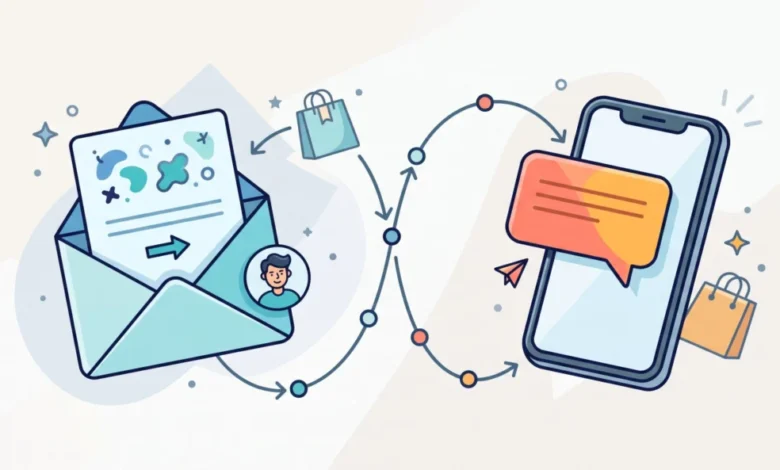
The modern retail landscape has fundamentally shifted from broad, spray-and-pray advertising campaigns to highly personalized, direct-to-consumer digital touchpoints. When a consumer hands over their mobile telephone number or email address at a digital checkout, they are not merely completing a transaction; they are granting a business direct access to their personal communication channels. Historically, brand founders and digital marketers have treated electronic mail and short message service (SMS) communications as interchangeable broadcasting tools. However, contemporary consumer behavior studies, retail analytics, and marketing technology integrations indicate that treating these two mediums as distinct yet collaborative pillars is essential for maximizing customer lifetime value, minimizing opt-out rates, and driving sustainable revenue growth.
The strategic divergence between email and text messaging lies in consumer psychology, device ergonomics, and the physical proximity of the hardware receiving the notification. An email inbox operates much like a communal post office box; it is a spacious, asynchronous corridor where messages can sit quietly for hours or days amidst dozens of unread promotional bulletins. Conversely, a smartphone notification buzzes directly against a user’s pocket, rests on their nightstand, or interrupts a midday professional meeting. This immediate physical intrusion makes SMS an intensely intimate medium—akin to an invitation into a consumer’s private living room. Consequently, marketing executives face a delicate balance between maintaining commercial momentum and respecting digital boundaries.
The Divergent Strengths of Email and SMS Channels
To construct a cohesive omnichannel strategy, businesses must first understand the operational limitations and inherent advantages of each medium. Electronic mail remains the undisputed champion for deep storytelling, visual brand immersion, and cost-effective broad-scale engagement. According to recent digital marketing benchmarks, email allows brands to showcase product contexts, segment audiences based on historical purchasing habits, and deliver extensive educational content for negligible marginal costs per send. The primary drawback of email is its latency. Because inboxes are routinely saturated with promotional material, an email campaign may languish unread until the recipient deliberately sets aside time to triage their correspondence.
On the other hand, SMS commands unparalleled immediacy. Industry data consistently demonstrates that text messages achieve open rates exceeding 90 percent within the first three minutes of delivery. They slice through digital clutter with surgical precision. Yet, this high-velocity channel imposes strict structural constraints. A standard text message offers limited character space, prohibiting lengthy explanations or complex brand narratives. Furthermore, each SMS segment incurs a tangible financial cost per send compared to the comparatively flat subscription fees of email service providers. Leaning too heavily on SMS without a compelling value proposition rapidly transforms a welcome brand interaction into an unwelcome intrusion, triggering immediate subscription revocations.
Chronology and Evolution of Omnichannel Automation
The evolution of direct-to-consumer marketing over the past decade reveals a clear progression from siloed messaging campaigns to integrated, behavior-triggered workflows. In the early stages of ecommerce development, companies typically maintained separate software stacks for email blasts and mobile text alerts. This operational division frequently resulted in cross-channel cannibalization, where consumers received identical promotional offers across both mediums simultaneously.
By the mid-2010s, advanced marketing automation platforms began consolidating these communication vectors into unified dashboards. This technological convergence allowed brands to orchestrate sequential customer journeys rather than parallel announcements. Industry case studies from leading retail technology providers, such as Omnisend, indicate that modern automated workflows perform optimally when they respect a chronological hierarchy. Rather than firing email and text communications concurrently upon a user action, sophisticated merchants now deploy staggered sequencing. For example, a standard welcome series initiates with an informational email detailing the brand’s origin, product philosophy, and introductory discount. If the recipient fails to complete a transaction within a designated 24-to-48-hour window, a single, concise SMS reminder acts as a secondary catalyst to bridge the conversion gap.
Strategic Channel Allocation: Time Sensitivity and Expiration
Determining whether a specific message belongs in the email inbox or on the mobile lock screen requires applying a strict operational filter: Does the content have an expiration date? Industry analysts and retail strategists advocate for a clear operational divide based on time sensitivity.
Messages that lack immediate urgency are ideally suited for email delivery. This category encompasses long-form brand narratives, seasonal collection launches, educational how-to guides, and slow-nurture sequences designed to build affinity over weeks. Because these communications derive no negative value from arriving an hour late, they benefit from the expansive reading environment that an email template provides.
Conversely, time-sensitive alerts demand the immediate velocity of SMS. Examples include flash sales concluding at midnight, localized inventory alerts for items recently restored to stock, and abandoned cart recovery notifications generated while consumer intent remains high. An abandoned cart text sent three hours after a user abruptly exits a checkout page captures attention before the consumer pivots to a competing merchant. If delivered the following morning via email alone, the immediacy of the purchase intent often evaporates entirely.
Economic Implications and the Cost of Over-Saturation
The economic stakes of proper channel management are substantial. Customer acquisition costs across major digital advertising networks have risen steadily over the past five years, placing increased emphasis on retention marketing and owned media channels. Within this framework, SMS is widely regarded as a high-yield, high-risk asset.
Industry data suggests that while email tolerance is remarkably high—consumers rarely penalize a brand for an extra promotional message in a crowded inbox—SMS tolerance is exceptionally fragile. A single poorly timed text message delivered late at night, or an excessive frequency of promotional alerts within a seven-day period, frequently results in an immediate opt-out. Because SMS opt-ins represent high-intent, premium consent, losing a subscriber to fatigue permanently seuthes off the brand’s most reliable direct line to that consumer.
Consequently, modern retail strategists emphasize restraint as a core component of revenue optimization. Maintaining smaller, highly engaged SMS lists yields significantly higher return on investment (ROI) than maintaining bloated directories of fatigued consumers who have learned to dread incoming mobile alerts. Compliance with regional telecommunications regulations, respect for established quiet hours, and strict adherence to timezone tracking are foundational requirements for sustainable mobile marketing operations.
Industry Integration and Future Outlook
As the ecommerce sector prepares for peak seasonal shopping periods—such as Black Friday and Cyber Monday (BFCM)—the pressure on digital communication infrastructure intensifies significantly. Retail analysts project that brands utilizing unified marketing automation suites will capture disproportionate market share compared to those relying on fragmented point solutions.
Platforms that consolidate email, SMS, and web push notifications within a single automation canvas allow marketing teams to construct seamless handoffs between channels. By maintaining unified behavioral segments derived from real-time browsing and purchasing data, merchants can ensure that each communication serves a distinct, non-redundant purpose.
Ultimately, the future of direct-to-consumer communication depends on respecting the physical and psychological boundaries of the digital consumer. By treating the email inbox as an intellectual archive and the mobile screen as a privileged guest room, brands can cultivate long-term customer loyalty, protect their proprietary communication channels, and drive predictable, sustainable revenue growth in an increasingly crowded digital economy.