Mastering the Modern SDR Workflow: Strategies for Pipeline Efficiency and CRM Integration

The modern sales development representative (SDR) operates in a high-stakes environment where the speed of lead response and the accuracy of data management directly dictate organizational revenue growth. In the contemporary B2B landscape, an SDR workflow represents the structured, repeatable methodology a sales team employs to ingest, prioritize, follow up on, qualify, and seamlessly transition leads to account executives (AEs). Far from a simple administrative checklist, a finely tuned workflow serves as the connective tissue between marketing generation and final deal closure. As organizations increasingly abandon fragmented spreadsheets in favor of unified, CRM-first ecosystems—such as HubSpot’s Sales Hub—the mechanics of how sales teams process incoming interest have undergone a fundamental operational evolution.
Understanding the broader market context requires examining how lead management practices have shifted over the last two decades. Historically, sales development teams operated in silos, manually logging calls, juggling disconnected email clients, and relying on static spreadsheets to track who had or had not been contacted. This fragmented approach introduced significant human error, delayed response times, and created information gaps during the handoff to account executives. The introduction of smart CRM platforms has revolutionized this dynamic by centralizing contact data, communication history, and engagement analytics into a single pane of glass. Industry analysts note that organizations transitioning to integrated CRM-first workflows experience notable reductions in lead leakage and improved visibility into pipeline health.

The foundational imperative of any high-performing SDR workflow remains rapid response timing, a principle underscored by decades of sales research. A widely cited 2007 landmark study conducted by the Massachusetts Institute of Technology (MIT) in partnership with InsideSales.com revealed that the odds of making successful contact with a web-generated lead plummeted dramatically if outreach was delayed beyond the initial five-minute window. While modern digital buying behaviors, multi-channel inbound strategies, and automated sequences have evolved considerably since the publication of that telephone-centric study, the underlying psychological truth remains intact: modern buyers expect prompt, relevant engagement. Consequently, sales operations leaders now design customized response SLAs (Service Level Agreements) tailored to specific inbound channels, ensuring that high-intent demo requests receive immediate attention while educational resource downloads follow a structured nurturing path.
Achieving operational excellence across an SDR team requires mastering six distinct, interdependent stages: prioritization, follow-up, qualification, handoff, logging, and reporting. Each phase relies on rigorous data hygiene and the consistent application of core sales competencies.
In the prioritization phase, SDRs evaluate assigned records not merely by chronological arrival, but by mapping them against the organization’s ideal customer profile (ICP), observed buying signals, and explicit urgency indicators. A prospect who matches firmographic criteria and explicitly requests a pricing consultation demands immediate diversion from standard queues, whereas a top-of-funnel ebook downloader is better routed into a targeted engagement sequence.

The follow-up stage dictates the tactical execution of multi-touch outreach. Rather than relying on sporadic, memory-based reminders, modern workflows leverage systematic cadences combining email, telephone outreach, and social selling channels. These touchpoints must dynamically adjust based on prospect engagement—pausing when an individual responds or opts out, and escalating when high-intent buying signals emerge.
Qualification represents the critical filter that separates casual inquirers from genuine sales opportunities. Utilizing established frameworks—such as BANT (Budget, Authority, Need, Timeline) or MEDDPICC variations—SDRs systematically probe for operational pain points, decision-making stakeholders, and definitive timelines. Recording these insights accurately within the CRM ensures that qualification data remains transparent and actionable.
The handoff stage bridges the gap between the development team and the closing executives. A successful transition eliminates the friction of repetition, ensuring that the AE receives comprehensive documentation regarding the prospect’s goals, technical requirements, previous touchpoints, and agreed-upon next steps. When executed correctly through automated scheduling utilities, prospects can independently select mutually agreeable meeting times, minimizing back-and-forth friction while locking the event directly into the core sales pipeline.

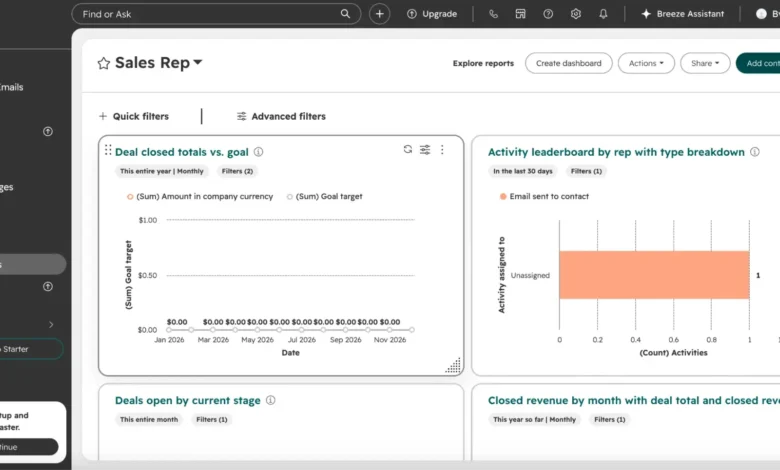
The final two operational pillars—logging and reporting—provide the executive oversight necessary for continuous process optimization. Every meaningful interaction, email open, call disposition, and qualification note must be meticulously captured. This continuous logging feeds executive dashboards, allowing sales leaders to evaluate team-wide activity volumes, conversion rates, average response times, and downstream AE acceptance metrics without requiring manual data compilation.
The integration of artificial intelligence and workflow automation has further transformed how SDRs manage daily execution. Modern sales technology stacks now feature AI-driven prospecting agents capable of conducting preliminary company research, synthesizing public data, and drafting tailored introductory messages. While these tools significantly reduce the administrative burden of pre-call research, sales leadership emphasizes that automation must augment, rather than replace, human judgment. SDRs retain the ultimate responsibility for verifying data accuracy, evaluating nuanced psychological buying signals, and establishing authentic human rapport.
Similarly, automated lead routing rules ensure that inbound inquiries instantly reach the appropriate territory representative or industry specialist based on predefined organizational logic. Concurrently, automated meeting transcription and summarization tools capture dialogue during live calls, automatically populating CRM fields and suggesting follow-up actions. When paired with structured reporting dashboards, these automated inputs provide real-time visibility into pipeline velocity, helping managers proactively identify bottlenecks before they impact quarterly revenue forecasts.

Measuring the efficacy of an SDR workflow requires moving beyond superficial metrics such as raw call volume or total emails sent. Forward-thinking sales organizations evaluate holistic key performance indicators (KPIs) that encompass both input effort and output quality. Essential metrics include speed-to-lead response times, follow-up task completion rates, the percentage of booked meetings that successfully meet established qualification criteria, and AE feedback scores regarding handoff quality. By analyzing these indicators collectively, sales leaders can ensure that increased activity volumes translate directly into qualified pipeline growth rather than wasted operational effort.
Ultimately, building a scalable sales development engine requires harmonizing disciplined human interaction with intelligent technological infrastructure. By anchoring prioritization, follow-up, qualification, handoff, logging, and reporting within a unified CRM framework, organizations create a repeatable, transparent process that supports sustainable growth. As market dynamics continue to evolve, sales teams that successfully balance rigorous workflow execution with adaptive automation will remain best positioned to capture and convert high-value enterprise opportunities.