The High Cost of Retaliation: Eleventh Circuit Ruling Clarifies Protections for Employees Filing EEOC Charges

When an employer believes an employee has misrepresented facts in an Equal Employment Opportunity Commission (EEOC) charge, the impulse to discipline for dishonesty is often immediate. However, a recent ruling from the United States Court of Appeals for the Eleventh Circuit serves as a stark, expensive reminder that the law grants broad immunity to statements made within the formal administrative process. In a case involving a detention deputy who was fired after his employer deemed his EEOC filings inaccurate, a jury awarded $250,000 in damages—a verdict the appellate court affirmed, citing the “participation clause” of Title VII of the Civil Rights Act of 1964.
The litigation underscores the precarious intersection of internal disciplinary investigations and federal anti-retaliation protections. Employers who conflate protected activity with legitimate workplace misconduct risk significant legal exposure, particularly when the termination notice explicitly references the employee’s EEOC filing as a primary justification for the discharge.
A Chronology of Conflict
The dispute originated from a detention deputy’s decision to file a charge of discrimination with the EEOC, alleging disability and religious discrimination, as well as subsequent retaliation. In the narrative provided to the commission, the employee claimed he had served as a detention officer since 2007 and had maintained a clean disciplinary record until he was notified of an impending negative performance evaluation.
The employer, upon reviewing the charge, launched an internal investigation. Management identified several discrepancies in the deputy’s filing. Specifically, employment records indicated the individual did not begin his tenure as a detention officer until 2010. Furthermore, the employer noted that previous evaluations had documented performance deficiencies, contradicting the employee’s claim that he had never faced workplace issues.
The employee defended these inaccuracies, characterizing the incorrect start date as a clerical typo and arguing that informal feedback he had received in the past did not equate to the formal disciplinary actions referenced in his personnel file. During the internal investigation, the employer expanded its scope, uncovering other potential misconduct, including inconsistencies regarding the employee’s personal history, undisclosed details about alcohol consumption, and a failure to maintain an accurate home address on file.
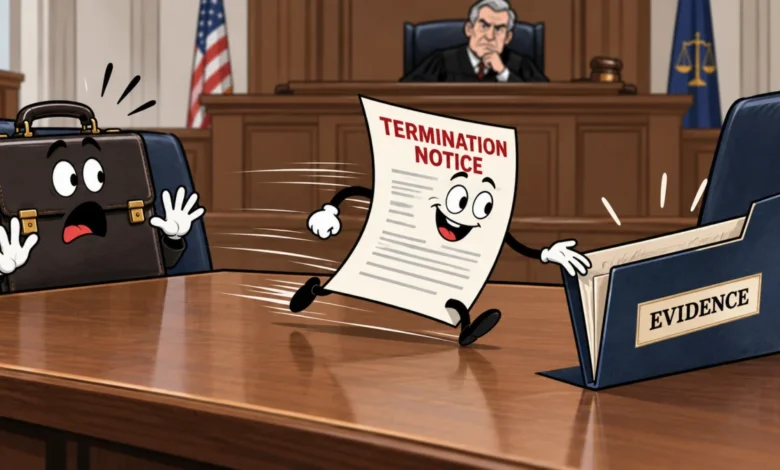
Ultimately, the employer terminated the deputy’s employment. Crucially, the termination notice explicitly cited the employee’s “public criticism” of the organization and the act of “knowingly utilizing false information” in his EEOC charge as central reasons for his firing. This decision to memorialize the EEOC charge as a catalyst for termination provided the deputy with the "smoking gun" evidence necessary to prevail in his subsequent retaliation lawsuit.
The Legal Framework: Title VII Participation Clause
The core of the legal debate hinged on the scope of the "participation clause" under Title VII. Federal law protects employees from retaliation when they participate in a "proceeding" under the statute, which includes filing an EEOC charge. The Eleventh Circuit has long held that this protection is near-absolute. Even if a statement within an EEOC charge is found to be false or even malicious, the act of making that statement remains protected activity.
The appellate court’s affirmation of the $250,000 verdict—split evenly between $125,000 in lost wages and $125,000 for emotional distress—reinforces the principle that an employer cannot bypass the participation clause simply by labeling a protected statement as "dishonesty." By including the content of the charge as a justification for the termination, the employer effectively admitted that the protected activity was a "but-for" cause of the discharge. Had the employer focused its disciplinary action exclusively on the independently verified issues, such as the failure to update an address or other documented behavioral lapses, the legal outcome might have been significantly different.

Statistical Context and Retaliation Claims
Retaliation remains the most frequently filed charge with the EEOC. According to the agency’s latest enforcement data, retaliation claims have consistently accounted for over 50% of all charges filed annually for several years. This high volume of litigation reflects the difficulty employers face in distinguishing between legitimate performance management and actions that could be construed as punitive responses to protected activity.
The economic impact of these cases extends beyond the immediate compensatory damages. Legal fees, expert witness costs, and the diversion of management time during prolonged litigation often push the true cost of such disputes well into the millions. The $250,000 jury award in this case serves as a mid-range benchmark; however, in jurisdictions where punitive damages are awarded, or where the case involves long-term front pay, the financial exposure can be substantially higher.
Implications for Human Resources and Legal Counsel
The Eleventh Circuit ruling offers three essential takeaways for human resources departments and legal counsel tasked with managing employees who have engaged in protected activity.
First, the EEOC charge must be treated as a "no-go" zone for disciplinary justification. Regardless of how erroneous or frustrating the allegations within a charge may appear, they cannot be recast as "disloyalty" or "dishonesty" in a termination letter. If an employer believes an employee is lying in an EEOC charge, the proper venue to address that is through the administrative process itself—by providing evidence to the EEOC investigator—rather than by terminating the employee.
Second, the necessity of an independent foundation for discipline is paramount. If an employer intends to terminate an employee for reasons that emerge during an investigation, those reasons must be robust enough to stand on their own. The investigation must be untethered from the protected activity. If, for example, an employee violates a safety protocol or a clear policy on conduct, those facts should be documented and handled according to standard disciplinary procedures, with careful attention paid to the timeline to ensure the discipline does not appear to be a pretext for retaliation.
Third, the importance of the termination notice cannot be overstated. In court, the written record of why an employee was terminated often becomes the most significant piece of evidence. HR professionals must ensure that the reasons for termination are accurately, objectively, and exclusively stated. Including "protected activity" in the reasoning for termination is, in effect, drafting a roadmap for a plaintiff’s attorney to secure a victory.
Broader Impact on Workplace Policy
This ruling serves as a warning to employers who utilize internal investigations to manage the fallout from EEOC charges. While an employer has a right to maintain integrity and truthfulness within its ranks, that right does not supersede the federal mandate that employees must be free to seek redress for discrimination without fear of professional reprisal.
The case confirms that the legal system prioritizes the integrity of the administrative process over an employer’s subjective belief that they have been maligned. By attempting to police the content of the EEOC charge, the employer inadvertently created a legal liability that far outweighed any potential benefit of terminating the employee for his perceived dishonesty. In the future, organizations are advised to adopt a policy of strict separation: address performance and conduct through established, independent channels, and allow the EEOC process to unfold according to its own evidentiary requirements, without intervention that could be interpreted as retaliatory.
Ultimately, the lesson is one of precision. In the eyes of the law, the specific language used in an official termination document acts as the final word on the employer’s intent. When that document explicitly names a protected EEOC charge as a factor, the employer essentially concedes the primary element of a retaliation claim, leaving little room for defense regardless of the employee’s other behavioral failings.